Politics
Direct Primaries or Direct Imposition? -By Bilyaminu Gambo Abubakar, Ibrahim Aliyu Gurin, and Nasir Yusuf Jibril
Democracy cannot flourish where internal party processes are manipulated. Political parties are the foundation of democratic governance, and when that foundation becomes compromised, the entire system suffers. If political parties truly wish to strengthen democracy in Nigeria, direct primaries should not merely exist on paper or as a political slogan; there must be transparency, fairness, and accountability in practice.

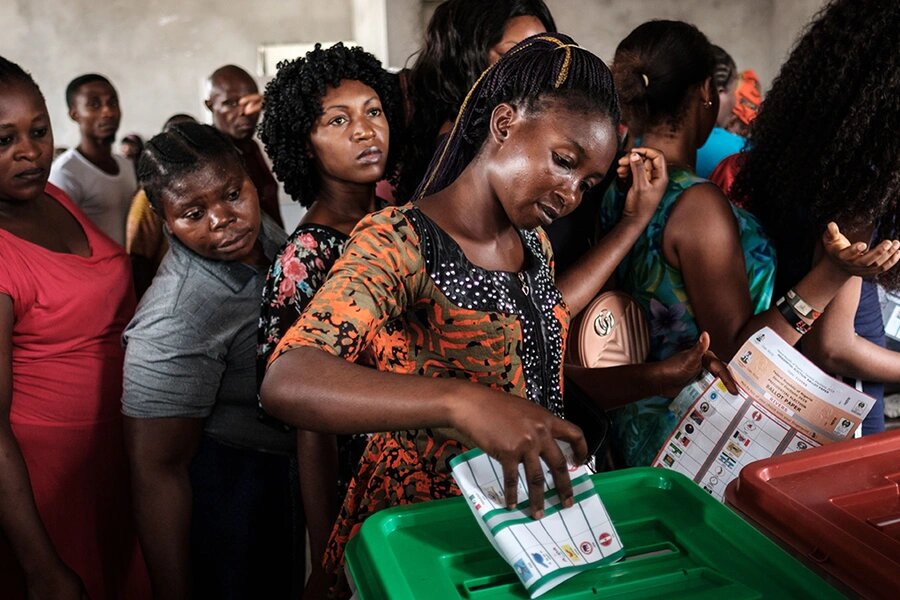
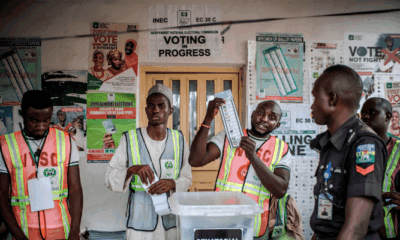
In the recent political developments across Nigeria, the conduct of party primaries, especially within the All Progressives Congress (APC), has raised a serious concern about the credibility of our political parties and raised a serious question: are these truly direct primaries, or merely direct imposition in disguise?
On paper, direct primaries represent one of the most democratic methods of candidates’ intraparty election because the system allows all eligible voters to choose the eventual general election candidates for each political party. This opens the candidate selection process to include all members of a political party rather than limiting that process to party leadership, insiders, or outside interests. It is meant to reduce the power of political godfathers, give ordinary party members a real voice, and make the party more democratic from within.
However, across many states, complaints about manipulation, predetermined results, and lack of transparency have become common whenever party primaries are held. In reality, what is often presented as a democratic process feels more like a controlled exercise aimed at producing already chosen candidates. In some cases, the only real difference between these primaries and local government elections is that there are no opposition parties involved.
Instead of giving party members a real voice, some of these exercises have only exposed the weaknesses within the system. Many aspirants complain about how the process keeps changing, how only selected people are allowed to vote, and how figures are inflated. In the end, results announced sometimes don’t match what actually happened at the polling units.
The situation in Kaduna State, Igabi Local Government Area in particular, illustrates these concerns. Frustrations have escalated to protest, as party members described what happened as a compromised exercise.
According to an eyewitness, Musa Salihu: “We lined up but nobody counted us. Suddenly, they came out and announced that ‘Jalo’ had won the election. That is not democracy because no election was conducted.”
The situation in Adamawa State is similar, particularly in Yola, the capital city of the state, as Alhaji Ahmadu Hamman, Dan Maje Adamawa, frowned at the pathetic condition of the polling unit, stating that: “We were here alone with no election officials or candidates present. Only Kabiru Mijinyawa was around.” He further added that no primaries took place in Yola South, Yola North, and Girei.
These accounts suggest that the process itself is breaking down. When votes are not properly counted and the results do not reflect what actually happened, the whole idea of democracy is defeated. At that point, elections stop being about the people’s choice and start looking like a mere formality to justify decisions that were already made.
Also, a political commentator and former gubernatorial media aide, Salisu Tanko Yakasai, questioned the credibility of party primaries in Nigeria. Commenting on the current political situation in the country via his X handle, he argued that many aspirants are left with very limited choices:
“If I were contesting in any party’s 2026 primaries—particularly the APC—I would either accept the outcome of what already appears to be a pre-arranged consensus or simply avoid participating in what is called direct primaries.”
His statement indicates an already established public belief that many primary elections were often decided long before voting begins. When that happens, taking part in the process feels meaningless, and the final result only serves to confirm decisions that were already made behind closed doors.
Yakasai’s concerns are also based on his own experience. Looking back at the 2011 elections, he said the final result did not reflect what actually happened during the primaries.
“We conducted direct primaries across 11 wards, and I won convincingly in 7. Yet, when the final results were released, everything had changed.”
Experiences like these only deepen long-held concerns that internal party democracy in Nigeria is often weakened by manipulation, imposition, and a lack of accountability. Once party members and aspirants begin to doubt the fairness of primaries, it doesn’t just affect the process but also creates distrust in the entire democratic system.
Recent developments within the APC in Katsina State further strengthen these concerns. A leading aspirant for the Daura/Sandamu/Mai’adua Federal Constituency, Auwalu Lawan Daura, openly rejected the outcome of the process, alleging serious irregularities.
According to him, “I am not satisfied with what happened today. Evidence is everywhere showing the injustice that was done. The manner of counting was highly dubious, and most of the people counted did not even have party membership cards.”
Drawing from all these allegations, which foundation of our internal democracy is built upon, this signals a serious problem in the system. If individuals without valid membership are allegedly allowed to participate in deciding party candidates, then the credibility of the entire exercise becomes questionable. A primary election loses its democratic value when the process is manipulated to favour certain interests at the expense of a genuine participation.
The danger of this goes beyond political parties. When candidates are produced through questionable and controversial processes, people start to lose faith in democracy itself. Citizens become disillusioned, loyal party members lose trust, and capable people may even stop showing interest in politics altogether. Over time, this weakens democratic institutions and creates a system where loyalty to powerful individuals matters more than competence, popularity, or genuine public support.
More importantly, primaries that were marred by irregularities often produce weak candidates who lack genuine grassroots legitimacy or relevance. Instead of rewarding popularity, performance, and political acceptance, the system sometimes appears to reward political connections and party stakeholders’ endorsement. This will eventually affect governance because leaders who emerge through imposition may feel more accountable to political patrons than to ordinary citizens.
Democracy cannot flourish where internal party processes are manipulated. Political parties are the foundation of democratic governance, and when that foundation becomes compromised, the entire system suffers. If political parties truly wish to strengthen democracy in Nigeria, direct primaries should not merely exist on paper or as a political slogan; there must be transparency, fairness, and accountability in practice.
The critical question therefore remains: are Nigerians witnessing genuine direct primaries, or simply direct imposition presented under a democratic label?
Until party stakeholders allow the true will of people to prevail, Nigerians may continue to see little difference between democracy and political selection carefully orchestrated by a privileged few.
The writers can be reached via Ibrahim Aliyu Gurin, ibrahimaliyu5023@gmail.com, Nasir Yusuf Jibril, nasirjibril2018@gmail.com and Bilyaminu Gambo Abubakar bilyaminugambokonkol01@gmail.com.