Forgotten Dairies
Divided We Vote, United We Suffer: Nigeria’s Identity Crisis At The Polls -By Isaac Asabor
Until Nigerians begin to vote less with their fears, their hunger, and their identities, and more with their judgment and their aspirations, the outcome will remain the same. We will continue to divide ourselves at the ballot box. And we will continue to suffer the consequences together.


Nigeria has mastered the art of a convenient excuse. Whenever the country stumbles, and it often does, the blame is swiftly and almost exclusively placed on leadership. Bad roads? Bad leaders. Economic hardship? Bad leaders. Insecurity? Still bad leaders. It is an argument that feels justified, even obvious. But it is also incomplete. Because if we are being honest, Nigeria’s crisis is not just about leadership failure. It is about followership failure, and nowhere is this more evident than at the ballot box.
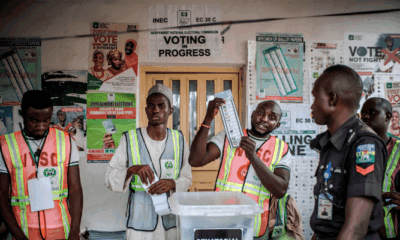
Every election cycle, Nigerians approach the polls not as citizens making calculated decisions about their future, but as members of tribes, religious blocs, and emotional camps defending their own. The result is predictable: we vote divided, and we suffer united. The foregoing viewpoint, no doubt, graphically explains Nigeria’s identity crisis at the polls.
At the heart of this crisis lies a dangerous hierarchy of priorities. Competence, capacity, and character, qualities that should define leadership choices, are often pushed aside in favor of ethnicity, religion, and political sentiment. The question is rarely, “Who is the most capable?” Instead, it becomes, “Who is one of us?” or “Who represents our interests?” It is a question that has cost the nation dearly.
In many parts of Nigeria, elections are not contests of ideas but contests of identity. Candidates are marketed not on the strength of their policies but on the familiarity of their names, the language they speak, or the faith they profess. Campaigns subtly, or sometimes openly, frame political competition as a zero-sum game between groups. Voters are urged to “protect their own,” as if governance were a tribal inheritance rather than a national responsibility. And so, the cycle continues.
A candidate may lack vision, competence, or even a credible track record, but as long as he ticks the right identity boxes, he stands a strong chance. Once elected, his performance becomes secondary to his affiliation. Criticism is deflected, not addressed. Accountability is weakened, not strengthened.
When leadership fails under such conditions, the damage does not discriminate. Economic decline does not ask for your tribe. Inflation does not recognize your religion. Insecurity does not check your political loyalty. We all suffer together.
Yet identity politics alone does not explain the full picture. It operates alongside another corrosive force: the normalization of “stomach infrastructure.” In a country where millions struggle to meet basic needs, elections have increasingly become opportunities for immediate relief. Bags of rice, cash handouts, and other incentives are distributed, turning the act of voting into a transaction. For many voters, the reasoning is painfully simple: take what you can now, because tomorrow is uncertain. But this short-term thinking carries long-term consequences.
When votes are exchanged for food or money, the foundation of democracy is undermined. Leaders who secure power through such means do not feel accountable to the electorate; they have already “settled” them. Governance becomes secondary, and public offices turn into an investment to be recovered. In this system, the voter is not just a victim, but also a participant.
Adding another layer to this dynamic is the rise of personality-driven politics, often captured in trends like the “city boy” factor. Here, politics shifts from policy to perception, from substance to style. Candidates are not just leaders; they are brands. Supporters align themselves not necessarily because of what these figures have done, but because of what they represent, power, status, or a sense of belonging.
Without any scintilla of hyperbole, It is politics driven by vibes. And in such an environment, critical thinking becomes optional. Supporters become defenders, quick to dismiss criticism and slow to demand accountability. The line between civic engagement and fan loyalty becomes blurred. But democracy is not a fan club. It is a system that demands scrutiny, participation, and responsibility.
The uncomfortable truth is that Nigerian politicians have not invented these strategies in a vacuum. They respond to incentives. If voters prioritize identity, politicians will emphasize identity. If voters respond to handouts, politicians will distribute handouts. If voters reward branding over competence, politicians will invest in image over substance.
Against the backdrop of the foregoing view, it is not out of place to opine that leadership, in this sense, is a reflection of followership. This is not to deny the structural realities that shape behavior. Poverty, unemployment, and insecurity are powerful forces. When survival is at stake, long-term considerations can feel like luxuries. But acknowledging these realities should not mean surrendering to them. Because the cost of surrender is clear.
When identity determines votes, merit suffers. When stomach infrastructure determines choices, accountability disappears. When political branding replaces critical evaluation, governance becomes performance rather than service.
And when all these forces combine, the result is exactly what Nigeria experiences today: a nation rich in potential but trapped in cycles of disappointment. It is important to ask a difficult question: how did we get here? Part of the answer lies in what society rewards. In Nigeria, loyalty is often valued over integrity. Wealth is celebrated without sufficient scrutiny of its source. Individuals who should be questioned are instead admired, if they are seen as successful or influential. These values inevitably spill into politics, shaping both the behavior of leaders and the expectations of followers.
Another part of the answer lies in silence. Many Nigerians recognize the flaws in the system, vote-buying, identity politics, poor governance, but choose not to challenge them. Whether out of fear, fatigue, or a belief that nothing will change, this silence allows the system to persist. But silence is not neutral. It is enabling.
If Nigeria is to break this cycle, the change must begin with followership. Citizens must start to see themselves not just as victims of bad leadership, but as active participants in shaping the system. This means making different choices, even when those choices are difficult. It means rejecting vote-buying, even when money is scarce. It means questioning candidates, even when they are “our own.” It means prioritizing competence over tribe, and vision over religion. It means understanding that the power of the vote is not in what it can bring today, but in what it can secure for tomorrow.
This is not an easy shift. It requires a reorientation of values, a willingness to think beyond immediate needs, and the courage to stand apart from prevailing sentiments. But it is necessary. Because the truth is simple: as long as Nigerians continue to vote along the lines of division, they will continue to experience the consequences collectively.
Nigeria’s future cannot be built on identity alone, especially in light of the long history of political dysfunction that has defined its public life. It cannot thrive on handouts or be propelled by mere political branding. What the country truly needs is an informed and engaged citizenry, one that is not only prepared to demand accountability from its leaders, but also willing to hold itself to higher standards.
The conversation must move beyond the blame of leadership failure. Yes, leaders must improve, but lasting change will only come when the environment that produces and sustains them is transformed. That environment is shaped by people.
In the end, democracy is not just about who leads. It is about who chooses, and how they choose.
Until Nigerians begin to vote less with their fears, their hunger, and their identities, and more with their judgment and their aspirations, the outcome will remain the same. We will continue to divide ourselves at the ballot box. And we will continue to suffer the consequences together.