
Africa
Double-Edged Sword of AI: Unpacking Its Effects and Dangers for Students -By Judith Duniya
The challenges associated with AI in education leave educators, students, and policymakers at a crossroads. It is clear that while AI can provide invaluable tools for learning, its unchecked integration poses significant risks to traditional educational values. Addressing these dangers requires a multifaceted approach that combines technology with an emphasis on critical thinking, academic integrity, mental health support, and equitable access.

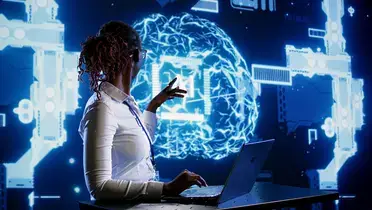
Gabriel Florence was a SS1 student when a friend introduced AI to her. She had been wondering and bothering on how her friend used to come up with highest marks whenever they were given assignments, when her friends were having highest marks she hardly got averages of the marks. Nervously she asked, Adeola , are you attending any extra lessons! Because you have never scored less than average, the secret is what?
After too much if disturbance, Adeola told her that, the secret is Artificial intelligence (AI), when an assignment giving her hard time, she will just sneak in to her AI software.
What is Artificial intelligence!
In the contemporary educational landscape, Artificial Intelligence (AI) has emerged as a transformative force, reshaping how students learn, interact, and engage with knowledge. With AI-powered tools ranging from intelligent tutoring systems to chatbots and plagiarism detectors, the integration of these technologies holds incredible promise. However, as the digital tide rises, it’s crucial to examine the effects and potential dangers AI poses for students today.
The Impact of AI in Education
AI has significantly enhanced the educational experience. Personalized learning algorithms tailor study materials to individual student’s needs, promoting efficiency in understanding complex topics. For instance, platforms like Khan Academy use AI to analyze learners’ performance and suggest targeted resources, an approach that paves the way for more personalized and effective education.
Additionally, AI-powered applications are helping students develop critical skills for the digital age. Coding programs, language learning apps, and even virtual laboratories introduce them to hands-on learning experiences that can prepare them for future job markets. According to a report by McKinsey, AI could contribute up to $1 trillion to the global education sector by enhancing learning experiences and training outcomes.
Became Reliance to for Users
While the benefits seem extensive, reliance on AI in education poses significant risks. As students become accustomed to immediate answers and solutions provided by AI systems, there is a growing concern over diminishing critical thinking and problem-solving skills. The immediacy of AI-tutored help can discourage students from engaging deeply with material, prompting an over-reliance on technology to navigate academic challenges.
For instance, a recent survey conducted by the Pew Research Center found that 65% of educators observed a decline in students’ analytical reasoning skills since the implementation of advanced AI tools in classrooms. As easy access to information replaces traditional learning methods, students may find themselves less equipped to handle complex problems without the aid of AI solutions.
Plagiarism and Integrity Challenge
Another alarming concern linked to AI usage in education is the rising prevalence of academic dishonesty. Advanced AI algorithms have made it increasingly simple for students to generate essays, solve homework questions, and produce entire research papers with little effort. In fact, tools like ChatGPT and other generative AI technologies can create sophisticated content that can easily bypass conventional plagiarism detectors.
According to a report by the Turnitin organization, instances of plagiarism among students surged by 30% in 2023 compared to previous years. This raises deep ethical questions about originality, integrity, and the value of education itself. Institutions are grappling with how to address these challenges, enacting stricter policies and exploring more advanced detection systems, but the arms race between generative AI and academic integrity measures is on a collision course.
The Stop Over of AI in Future Education
The challenges associated with AI in education leave educators, students, and policymakers at a crossroads. It is clear that while AI can provide invaluable tools for learning, its unchecked integration poses significant risks to traditional educational values. Addressing these dangers requires a multifaceted approach that combines technology with an emphasis on critical thinking, academic integrity, mental health support, and equitable access.
1. Balanced Integration: Educational institutions must develop a model that harmonizes the use of AI with traditional pedagogical methods, promoting critical engagement with the material while leveraging the efficiency of AI tools.
2. Fostering Integrity: Schools should emphasize the importance of academic integrity through workshops and educational campaigns to inform students about the ethical implications and consequences of AI-assisted cheating.
On the last note AI reshapes the academic experience, its dualities present critical considerations for students, educators, and policymakers. By understanding both the opportunities and the inherent dangers, society can better navigate this modern educational paradox. The goal should not be to reject technology but to harness its potential while safeguarding the very essence of education—an environment where learning is nurtured, critical thought is cultivated, and all students have the opportunity to thrive.


























You must be logged in to post a comment Login