Africa
DSS Vetting Failure: The Pathology of Institutional Betrayal -By Professor John Egbeazien Oshodi
The DSS leadership should address Nigerians with transparency and humility, outlining how this lapse occurred and what reforms are underway. Silence implies denial; communication shows strength. The Service must demonstrate that it is willing to learn, adapt, and prevent such failures from ever recurring.

The resignation of the former Minister was not the end of a story—it was the unveiling of a deeper national failure. I had earlier written “Dear Uche Nnaji: Minister of Science, Technology and Innovation—Be the First to Say, ‘I Resign.’” That call has now been answered. Yet the real crisis lies within the Department of State Services (DSS), whose job it was to prevent such a scandal.
When a country’s most powerful intelligence agency fails to detect a forgery that journalists expose in a matter of hours, it is no longer a question of oversight—it is a crisis of institutional integrity. The DSS’s failure is not about lack of tools; it is about lack of truth.
PREMIUM TIMES Did What the DSS Wouldn’t
It was not an international agency, not a Senate probe, and not an intelligence audit that uncovered the truth—it was Premium Times, Nigeria’s investigative newsroom. Their investigation exposed how the Minister forged his university degree and NYSC certificates.
That revelation should shame the DSS. A journalist, armed only with curiosity, email access, and courage, verified what a fully staffed, well-funded intelligence agency failed to confirm. The contrast is damning: the free press performed the function of the state while the DSS stood aside.
This was not a complex intelligence operation. It required only a phone call to the university and the NYSC. The DSS did not make that call—because someone decided that political loyalty was safer than profession.
A Minister as a Security Risk
By clearing forged credentials, the DSS effectively admitted a fraudulent identity into the highest level of government. A Minister with falsified documents was, for months, privy to classified meetings, confidential briefings, and sensitive state information.
That is not a political embarrassment; it is a security risk. In any serious democracy, such negligence would trigger immediate internal investigation and the removal of those responsible—from the case officer to the final approving director.
The officers who signed off on the clearance, their supervising directors, and ultimately the DSS Director-General must be held accountable. They failed the Republic they were sworn to protect.
A Culture of Fear and Convenience
This scandal exposes what has long weakened the DSS—a quiet culture of fear disguised as discipline. Many officers, sworn to defend the nation, now hesitate to defend the truth. Instead of protecting the Republic, some have learned to protect political comfort.
The DSS was created to detect threats, uphold integrity, and guard the Constitution. Its oath binds officers to the state, not to any political figure. Yet, files involving powerful names are often handled with caution instead of conviction.
Still, within the Service are men and women who truly want to do what is right but feel trapped by hierarchy, silence, or subtle coercion. Perhaps it is time for what one might call a moral and conscience therapy session inside the Service—a moment of reflection, courage, and renewal. The DSS must create an atmosphere where integrity is not punished and where honesty is a form of strength, not isolation.
Those who refuse to take dishonest orders from superiors deserve protection, not persecution. And those unwilling to act with conscience—or unable to serve without compromise—should have the integrity to resign. The nation’s security cannot rest on officers who obey wrong instructions more readily than they defend what is right.
When Negligence Becomes National Exposure
This was not a minor oversight. It was institutional negligence that endangered national security. By allowing a forged identity to sit in the Federal Executive Council, the Department of State Services (DSS) compromised the country’s internal defenses and left sensitive information exposed to potential manipulation, blackmail, or even foreign intelligence.
What makes the situation more alarming is the reaction from Senator Ali Ndume, who said:
“We are not screening. Get this clear. Screening and confirmation are two different things. Before the president sends a candidate to the Senate, there are a lot of processes, including screening him not only on certificates, but also conducting a background check by the SSS. The SSS has to clear him.”
Those words were meant to clarify procedure, but instead they expose a deeper institutional danger: total dependence on a single agency whose own judgment has now failed. If the Senate merely confirms what the DSS presents, then the country’s highest offices can be breached by one bad clearance.
The DSS cannot be both the investigator and the final authority. Its clearance must never again be treated as unquestionable. When one agency’s word becomes law, the entire system loses its safety net. The Senate’s responsibility is not to echo the DSS—it is to verify, to question, and to ensure that the agency itself has done its work.
This failure reveals a structural risk that extends far beyond one minister. It shows how over-reliance on the DSS has turned a security body into a single point of national vulnerability. When that point collapses, the damage reaches the Presidency itself.
Nigeria’s democratic architecture depends on cross-checking, not blind confidence. Oversight without verification is not oversight—it is permission for danger to enter the heart of government.
Steps Toward National Correction
Nigeria cannot move on with silence. The public deserves to see consequence, transparency, and reform. The DSS can only regain credibility through shared responsibility and structural change.
1. Accountability – Ending a Culture of Careless Clearance
The officers, investigators, and supervising directors who approved the forged credentials must be identified and disciplined. This failure is not isolated; it reflects a culture that has long allowed weak screening, political pressure, and internal compromise to pass as routine. Such behavior has quietly eroded national trust and left the Presidency exposed to public embarrassment.
This is the moment to draw a clear line. The DSS leadership must accept that its screening outcomes can no longer be treated as final or beyond review. The Presidency and the Senate should each conduct their own confidential background checks before final confirmation. Shared oversight will break the cycle of blind reliance and create a system of double verification that protects the state from future embarrassment.
2. Independent Vetting Board – A National Safeguard
An Integrity and Suitability Review Board should now sit above all high-level vetting processes. This body—comprising retired jurists, senior intelligence experts, and reputable civic professionals—would receive reports from both the DSS and the Presidency for cross-verification. Its role would be to ensure that no clearance is finalized until all verifications align.
This structure will remove politics from security checks and replace discretion with documented accountability. It would not weaken the DSS; it would strengthen Nigeria’s overall security architecture.
3. Digital Verification – Technology as the New Oversight Partner
A modern, automated national verification system must link all major data points—universities, NYSC, tax, and professional registries. Once a nominee’s details are entered, the system should automatically confirm or flag inconsistencies for further review. Technology reduces personal bias and keeps every agency accountable.
4. Public Explanation – Rebuilding Institutional Dignity
The DSS leadership should address Nigerians with transparency and humility, outlining how this lapse occurred and what reforms are underway. Silence implies denial; communication shows strength. The Service must demonstrate that it is willing to learn, adapt, and prevent such failures from ever recurring.
A Lesson in Truth and Responsibility
Premium Times’ investigation is now part of Nigerian history—a moment when journalism defended the state more effectively than its own intelligence service. That should not be normal.
The DSS’s credibility will not be restored through secrecy or denial. It will be restored when it admits its failure, disciplines its officers, and rebuilds its internal checks.
The Minister’s resignation was personal. The accountability of the DSS must be institutional. The President now carries the responsibility to ensure that this lesson is not wasted.
A government that cannot verify truth will always end up defending falsehood. The time for excuses has passed. The time for correction has begun.
About the Author
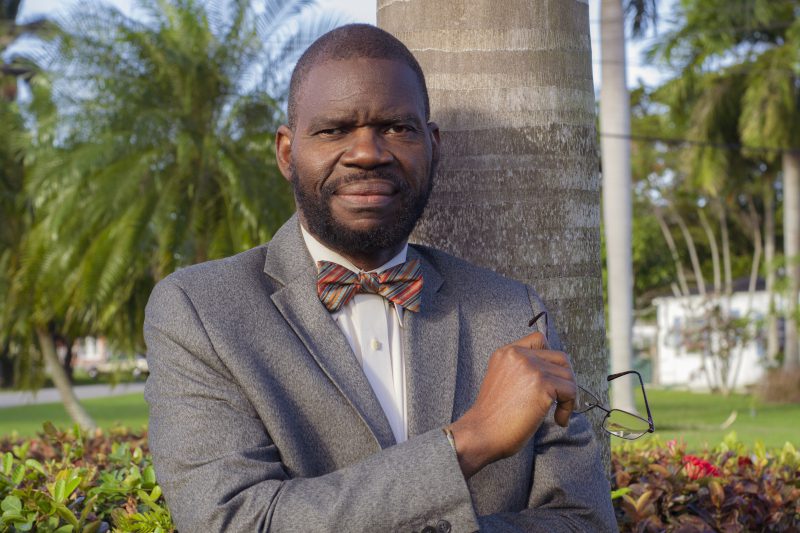
Prof. John Egbeazien Oshodi is an American psychologist and educator specializing in forensic, legal, clinical, cross-cultural psychology, police, and prison science.
Born in Uromi, Edo State, Nigeria, and son of a 37-year veteran of the Nigeria Police Force, he has dedicated his career to linking psychology with justice, education, and governance. In 2011, he introduced advanced forensic psychology to Nigeria through the National Universities Commission and Nasarawa State University, where he served as Associate Professor of Psychology.
He is currently contributing faculty in the Doctorate in Clinical and School Psychology at Nova Southeastern University; PhD Clinical Psychology, BS Psychology, and BS Tempo Criminal Justice programs at Walden University; Professor of Leadership Studies/Management and Social Sciences (Virtual Faculty) at ISCOM University, Benin Republic; and virtual faculty at Weldios University. He also serves as President and Chief Psychologist at the Oshodi Foundation, Center for Psychological and Forensic Services, United States.
Prof. Oshodi is a Black Republican with interests in individual responsibility, community self-reliance, and institutional democracy. He is the founder of Psychoafricalysis (Psychoafricalytic Psychology), a culturally grounded framework centering African sociocultural realities, historical memory, and future-oriented identity. He has authored over 500 articles, multiple books, and numerous peer-reviewed journal articles spanning Africentric psychological theory, higher education reform, forensic and correctional psychology, African democracy, and decolonized therapeutic models.