Africa
Feasting On Both Sides: Nyesom Wike’s Dual Game And The Need For Political Consistency In Nigeria, by Isaac Asabor

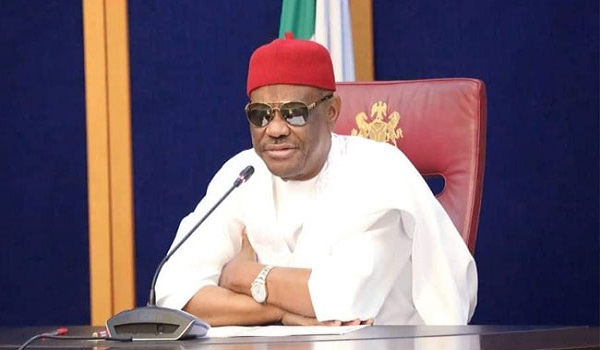
In the world of Nigerian politics, party loyalty has often been considered an unspoken rule. When a prominent politician like Barrister Nyesom Wike, a stalwart of the People’s Democratic Party (PDP), appears to be playing on both sides, straddling both PDP’s legacy and a prominent role within the All Progressives Congress (APC)-led government, the situation calls for scrutiny. For years, Wike championed the importance of party loyalty, decrying cross-party affiliations. Yet today, he occupies a ministerial position under the APC-led administration while maintaining roots within the PDP, casting serious doubts on his previously firm stance. This double standard not only reflects on Wike’s political journey but also holds a mirror to broader issues within Nigeria’s political landscape.
Wike has never been shy about his views on political loyalty. In his years as governor and a leading figure within the PDP, he criticized politicians who switched allegiances for personal gain, asserting that politicians should stand by their parties regardless of the challenges. His speeches from past forums are a testament to his passion for maintaining party loyalty, wherein he argued that leaders should make decisions that align with their party’s vision and should not serve personal interests at the expense of integrity. This standpoint resonated with many Nigerians who saw him as a rare politician committed to a cause larger than himself.
However, Wike’s recent move to accept a ministerial position within an APC-led administration has left many Nigerians questioning his principles. By accepting this role while maintaining ties with the PDP, he seems to be abandoning his long-held position that politicians should be unwaveringly loyal to one party. Wike’s actions raise the question: Can politicians uphold the integrity of the parties they represent while actively serving the interests of another?
Wike’s dual allegiance has implications that extend far beyond his own career. In a political system where party lines should represent ideological and policy differences, such mixed signals from a high-profile figure only blur these distinctions, leaving Nigerian voters disillusioned. If a prominent political figure can alternate between affiliations so freely, it sends the message that the platforms, values, and promises of Nigeria’s political parties are secondary to individual advancement.
This practice further complicates the task of building a solid democratic framework in Nigeria, where parties should ideally be driven by consistent philosophies and principles. The fact that Wike has positioned himself as a member of both parties dilutes the essence of party loyalty and integrity. How can voters believe in a political system when even senior leaders, who once advocated for party loyalty, freely shift alliances without explanation?
To extend the football analogy: In a real-world sports team, loyalty is highly valued because it binds players to a collective purpose, instilling in them a sense of shared identity. Imagine if Lionel Messi donned the jersey of both Barcelona and PSG on the same match day. Such a spectacle would not only disorient fans but erode the competitive spirit of the game. Wike’s recent moves similarly disorient the political “fans”, the Nigerian electorate, who deserve leaders who represent clear, consistent values.
Wike’s stance exposes a concerning double standard. Over the years, he has castigated others for crossing party lines, creating a public image of steadfast loyalty. This reputation, however, is now at odds with his current political choices. While some may argue that his decision to accept the ministerial role in the APC government is a strategic move to secure influence for his home state, this explanation still conflicts with his earlier advocacy. If anything, his decision highlights an element of political expediency that belies his past image.
In a democracy, politicians should be held to account for their words and actions, and consistency is a core aspect of public trust. A shift in allegiance, especially at the ministerial level, should come with a clear rationale to the public that previously supported Wike on the basis of his strong words on loyalty. Leaders cannot build credibility if they abandon their principles when it is convenient. For Nigerian democracy to flourish, the actions of political leaders should align with their stated beliefs, lest the public begin to view all political commitments as hollow.
Wike’s move contributes to the erosion of distinct party identities, which has plagued Nigerian politics for years. In countries with mature democracies, political parties are defined by core values and policies. Members of these parties are expected to embody and promote these ideals consistently. The Nigerian experience, however, is one where ideology often takes a backseat to personal gain. Party switches are commonplace, and alliances shift based on who is in power rather than on shared beliefs or goals.
By playing both sides, Wike risks furthering the perception that Nigeria’s political parties are little more than vehicles for power. This is detrimental to the entire democratic structure. Without clear party distinctions, voters are left with blurred choices and a weakened ability to hold leaders accountable. Wike’s position exemplifies this problem, as he appears to wear the “jerseys” of both parties, diluting the meaning of each and making it harder for the public to place their trust in either.
For Nigerian democracy to progress, its leaders must embrace ideological clarity and respect the principles they claim to uphold. Leaders like Wike, who once advocated for steadfast loyalty, should serve as role models. When politicians demonstrate consistency, voters can make informed choices based on clear differences in policy and philosophy. If Wike is no longer aligned with the PDP’s vision, he should state as much openly and embrace his new political path fully.
The credibility of Nigeria’s political system rests on the transparency and integrity of its leaders. By openly affiliating with both parties, Wike sets a dangerous precedent, one that suggests party allegiance is only necessary until a more beneficial offer comes along. Such a trend threatens to undermine voter confidence, especially among young Nigerians, who may see this as further evidence of a broken system.
Wike’s recent political choices bring to light the urgent need for Nigerian politicians to choose a side and stick with it. His dual loyalty raises questions about the nature of political commitment in Nigeria, and if leaders like him can shift allegiances without consequence, it sets a damaging example for others to follow.
As Nigerian politics continues to evolve, the electorate deserves leaders who stand by their convictions, even when it is inconvenient. If political parties are to serve their purpose as vehicles of representation and vision, their members must abide by the commitments they make. Otherwise, the Nigerian people are left with parties that are only as loyal as their members’ personal interests allow.
Just as in a football game, where a player’s jersey symbolizes their team loyalty, Wike must remember the significance of his political “jersey.” For the sake of Nigerian democracy, he should embrace one party and give it his full allegiance, anything less is a betrayal of the values he once championed.