
Breaking News
France Protests Turn Violent as Fire Destroys Historic 143-Year-Old City Hall
France faces escalating unrest over rising living costs, fuel prices and public services after protesters set fire to the historic Limoges City Hall.

A historic town hall in the French city of Limoges has been largely destroyed by fire as nationwide protests over the rising cost of living descended into violence, leaving public buildings damaged, businesses looted and thousands arrested.
The 143-year-old landmark, inaugurated in 1883 and modelled after Paris City Hall, was reportedly set ablaze by masked protesters on Saturday night. The building had survived two World Wars, but footage from the incident showed its bell tower and roof collapsing as flames spread through the structure.
The incident marked a major escalation in protests that began last month with students demanding improvements to France’s education system before expanding into a wider movement against rising living costs and what demonstrators say is inadequate government support.
How the protests escalated
The demonstrations initially involved high school students protesting long school hours, shortages of teachers, deteriorating classrooms and a university admissions system they considered opaque.
Students said they routinely lost months of teaching because vacant staff positions remained unfilled. For four weeks, they organised marches and barricaded school entrances.
The protests grew significantly on Saturday as parents, teachers, grandparents, workers and members of the General Confederation of Labour (CGT) joined the movement.
Their demands included increased public-service funding, lower prices, higher pensions and improved wages. Many carried banners accusing the government of failing to listen to ordinary citizens.
Rising fuel costs also fuelled anger following the Israeli-US war on Iran, which reportedly resulted in the effective closure of the Strait of Hormuz.
While tens of thousands of people marched peacefully in Paris to support the students, masked groups in other locations set barricades alight and clashed with police.
Limoges town hall suffers extensive damage
The Haute-Vienne prefecture said approximately 2,000 demonstrators gathered in Limoges. According to reports, a group broke into the town hall at about 6pm, set a police car on fire outside, smashed windows and ignited a blaze inside.
AFP quoted prefect Maurice Barate as describing the scale of the destruction.
“The roof has collapsed onto lower floors, except the west wing, and two-thirds of the exterior has already disappeared,” Barate said.
He called the incident a “catastrophe for heritage” and a “deliberate act by hooligans.”
Limoges Mayor Guillaume Guérin condemned the attackers, saying they were not people peacefully campaigning for social change.
“They were not demonstrators that defend causes but people organised for war, who told a caretaker he would be killed and told officials they would burn,” he said.
Guérin also criticised the authorities’ response, saying municipal police had been overwhelmed after running out of ammunition.
“Around 3:30pm our municipal police, although present in number, found themselves no longer able to fight against the violence of rioters because they had run out of munition,” he said.
He described the situation as a colossal failure of the state and threatened to resign unless funds were provided to repair the damage.
Lyon, Marseille and Bordeaux also hit
Limoges was not the only city to experience attacks on public buildings.
In Lyon, protesters set fire to the historic tourist office at Place Bellecour. The city’s Green Mayor, Grégory Doucet, told Le Monde: “I’m stunned by the violence against public and state property. Shop-owners felt abandoned.”
In Marseille, masked groups stormed the city hall, overturned furniture, toppled a bust of Marianne, the symbolic female representation of the French Republic, and surrounded a municipal police station.
Socialist Mayor Benoît Payan condemned the attacks, saying: “Hordes of rioters and looters attacked our common buildings… with no real demands, but with the sole aim to wreck the demands of those who had demonstrated legitimately.”
He also called for questions to be raised about policing tactics.
In Bordeaux, rioters reportedly broke into and ransacked the official residence of the Gironde prefect before setting fire to the courtyard. Authorities responded by deploying the elite RAID police unit.
Municipal buildings were targeted in Lille, where a group reportedly forced its way into the town hall. Attempts to enter buildings were also reported in Calais and Brest, while Grenoble’s city hall sustained damage.
Interior Minister Laurent Nuñez and Prime Minister Sébastien Lecornu said the incidents pointed to “a clear aim to hit public buildings in many cities.”
Macron says rioters will be held accountable
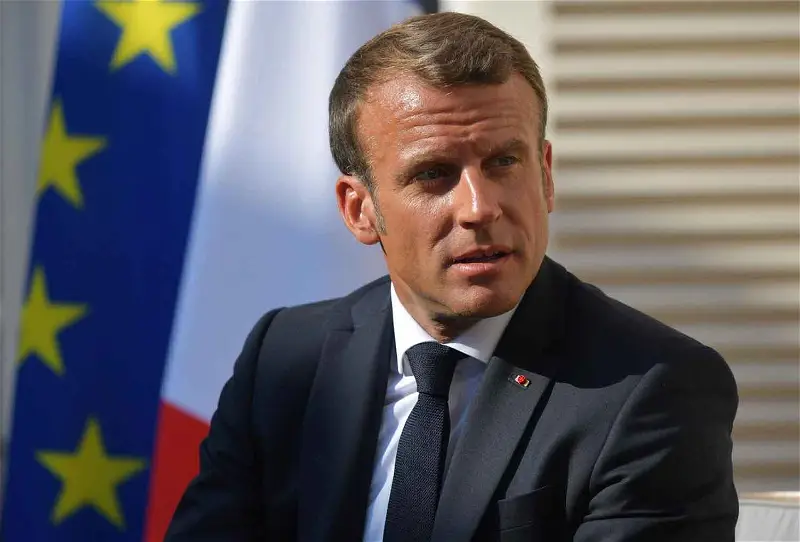
President Emmanuel Macron condemned the violence and insisted that rising living costs and other grievances could not justify attacks on public institutions and businesses.
Addressing the nation, he called on political organisations to condemn the unrest and said authorities would distinguish between people making legitimate demands and those responsible for destruction and looting.
“Tonight, we all feel anger and shame. Those who looted will have to pay back for the damage, and those who sought to bring down the Republic will be held accountable,” Macron said.
He attributed the violence to what he called “insurrectionist elements from radical far-left groups, joined by numerous criminals.”
In a social media post, the president reiterated that there was “no place for violence” and vowed that those who vandalised government offices, attacked businesses or looted public buildings would be prosecuted.
Macron is approaching the end of his second term and is expected to leave office in 2027.
His government and far-right political figure Marine Le Pen blamed ultra-left groups and criminals for the unrest. Lecornu said the government would not be intimidated, while radical-left leader Jean-Luc Mélenchon accused the authorities of organisational failures that “opened the door to chaos.”
More than 2,000 arrested as government faces pressure
The French government held crisis talks after the violence left public buildings burned, shops damaged and hundreds of emergency personnel injured.
Nuñez said several hundred shops had been damaged, more than 600 police officers, firefighters and paramedics had been hurt, and over 2,000 people had been arrested.
Paris recorded 855 arrests, according to police. In Saint-Étienne, a 17-year-old boy reportedly lost his right hand after being struck by a crowd-control grenade. A protester also died after suffering cardiac arrest in Paris.
The scale of the unrest prompted criticism of the government and police for failing to anticipate the violence. Politicians from both sides of the political spectrum called for Nuñez to resign.
In Marseille, the attacks on the city hall and a police station intensified concerns over the security of public institutions.
Meanwhile, the streets of Paris, Lille, Bordeaux, Nice, Marseille and Strasbourg were left strewn with burnt-out cars, broken shop windows and the remains of barricades.
Traders’ unions estimated that more than 1,500 shops had been ransacked, with losses reaching tens of millions of euros. Carrefour’s chief executive said 50 of the retailer’s outlets had been damaged, 20 of them looted.
The unrest has left Macron’s government facing a dual challenge: responding to public anger over living costs and demands for improved public services, while restoring order after widespread attacks on businesses and government buildings.
Africans Angle News





















You must be logged in to post a comment Login