
Forgotten Dairies
From Chibok To Oyo: Nigeria’s Failure To Protect Its Futur -By Abidemi Oguntunji
When viewed from a distance, one may quickly assume that the sole victims of these abductions are the schoolchildren, their teachers, and perhaps their families. This is not entirely wrong. However, the consequences extend far beyond the immediate victims. In the words of the late poet John Pepper Clark, “we are all casualties.” The long-term effects of educational insecurity ultimately affect society at large.


I was in SS3 when the Chibok schoolgirls’ abduction took place. It was not the first large-scale violent attack Nigeria had witnessed, but it was the first to draw global attention. Earlier, there had been reported cases of violent attacks carried out by Boko Haram insurgents, most notably the gruesome killing of 59 schoolboys at the Federal Government College, Buni Yadi, Yobe State, in February 2014, two months before the Chibok incident. The #BringBackOurGirls campaign drew attention both on and off social media, with global leaders, celebrities, and activists condemning the attacks and campaigning for the girls’ release.
More than a decade later, while a significant number of the 276 kidnapped schoolgirls have been released or returned, a few others remain unaccounted for. Equally, the aftermath and response of the Nigerian government, in its usual fire-brigade approach to the gory incident, convinced many that Nigeria would not only allow such a tragedy to happen again, but would also fail to strengthen its approach to protecting schoolchildren in a region plagued by insecurity and socio-economic inequalities. However, the Chibok incident achieved two things: first, it launched Boko Haram into the global consciousness as one of the world’s most notorious terrorist groups; and second, it set a dangerous precedent Nigeria is yet to recover from, more than a decade after the tragedy.
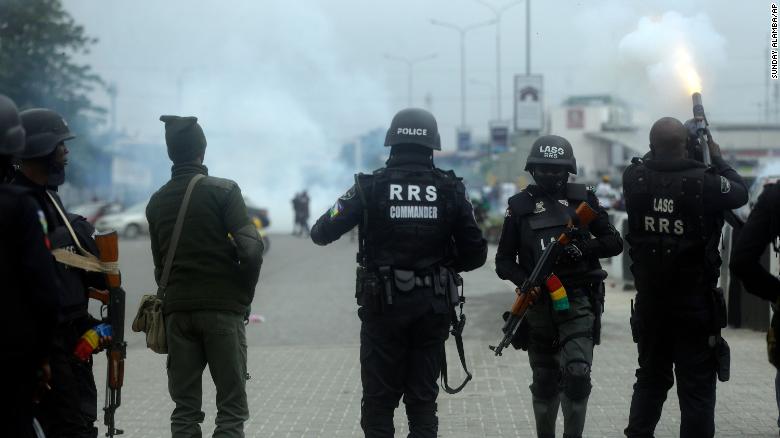
This dangerous precedent set by the Chibok incident lingers to this day. In what may be described as the pre-Chibok era, schools were attacked and burnt, with rare exceptions such as the Buni Yadi massacre. However, the post-Chibok era witnessed operational shifts in the execution of terror attacks by non-state actors. It also intensified the violent abduction of schoolchildren in Nigeria. From Chibok to Dapchi, and now to the recent Oyo kidnapping incident, the tragedy continues. While the consequences of these kidnapping incidents are far-reaching, the deeper tragedy is that Nigeria failed to fully reform school protection and educational insecurity has now become dangerously normalised.
On 16 May alone, two separate but coordinated school abductions took place in Nigeria: the Oyo incident and another in Askira-Uba, Borno State. Unsurprisingly, the abduction of the schoolchildren in Askira-Uba did not draw widespread national attention. It barely made it to the front pages of national dailies. This lack of public outrage further reflects the growing normalisation of educational insecurity in northeastern Nigeria. As a matter of fact, there remains conflicting information regarding the number of schoolchildren abducted in Askira-Uba, with figures ranging between 35 and 48. On the other hand, the abduction of 46 individuals from three schools in the Yawota and Esiele communities of Oriire Local Government Area in northern Oyo State attracted widespread public attention. The gruesome killing of Mr Michael Oyedokun, one of the abducted teachers, further intensified public outrage. Another reason for the widespread reaction may be that many Southerners still view insecurity as a problem largely confined to Northern Nigeria. Many assume that the South-West is insulated from the activities of armed criminal groups. Thus, when the attackers struck that Friday, fear spread rapidly across many communities, generating widespread commentary and concern. There is also an emerging trend that deserves attention: banditry is witnessing another operational shift in its quest for survival, dominance, and territorial expansion. Consequently, regions once considered relatively peaceful are now witnessing a sharp rise in kidnapping incidents.
What makes these tragedies even more disturbing is not necessarily the absence of policies specifically designed to protect vulnerable schoolchildren and ensure learning continuity during crises, but the weak implementation of existing policies. Following the Chibok abduction, the Nigerian government signed declarations, unveiled initiatives, and formulated policies aimed at protecting schoolchildren in vulnerable communities. Policies such as the Safe Schools Declaration and the 2021 National Policy on Safety, Security and Violence-Free Schools remain important frameworks on paper, yet Nigerian schoolchildren remain vulnerable. Schoolchildren are still abducted, while teachers are murdered in communities the state often remembers only during elections and after tragedy strikes. Even more disturbing is the decision of the Oyo State Government to reopen schools within the affected axis while some victims remain in captivity and fear still looms across the surrounding communities. This further exposes the widening gap between policy language and political reality. It raises an uncomfortable question: what exactly is being reopened — education or vulnerability?
Sadly, what is happening across many rural communities in Nigeria is not random. Insecurity is gradually widening existing educational inequalities between rural and urban communities. While parents in cities debate educational quality, parents in vulnerable rural communities increasingly contend with whether sending their children to school is worth the risk of abduction or death. In many ways, these armed groups appear to understand what Nigerian leaders continue to ignore: rural schools are becoming soft targets because of political neglect, geographical isolation, and a weak security presence.
When viewed from a distance, one may quickly assume that the sole victims of these abductions are the schoolchildren, their teachers, and perhaps their families. This is not entirely wrong. However, the consequences extend far beyond the immediate victims. In the words of the late poet John Pepper Clark, “we are all casualties.” The long-term effects of educational insecurity ultimately affect society at large.
The educational sector itself is profoundly affected. With rumours, fear, and uncertainty spreading across affected communities, displacement becomes increasingly common. The relocation of schoolchildren disrupts learning continuity and significantly affects their educational development. Prolonged absenteeism also contributes to rising dropout rates. Furthermore, in already underserved communities, qualified teachers increasingly seek transfers away from insecure areas, further weakening educational quality and deepening existing inequalities.
Beyond education, the continuous disruption of learning activities sabotages national growth and development. School kidnappings are not only attacks on children and teachers; they are attacks on the socio-economic stability of the nation itself. Students who should be preparing to contribute to national development are instead pushed out of classrooms and into uncertainty. As a result, human capital weakens, future productivity declines, and cycles of poverty deepen.
Ultimately, the greatest danger is not only the attacks themselves but society’s gradual adaptation to them. The normalisation of unsafe classrooms is itself a national tragedy. A society that accepts fear as a condition for learning gradually weakens its own future.
























You must be logged in to post a comment Login