
Africa
From Joy Nunieh To Natasha Akpoti-Uduaghan: Is Akpabio A Victim Of Fate? -By Isaac Asabor
Against the foregoing backdrop, it is expedient to ask at this juncture, “Is Akpabio a Victim of Fate?” To frame Akpabio as a victim of fate would be to absolve him of accountability. Fate did not force him into the situations that have led to these allegations; his actions did. While he remains innocent until proven guilty in a court of law, the weight of accusations against him cannot be ignored. The sheer consistency of the claims, coupled with his history of political strong-arming, makes it difficult to believe that he is simply an unfortunate target of political machinations.

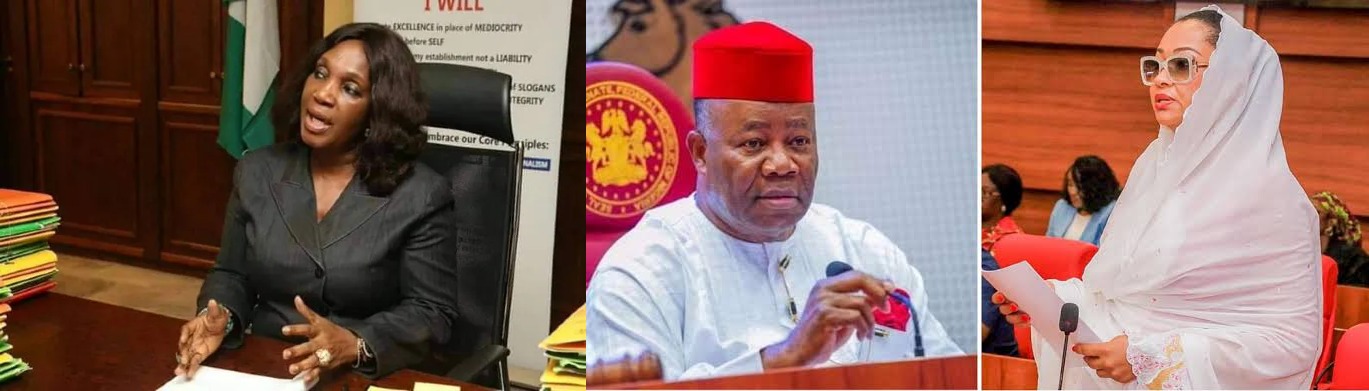
In Nigeria’s ever-turbulent political landscape, few figures have been as popular as Senator Godswill Akpabio. A seasoned politician, former governor, and now Senate President, Akpabio’s name unarguably rings a bell. His tenure has been characterized by strides of infrastructural developments, good governance, but unfortunately, his enviable reputation has in the last few years been under the threat of allegations that bother on sexual harassment. The latest scandal involving Senator Natasha Akpoti-Uduaghan is yet another chapter in his long history of contentious encounters with powerful women in politics. This raises a critical question: “Is Akpabio a victim of fate?
To appreciate the gravity of the latest accusations against Akpabio, one must revisit a similar scandal that played out in 2020. Then, it was Joy Nunieh, the former acting managing director of the Niger Delta Development Commission (NDDC), who accused Akpabio of sexual harassment, intimidation, and corruption. Nunieh’s revelations, though explosive, were met with fierce denials from Akpabio, who swiftly threatened legal action.
Fast forward to 2025, and similar allegations have resurfaced, this time from Senator Natasha Akpoti-Uduaghan. In an interview on Arise Television, she recounted instances where Akpabio allegedly made advances toward her, attempted to manipulate Senate proceedings against her, and ultimately humiliated her in the upper chamber. Akpoti-Uduaghan has gone as far as to file a lawsuit, seeking damages for defamation and legal costs.
One cannot ignore the striking similarities between the accusations leveled by Nunieh and Akpoti-Uduaghan. Both women have held significant political positions and have accused Akpabio of using his influence to suppress them when they refused to comply with his alleged demands. Is it possible that two women in high political offices, years apart, are fabricating the same kind of story against the same man? Or does this indicate a recurring behavioral pattern from Akpabio?
Defenders of Akpabio may argue that these accusations are politically motivated, aimed at tarnishing his reputation. After all, Nigerian politics is a battlefield where allegations, true or false, are often wielded as weapons. However, such a defense falls apart when one considers that both Nunieh and Akpoti-Uduaghan have presented specific instances and circumstances where they claim Akpabio crossed the line. In Akpoti-Uduaghan’s case, she has even challenged the Department of State Services (DSS) to retrieve WhatsApp conversations as evidence.
Given the level of power dynamic at play, and expected flurry of defenses, in favor of or against either of the contending personalities, it is not a misnomer to opine that sexual harassment in the corridors of power is not a new phenomenon, and it is not exclusive to Nigeria. Across the world, powerful men have faced allegations from women who found themselves in vulnerable positions. The common thread in such cases is the power dynamic: a man in a position of authority attempts to exploit a woman’s ambition, need, or access to career advancement.
For instance, Akpoti-Uduaghan’s allegations suggest that Akpabio used his position as Senate President to frustrate her legislative motions, particularly concerning the Ajaokuta Steel Company, simply because she did not yield to his advances. If true, this paints a grim picture of the extent to which women in Nigerian politics must struggle against both systemic barriers and individual predators.
There is no denying the fact Akpabio has earned a reputation that precedes him. The foregoing view can be buttressed by opining that beyond allegations of sexual harassment that his reputation in Nigerian politics has long been a subject of scrutiny. In fact, his tenure as governor of Akwa Ibom State was riddled with accusations of corruption and mismanagement. His role in the NDDC scandal, which saw the agency become a cesspool of financial misappropriation, further solidified public perception of him as a politician who thrives on impunity.
Even within the Senate, Akpabio’s leadership style has been described as authoritarian, with critics accusing him of treating the chamber as his personal fiefdom. His reaction to Akpoti-Uduaghan’s seating dispute, ordering her to be physically removed, only reinforces this perception. Rather than address the issue diplomatically, he resorted to public humiliation, further fueling speculation that his actions were driven by personal vendetta rather than procedural concerns.
The allegations against Akpabio highlight a broader problem in Nigeria’s political sphere: the persistent victimization of women in leadership. Female politicians often face additional hurdles beyond the usual political rivalry; they must contend with sexism, misogyny, and, in some cases, outright predatory behavior from their male counterparts.
The cases of Joy Nunieh and Natasha Akpoti-Uduaghan should serve as a wake-up call. If influential women in government can be subjected to such treatment, what hope is there for the average Nigerian woman seeking to enter politics? The fear of retribution, character assassination, or career sabotage keeps many talented women from pursuing leadership roles.
Against the foregoing backdrop, it is expedient to ask at this juncture, “Is Akpabio a Victim of Fate?” To frame Akpabio as a victim of fate would be to absolve him of accountability. Fate did not force him into the situations that have led to these allegations; his actions did. While he remains innocent until proven guilty in a court of law, the weight of accusations against him cannot be ignored. The sheer consistency of the claims, coupled with his history of political strong-arming, makes it difficult to believe that he is simply an unfortunate target of political machinations.
However, if he truly believes he is being unfairly accused, the onus is on him to provide irrefutable evidence that these allegations are false. In a democratic society, public figures must be held to high ethical standards, and transparency is the best defense against false accusations.
Akpabio’s political career has been long and eventful, but it is now at a crossroads. The latest allegations against him present not just a legal battle but a moral reckoning. If he is innocent, he must prove it beyond doubt. If guilty, he must face the consequences of his actions.
Regardless of the outcome, one thing is clear: Nigerian women in politics deserve a safe and respectful environment where they can serve without fear of harassment or intimidation. It is time for the Nigerian Senate and the entire political system to confront this issue head-on and ensure that power is not used as a tool for personal gratification at the expense of justice and dignity.
























You must be logged in to post a comment Login