Politics
From Living In Bondage To Political Bondage: Kenneth Okonkwo’s Unchained Odyssey -By Isaac Asabor
Against the foregoing backdrop, one can opine that the Nigerian political landscape needs reform. This is as Okonkwo’s disillusionment with Labour Party is emblematic of a broader problem in Nigerian politics, parties that fail to uphold their own ideals. If a movement that prided itself on change and transparency could devolve into infighting and ideological drift, then the nation’s political structure is in dire need of reform.

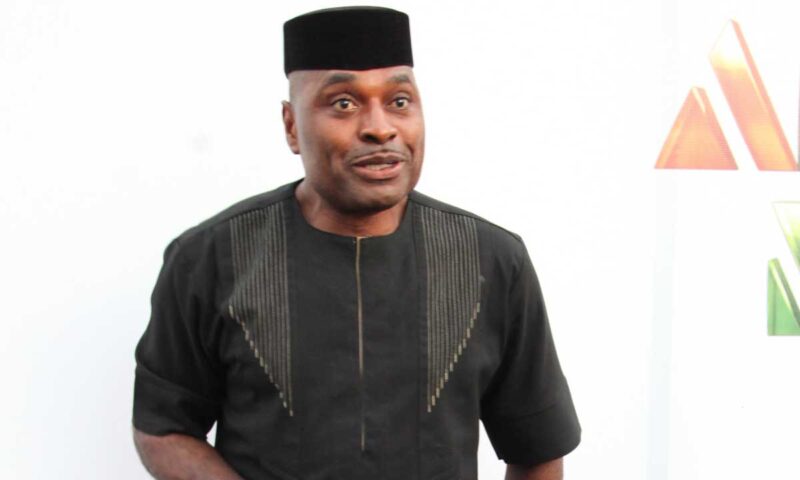
In 1992, Kenneth Okonkwo became a household name in Nigeria when he starred in the iconic Nollywood film “Living in Bondage”. His role as Andy Okeke, a man ensnared by the dark grip of ritualistic wealth, mirrored the struggles of many who sought prosperity but found themselves shackled by forces beyond their control. Decades later, Okonkwo found himself caught in another kind of servitude, political bondage within Nigeria’s Labour Party (LP). His recent resignation from the party can be seen as his real-life liberation, echoing his on-screen redemption.
At this juncture, it is reasonable to peep into the original bondage, “Living in Bondage”. The film, Living in Bondage, was a defining moment in Nollywood history, a movie that laid the foundation for the industry’s growth. Okonkwo’s character, Andy Okeke, symbolized the desperation of many Nigerians who, in the quest for success, made perilous sacrifices. Andy’s story was one of entrapment, he was deceived into joining a cult that promised wealth in exchange for an ultimate sacrifice: his wife’s life. The price of his ambition was heavy, and his prosperity turned into torment.
However, the film’s climax offered a path to redemption. Andy, after much suffering, found salvation through divine intervention and the strength to break free from his bondage. This resolution resonated deeply with many Nigerians who saw in Andy’s struggles their own battles against societal pressures and the consequences of morally compromising choices.
Beyond its entertainment value, Living in Bondage served as a cautionary tale, warning against the consequences of unchecked ambition and moral compromise. It remains a reference point in Nigerian pop culture, underscoring how desperation can lead individuals into situations they later regret.
Years after Living in Bondage, Okonkwo made another fateful choice, this time, in the political arena. In the 2023 elections, he aligned himself with Peter Obi’s Labour Party, becoming a vocal advocate for the ‘Obidient’ movement. His eloquence and passion made him one of the most visible spokespersons of the party, and for a while, it seemed he had found a new purpose in fighting for a better Nigeria.
Okonkwo’s move to the Labour Party was seen as a bold statement, especially considering his previous alignment with the ruling All Progressives Congress (APC). He positioned himself as a champion of the common man, speaking out against corruption, bad governance, and systemic failures in Nigeria. Many saw his transition as a sign of political rebirth, a man finally aligning with a cause that resonated with his values and those of the Nigerian people.
However, as time passed, Okonkwo’s relationship with the Labour Party soured. The very ideals that attracted him to the movement began to wane as internal party politics took a turn for the worse. Labour Party, once seen as a beacon of hope for change, became embroiled in factional conflicts, corruption allegations, and ideological inconsistencies. Okonkwo, who had once fought against tyranny and oppression in his movie roles, found himself ensnared in a different kind of bondage, political servitude.
His situation mirrored Andy Okeke’s dilemma in Living in Bondage, an initial promise of prosperity and change turning into entrapment. Just as Andy realized that wealth gained through dubious means came with a price, Okonkwo came to see that the Labour Party was not the sanctuary of democratic principles he had hoped for. He became increasingly vocal about his concerns, warning of the dangers of internal discord and the betrayal of the movement’s ideals.
Just days ago, Okonkwo made a bold move, announcing his resignation from the Labour Party. In his statement, he cited a departure from the core principles that initially drew him to the movement. He declared that he was breaking free from the chains of political hypocrisy and manipulation, much like Andy Okeke did in Living in Bondage.
His resignation sent shockwaves through the political landscape, as he had been one of the party’s most ardent defenders. Many wondered if his departure signaled deeper problems within the Labour Party, raising questions about its ability to remain a credible alternative to the dominant political parties in Nigeria. Others saw his exit as an act of courage, a refusal to be complicit in a system that did not align with his values.
Okonkwo’s decision also sparked debate about the nature of Nigerian politics. Is true political freedom even possible in a system rife with corruption, tribalism, and self-interest? His resignation suggests that breaking free from one form of bondage often leads to another set of challenges. It remains to be seen whether he will seek another political platform or chart an entirely new course outside the party system.
Without a doubt, there are lessons from Okonkwo’s Odyssey. The lessons can be found in his journey from theatric bondage to political bondage and now to self-declared liberation.
One of the several lessons learnt in his odyssey is that power structures are often restrictive. Whether in the world of Living in Bondage or the Nigerian political scene, those seeking power often find themselves entangled in unforeseen constraints. Okonkwo’s experience highlights the difficulty of maintaining independence within established systems.
Secondly, there is the lesson that liberation comes at a cost. In Living in Bondage, Andy Okeke had to endure suffering before finding redemption. In politics, breaking free from an oppressive system often means losing influence and platform. Okonkwo’s resignation from Labour Party is a sacrifice, but perhaps one necessary for his peace of mind.
Against the foregoing backdrop, one can opine that the Nigerian political landscape needs reform. This is as Okonkwo’s disillusionment with Labour Party is emblematic of a broader problem in Nigerian politics, parties that fail to uphold their own ideals. If a movement that prided itself on change and transparency could devolve into infighting and ideological drift, then the nation’s political structure is in dire need of reform.
In fact, Okonkwo’s resignation is a reminder that politicians should not cling to a party out of mere loyalty. When a party deviates from its values, individuals of integrity must make the hard choice to walk away.
At this juncture, the question begging for answer is “What’s next for Okonkwo?” The foregoing queston I no doubt pertinent as he steps away from Labour Party, and is at another crossroads. Will he join another political party, form a new movement, or focus on activism outside of traditional politics? Time will tell, but one thing is clear: he refuses to remain in bondage. His latest decision affirms that personal conviction should not be sacrificed on the altar of political loyalty.
For many Nigerians, Okonkwo’s journey is an allegory of their own struggles, aspiring for something greater but often finding themselves trapped in a system that demands compromise. Whether in politics, business, or personal pursuits, his story serves as a reminder that breaking free from any form of bondage requires courage, self-awareness, and a willingness to start anew.
In the end, just like Andy Okeke, Kenneth Okonkwo has declared, “I am free, I’m no more living in bondage”.