Africa
Fubara’s Leadership and the Inevitable Fall of IGP Egbetokun, by John Egbeazien Oshodi

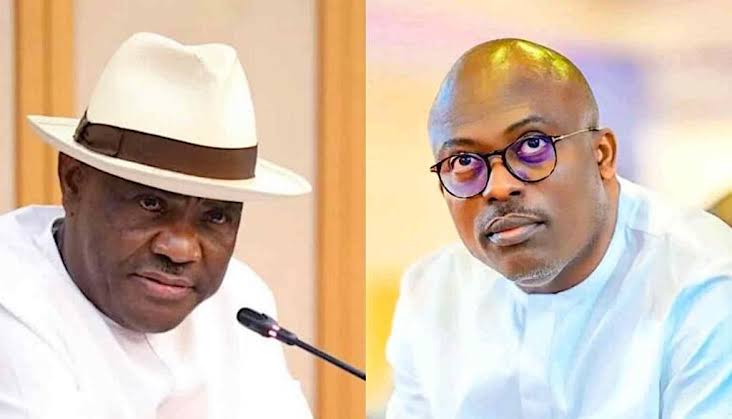
The political storm brewing in Rivers State has reached a boiling point, and at the center of it all is the embattled Inspector-General of Police (IGP), Kayode Egbetokun. His confrontation with Governor Siminalayi Fubara over the October 5, 2024, local government elections has exposed deep cracks in the relationship between federal authority and state autonomy. As tensions escalate and the governor continues his relentless attacks, it has become clear that the writing is on the wall for Egbetokun. His downfall is no longer a question of “if,” but “when.” Yet, despite the inevitability of his end, the final blow has not yet fallen. The painful conclusion to his reign as IGP is looming—an unavoidable consequence of the series of miscalculations, missteps, and mismanagement that have marred his tenure. Egbetokun’s fate is sealed, but the moment of his collapse, though imminent, remains just beyond the horizon.
Fubara’s Public Challenge: “We Have Been Taking Enough Nonsense”
It was only a matter of time before the steady accumulation of tension between Rivers State and the Nigeria Police Force reached a breaking point. That moment came when Governor Fubara himself stepped into the fray, taking the battle to IGP Egbetokun in a way that no other state leader had dared. On the morning of October 5, Fubara arrived at the Rivers State Independent Electoral Commission (RSIEC) offices to confront what he saw as an attempt by the police, acting under Egbetokun’s orders, to seize control of the state’s electoral process.
The governor’s frustration was palpable as he spoke directly to the media, signaling the start of what would become an all-out assault on the police leadership. “We came here this morning when we heard that the Nigeria police are coming to take over the premises of the Rivers State Independent Electoral Commission (RSIEC). I had to come myself to find out why such a thing would happen,” Fubara said. His words were more than just a reaction to the immediate situation—they were the first blow in what would become a sustained attack on Egbetokun’s authority.
Fubara’s frustration turned into a pointed critique of the Nigeria Police Force under Egbetokun’s leadership. “I have to say this on a very strong note. We have been taking enough nonsense from this institution,” the governor stated firmly. It was a message that carried the weight of years of perceived overreach, interference, and disrespect from the federal police toward Rivers State. In these moments, Fubara made it clear that he had no intention of backing down. His words marked the beginning of a campaign that would, inevitably, lead to the undoing of the IGP.
The Court Ruling Manipulation: “We Don’t Need Your Security”
The October 5 elections were not just about local governance—they were about control, autonomy, and the right of Rivers State to govern itself without interference. The controversy that erupted around the elections centered on a court ruling that the police, under Egbetokun’s orders, had used as justification for withholding security from the elections. However, Fubara was quick to expose the police’s manipulation of the court’s judgment.
“Everybody is aware of the court judgment. Did the ruling specify anywhere that the election should not be held?” Fubara asked, his voice dripping with incredulity. His question wasn’t just rhetorical—it was a direct challenge to the police’s authority and their interpretation of the law. Fubara’s point was clear: the police had overstepped, twisting the court’s ruling to suit their own agenda. The ruling had only barred the release of the voter register, but the police had taken it a step further by withholding security, effectively blocking the elections.
“It (judgment) said don’t give voter register. What are we doing with it? Police, don’t provide security. Is it the same thing as blocking the election?” Fubara continued, exposing the absurdity of the police’s position. His words cut through the fog of legal obfuscation that Egbetokun’s forces had attempted to create, revealing their actions for what they were: a blatant effort to interfere in the state’s electoral process.
In one of the most significant moments of defiance, Fubara declared, “We don’t need your security. We will provide our security.” This was more than just a statement of fact—it was a declaration of independence from federal control. With these words, Fubara signaled that Rivers State would not bow to federal intimidation. The police’s authority in the state had been not only questioned but also publicly undermined. This moment set the stage for what would become the inevitable downfall of Egbetokun, whose control over the Nigeria Police Force had been weakened by his inability to manage the crisis in Rivers State.
Fubara’s Unyielding Stance: “The Election Will Be Held, Results Will Be Declared”
As the standoff between the Rivers State government and the Nigeria Police Force intensified, Fubara’s resolve only grew stronger. Despite the police’s refusal to provide security for the elections, the governor remained adamant that the democratic process would go forward. In a statement that echoed his unyielding determination, Fubara declared, “Whatever you want to do, do it. The election will be held, results will be declared, and people will be sworn in.”
Fubara’s words were not just a reassurance to the people of Rivers State; they were a direct message to IGP Egbetokun. The governor was making it clear that he would not be cowed by federal pressure or intimidation. His declaration was a challenge to Egbetokun’s authority—a bold statement that Rivers State would not bend to federal overreach, no matter the consequences.
For Egbetokun, this moment represented a turning point. The IGP had been publicly defied by a state governor, and his response—or lack thereof—would determine the future of his leadership. Fubara’s words signaled that the battle for control over Rivers State’s elections was far from over. The governor’s defiance had placed Egbetokun in an untenable position, where any action he took could further weaken his standing.
The Governor’s Personal Attack: “Enough is Enough”
It was clear that Fubara was no longer willing to play by the rules of political decorum. His next move was a direct, personal attack on IGP Egbetokun that left no room for ambiguity. In one of the most pointed speeches of his political career, Fubara confronted the IGP head-on, tearing into his leadership and accusing him of corruption and wickedness.
“When it comes to the issue of Rivers state, it becomes different. You are not ashamed of yourself. Enough is enough. I will be here. This (RSIEC) is my property. You don’t have any power whatsoever to bar me from entering it. Just try it,” Fubara declared, his words loaded with defiance and disdain. This was no ordinary political criticism—this was a full-blown confrontation. The governor was daring Egbetokun to take action, knowing full well that any such move could spell disaster for the IGP’s already fragile leadership.
Fubara didn’t stop there. He went on to accuse Egbetokun of being not just an ineffective leader, but a corrupt and fraudulent one. “That part of your history as a very wicked and fraudulent inspector-general will include shooting Fubara,” the governor declared, painting Egbetokun as a figure willing to go to any lengths to maintain control, even if it meant violence against a state governor. This direct accusation was a devastating blow to Egbetokun’s credibility and moral standing, further isolating him from both the public and political elite.
The Governor’s Final Defiance: “Anything That Wants to Happen, Let It Happen”
As the tension reached its peak, Governor Fubara issued a final, defiant proclamation that would seal the fate of IGP Egbetokun. In a message that left no room for compromise, Fubara declared that the elections would proceed no matter what obstacles were placed in his way. “I think I have given you enough respect. Let me tell all Rivers indigenes and everyone residing in Rivers state. The election will hold. Anything that wants to happen, let it happen,” Fubara said, making it clear that he was ready to face any consequences that might arise from his defiance.
These words were the final nail in the coffin for Egbetokun’s leadership. The IGP had been publicly challenged, humiliated, and defied by a state governor. His authority had been called into question not just in Rivers State, but on the national stage. For Egbetokun, the clock was now ticking. His end was bound to come, and though it had not yet happened, there was no longer any doubt that it would.
Since June 17, 2024, tensions in Rivers State have escalated as police deployed armed operatives at local government secretariats following the expiration of chairmen’s tenures. Protests erupted against unconstitutional tenure extensions for chairmen loyal to former Minister Nyesom Wike, with youths expressing support for appointments from Governor Siminalayi Fubara. A Rivers State High Court ruling invalidated the amended Local Government Law facilitating these extensions; yet, some chairmen refuse to vacate their posts, while Fubara has yet to announce new caretaker committee chairmen. Even when Fubara appointed the new caretaker committee chairmen, the IGP still locked up the local government secretariats to appease Wike and others.
Under IGP Egbetokun’s leadership, the police have visibly aligned themselves with Wike, using “group tensions” as an excuse for maintaining their presence in council buildings. Regardless of when he withdraws, Egbetokun’s undemocratic actions, which the governor himself called “wicked,” have already surfaced—particularly during elections when the police failed to protect voters. The police’s subservience to politicized Abuja court orders, rather than upholding democratic values, was unmistakable.
Laughably, police sealed government offices and abandoned voter protection, showing a clear bias. Now, with Wike’s loyalists still unsettled post-election, if any harm comes to the newly elected officials or councils, Egbetokun will be directly accountable. His open bias reveals not only his leadership’s ethical failings but also the broader danger of a police force that bends to political manipulation. This threatens to destabilize Nigeria’s young democracy and erodes public trust in law enforcement’s neutrality.
In the local government elections, the Action Peoples Party (APP) won nearly all 23 chairmanship positions. Many of these chairs and other members were formerly under the state PDP, but with Wike in control, they shifted to the APP and achieved victory, as announced by the Rivers State Independent Electoral Commission on October 5, 2024. Amusingly, even when the national PDP urged the former local government chairs to participate in the elections, they stubbornly stood by Wike.
The IGP’s Fate: The Fall That Will Happen
As the dust settles from the October 5 elections, the inevitable conclusion to IGP Egbetokun’s tenure draws closer. The governor’s unrelenting defiance and public attacks have left the IGP politically weakened, his authority eroded beyond repair. For President Tinubu and the federal government, the question is no longer whether to let Egbetokun go, but how long they can afford to keep him in office before the situation spirals further out of control.
Egbetokun’s downfall is bound to happen. His reign as IGP is nearing its end, though the final moment has yet to arrive. The stage has been set, the players have made their moves, and the outcome is all but certain. His tenure is a ticking time bomb—waiting for the final event that will bring about the inevitable fall.
The Nigerian Constitution clearly establishes that each state governor is the chief security officer of their respective state. Yet, in practice, police commissioners and even the Inspector-General of Police (IGP) often bypass and ignore this mandate, sidelining the governor’s authority. Governor Fubara, however, has proven that he not only understands his rights but is also willing to defend them publicly. His bold stance in the face of federal overreach shows a deep understanding of his constitutional role, and not even the President can deny the significance of this achievement. Fubara’s actions stand as a powerful democratic lesson for all governors, present and future, as well as for the heads of police and security agencies who might consider disregarding the rightful authority of state leaders.
IGP Egbetokun’s downfall is not a matter of if but when. His blatant disregard for constitutional principles has set his fate in motion, and his fall is inevitable. Time is running out, and soon his name will join the list of those who collapsed under their own corruption and disregard for democratic values. This is no time for the media to indulge in superficial praise—a game often played to pacify the public. Instead, Egbetokun owes Nigeria and Rivers State a sincere, public apology for his misconduct.
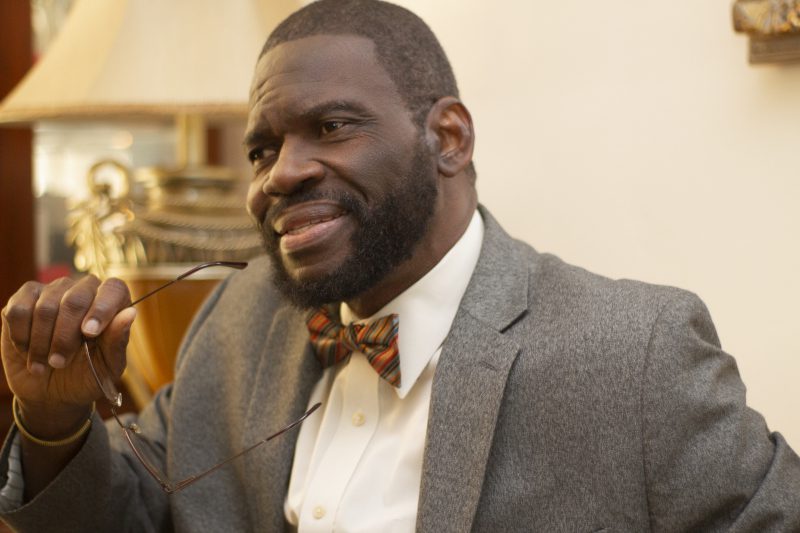
Professor John Egbeazien Oshodi, born in Uromi, Edo State, Nigeria, is an American-based police and prison scientist, forensic psychologist, public policy psychologist, and legal psychologist. He’s a government advisor on forensic-clinical psychological services in the USA and the founder of the Dr. John Egbeazien Oshodi Foundation for Psychological Health. With a significant role in introducing forensic psychology to Nigeria through N.U.C. and Nasarawa State University, he’s also a former Secretary-General of the Nigeria Psychological Association. He’s taught at esteemed institutions like Florida Memorial University, Florida International University, Nova Southeastern University, and more, and is currently an online faculty member at Weldios University, Nexus International University, and Walden University.