
Africa
Moral Dilemma of Religious Tomfoolery & Superstition, by Richard Odusanya

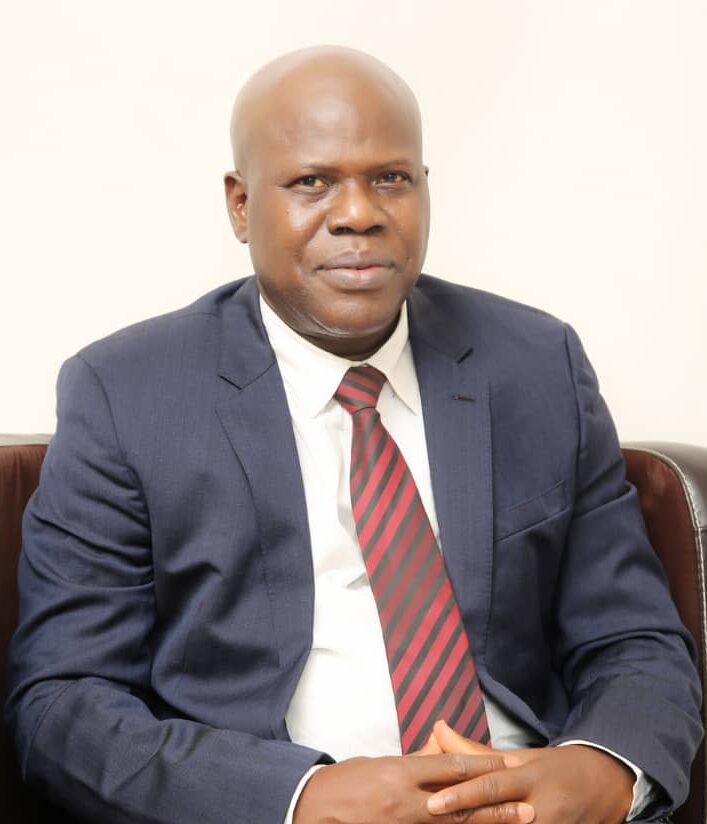
It is pertinent to begin by unequivocally positing that religion and spirituality are two different things. It would be a misnomer to call the organized religion prevalent in Africa today spirituality. African spirituality predates Christianity, Islam, and all other religions alien to Africa, Abrahamic or otherwise. As Prof. PLO Lumumba puts it, ‘Africans are spiritual because they believe and recognize that they are temporal beings and that there is a superior being.’ All over Africa, before the advent of organised religion, there had always been a belief in a superior being which is invariably referred to as a supreme being in various African languages and dialects.
The Igbos of Nigeria reverence this supreme being as Chukwu, which is a portmanteau of ‘Chi’ and ‘Ukwu’. Chi means God and Ukwu means big or grand or supreme. Hence, Chukwu loosely translates as the supreme God or the big God. Similarly, to the Yorubas, the supreme being is regarded as the Olofin-Orun, ‘Lord of heaven’, also he is Olodumare, ‘almighty’ and ‘supreme’. He is reverenced as the sky god, the discerner of hearts—’ he who sees the inside and the outside of man’. Among the Gikuyus of Kenya, Ngai (also called Murungu or Enkai) is the supreme god. In this manner, Africans expressed their spirituality and awareness of the existence of God and sought a path to him.
Today, religion-organized religion has replaced spirituality in Africa. The most blatant flaw of each of these religions is the sole claim to salvation and the path to God. It is also glaring how each religion positions itself as the last ‘bus stop’ for all problems – spiritual, financial, marital, mental, psychological, and otherwise. As humans are naturally in a perpetual search of solutions and answers, they embrace religion hopelessly. It is in this context that religion has become the web that Africa is trapped in. The web is so convoluted and sticky that development and growth are pursued not by deliberate planning but through fasting and prayer.
As Karl Max warned, religion is ‘the opium of the masses’. Indeed, the masses in Africa resort to religion in despair. But as we have seen time and again, the ‘masses’ that allow religion to cloud their minds and sense of judgment are not just the poor and lowly. The educated, sophisticated, and elite are also caught in this web of religious tomfoolery. The effect of this rather sad situation is felt in every aspect of life in Africa.
From the sword-swinging Crusaders of the Middle Ages to the 21st-century AK-47-wielding Jihadists, religion has always been a source of conflict. People have killed more in the name of God than they have for any other cause. Today, Africa is crawling with all sorts of religious groups and sects that hold extreme views and consider people who adhere to different religions as enemies that must be vanquished. Some sects and denominations threaten order and peaceful coexistence even within the same religious groups. One would run out of ink and paper if they attempted to chronicle religious conflicts that Africa has witnessed over the years. Yet some are worth mentioning.
In 2022, the gruesome murder of a student in Sokoto, northwest, Nigeria by a mob was reported. The student who was accused of ‘blasphemy’ was forcefully removed from the school security room, where she was hidden by the school authorities and killed by her fellow students. It is important to note that this act of vile barbarism was carried out by students in an institution of higher learning. If such savagery can happen in an environment where people should be acquiring the necessary knowledge to free themselves from fear, ignorance and superstition, then the future is bleak.
A number of the terrorist groups unleashing mayhem in Africa started as religious sects carved out from Islam. Bokoharam and Al-Shabaab are prime examples. The activities of these groups have brought about the deaths of thousands, if not millions of people and the destruction of properties worth millions of dollars. The less said about those being displaced and uprooted from their ancestral homes, the better.
There is ample evidence to suggest that there is a correlation between religion and poverty in Africa. Take the curious case of Nigeria. It is common to see four or five different churches housed within the same building. What goes on in these churches? Well, on weekdays, people gather to pray fervently for ‘unmerited favor’ and miracle money. Men and women in their prime jettison working and planning for their futures and embrace praying and fasting. And when the answers to their prayers take too long to come, they simply switch to the church on the next floor. And in this manner, people dig their graves as they descend even deeper into the abyss of poverty.
Africa is home to some of the wealthiest preachers on earth. Clerics are so wealthy that they make thieving politicians jealous. The obscenely luxurious lifestyle of these preachers is largely funded by the pennies squeezed out of their impoverished multitude of followers. The sermons of these prosperity preachers always bother on tithe and giving. And as the faithful give, the preachers accumulate enormous wealth, purchasing private jets and building schools and universities that 95 percent of members of their congregation cannot afford to send their children to.
If the excesses of these clerics were limited to just milking their flock dry, it would have been bearable. These charlatans hide under the umbrella of religion to commit all manner of crimes ranging from fraud, murder, human sacrifice, human trafficking, rape, torture, etc. In 2023, it was reported that over 400 people died in Kenya while engaged in fasting to meet Jesus. And just recently, the Nelspruit Sexual Offences Court in South Africa sentenced a 42-year-old pastor, Dumisani Khumalo, to life imprisonment for the rape of a 14-year-old girl in 2020.
Shocking as it may sound, the crimes and excesses of religious leaders are largely underreported, as in most cases, these nefarious activities are concealed by members of the congregation, believing it would bring the man of God and the church of God to disrepute. It usually takes years of observation and meticulous investigative journalism to unmask these criminals. The BBC documentary on Prophet TB Joshua is a typical example. As expected, the public affairs director of the Synagogue Church of All Nations (SCOAN) dismissed the BBC documentary as an agenda to rubbish the indelible footprints of TB Joshua’s legacies. The Nigerian government has yet to react to any of the gross violations of human rights revealed in the documentary.
The deviation of Africa from spirituality to religion has brought about more ignorance, superstition, fear, and poverty. This is supremely sad, today, we live in an Africa where people die of treatable diseases merely because their pastors prescribe faith instead of medicine. Religion has been weaponized by politicians as a means of dividing the people and keeping them perpetually occupied, even as they loot the national treasury. During elections, people largely vote according to their religious affiliation. Competence, capacity, and pedigree mean little or nothing at the polls.
Simply put, now is the time for Africa to wake up and unshackle herself from the yoke of religious tomfoolery. No developed nation prayed, or fasted or ‘tithed’ their way to national development and economic emancipation. We must begin to use our God-given sense to think outside of the box and proffer solutions to our collective problems. The belief that religion is the elixir for all our problems is false. As the Bible points out, we are created in God’s image. Hence, we should be able to create opportunities and solutions and quit praying to God to provide things that, with proper planning and hard work, we can provide for ourselves.
Finally, permit me to conclude this contribution about the Moral Dilemma Of Religious Tomfoolery and Superstition with the provocative words of Myles Munroe, a Bahamian evangelist and ordained minister, professor, author, speaker, and leadership consultant. Munroe, remarked as follows: “Stop asking God to send someone to heal your country” Put succinctly, Myles Munroe was speaking on the subject of prayer and governance.
Richard Odusanya


























You must be logged in to post a comment Login