
Africa
Geopolitics Influencing China’s African Policy ,by Kestér Kenn Klomegâh

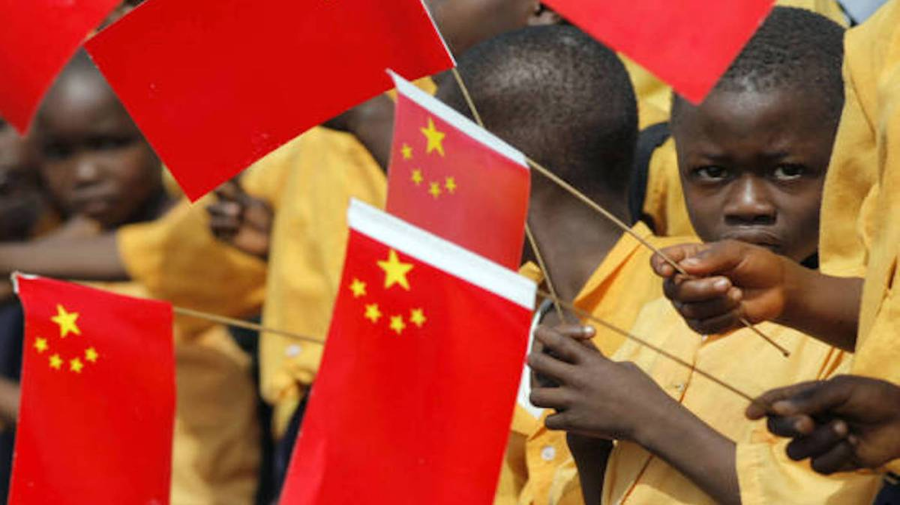
The Forum on China-Africa Cooperation, held in Beijing, was the grandest summit in China during the past few years, with 53 African Heads of State and Governments, African and Chinese business executive and entrepreneurs. China’s increasing influence on the continent, in terms of wedging its extensive economic power and widened trade links, it was designed to show its strategic implications, and largely as part of China’s high-stakes rivalry with the United States for influence in Africa.
China’s leader Xi Jinping playing the lavish host to leaders from Africa early September 2024 — burnishing its economic power, and speeches and discussions without anti-Western sentiments and without disparaging rhetorics. China declared summit theme was titled: “Joining Hands to Advance Modernization and Build a High-Level China-Africa Community with a Shared Future.”
In his 10-minute speech, China’s leader Xi Jinping outlined 10 action areas for cooperation over the coming three years, including infrastructure connectivity, trade, security and green development – an area where Beijing is widely seen as pushing to enhance its exports of green technology.
At the summit, Chinese leader promised to create one million employment places for Africans, China would flash out nearly $51 billion over the next three years, including $30 billion in credit lines, $10 billion in investment by Chinese enterprises. In Dakar, Senegal, China offered $30 billion, lower than the $60 billion pledged previously in 2015 to 2018. Undoubtedly, China is the world’s leader in green technologies, and logically it is looking to extend this technology to Africa, it is a highly-recognizable potential market for its exports but currently face growing curbs in the United States and elsewhere.
After the opening ceremony, the African and Chinese delegates adopted the Beijing Declaration – the Beijing Action Plan for 2025-2027. China is now Africa’s biggest trading partner, with bilateral trade reaching $167.8 billion in the first half of this year, according to China’s state media.
More the two decades of its relationship with Africa, China timely moved into Africa after the sudden exit of Russia and have stayed practically focused with development and economic initiatives. For over a decade, China has invested more than $120 billion in government-backed loans through its Belt and Road Initiative (BRI) across Africa, funding hydropower plants, roads, and railways. China noticeable achievements almost in sectors deemed important by Africa. Summit pledges have been fulfilled and various aspects of declarations observed. That has made Africa to consider China “a reliable partner” these several years.
Despite complicated challenges, China has an enduring geopolitical interest in Africa. At least, China has already left a monumental infrastructure in every African countries: roads, bridges, sport stadiums, school buildings, hospitals, factories and government buildings. It has also provided training and education to thousands of African youth and women, and upgrading professional skills of civil servants from government ministries across Africa.
With its rapidly growing population of 1.4 billion people and abundant natural resources, Africa is strategically important to the U.S., Europe and Asian countries and other global powers. As it opened the new chapter on September 5th, an inspiring speech indicated China was looking carefully for navigating a new landscape, balancing the need for infrastructure development with the risk of further debt. But for now onwards China’s shifting focus, this time targeting bigger profits and fewer complications and African-debt-ridden accusations, would be as follows:
(i) China would further open its market to African agricultural products from Africa, and exempted from tariffs. In this development, it promises agricultural investment funds.
(ii) China plans to carry out 30 infrastructure projects across the continent as part of its Belt and Road initiative, which has been criticized as saddling African countries with heavy debts. In addition to 30 infrastructure connectivity projects, it would start 30 clean energy projects in Africa, cooperate on nuclear technology to tackle power deficits which hinders industrialization.
(iii) China would shift away from such mega-projects, and plans to promote approximately 1,000 small- and medium-scale projects across Africa.
(iv) China plans further to invest heavily public-private partnerships, and support localizing Chinese enterprises in Africa.
African leaders have welcomed China’s assistance but are pushing for a closer alignment of aid with the continent’s development goals. They are seeking to industrialize their economies and expand agricultural exports to reduce a trade deficit with China, which has become sub-Saharan Africa’s largest bilateral trading partner.
“In the context of our industrialization effort, the portfolio of private investments in Africa should be sufficiently diversified to extend beyond the traditional field of mining and energy resources,” Moussa Faki Mahamat, the chair of the African Union Commission, said, addressing the forum in French.
China is not seen by analysts to be the main cause of African debt distress in most cases, as countries also owe huge sums to multilateral banks and private lenders. But its hefty loans have upped debt burdens and Beijing has been criticized for not moving quickly enough or being flexible in helping distressed or at-risk countries.
“With the intensification of this great power competition with the United States, China is coming to the realization that it has to rely on the Global South as the foundation for its diplomacy,” said Yun Sun, director of the China program at the Stimson Center think tank in Washington. “The choice of African countries in this great power competition is becoming more important than ever, because Africa is such a big block in the Global South.”
As China and Africa already entered this new phase of their relationship, Beijing remains the best partner for large-scale projects, for economic development and trade, while ensuring that the new partnerships would yield expected tangible benefits and ultimately shape the common future of China-Africa relations for years ahead.





















You must be logged in to post a comment Login