
Africa
Goodluck Jonathan’s Second Coming: A Return To Weakness, Waste, And Woe -By Vitus Ozoke, PhD
Jonathan’s biggest sin, however, wasn’t just corruption — it was weakness. He wasn’t in charge. Everyone knew it. His ministers ran rings around him. His political godfathers pulled the strings. The cabals called the shots. Jonathan wasn’t leading Nigeria; he was watching from the sidelines. A president who cannot say “No” to his friends will always say “Sorry” to his people. And Jonathan’s Nigeria was one long apology — a helpless shrug from a man clearly overwhelmed by the magnitude of the office he held.

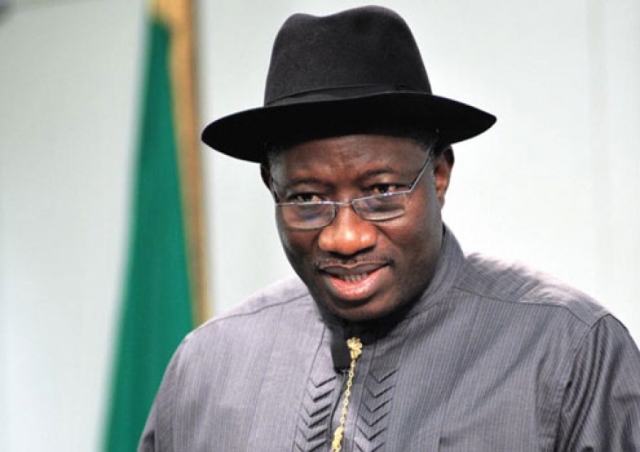
So, Goodluck Jonathan is said to be eyeing a return to Aso Rock — again. You almost have to admire the audacity. The man who presided over one of the most rudderless, corrupt, and visionless administrations in Nigeria’s democratic history now thinks he deserves a second bite of the apple. It’s almost comical, if it weren’t tragic.
Let’s be clear: there was a reason Goodluck Ebele Jonathan was booted out of office in 2015. He didn’t lose because Nigerians suddenly fell in love with Muhammadu Buhari. He lost because his government had become a byword for chaos, corruption, and crippling indecision. His reign was a tragic experiment in what happens when a man with neither backbone nor boldness is handed the keys to a volatile, complex nation like Nigeria.
Jonathan governed like a man afraid of his own shadow. He was perpetually “consulting,” constantly “studying the situation,” and forever “setting up committees.” Meanwhile, Nigeria burned. Under his watch, Boko Haram morphed from a ragtag group of extremists into a full-blown terrorist army, capturing territories, overrunning military bases, and hoisting their black flags over Nigerian towns.
The Chibok incident occurred under Jonathan, and his initial reaction was one of denial, dithering, and deafening silence. While young girls were being kidnapped and the world screamed #BringBackOurGirls, Jonathan and his kitchen cabinet were busy politicking and accusing opposition voices of exaggeration. Leadership failure doesn’t come more glaringly.
But it wasn’t just security. The Jonathan years were a festival of corruption. Billions of dollars vanished into thin air — oil revenue unaccounted for, subsidy scams that would make Hollywood blush, and a central bank governor (Sanusi Lamido Sanusi) who blew the whistle and got the boot for daring to speak the truth. The fuel subsidy racket under Jonathan was legendary — a gravy train for cronies and cartels who laughed all the way to foreign banks while ordinary Nigerians queued for petrol.
The 2012 fuel subsidy fiasco, which triggered mass protests across the country, was a symbol of everything wrong with Jonathan’s government — tone-deaf policy, confused communication, and total detachment from the realities of ordinary Nigerians. And when the dust settled, the same subsidy regime he sought to reform became even fatter, darker, and leakier.
And who can forget the farce of the Transformation Agenda? It was all slogan, no substance. Ministers and Special Advisers and Assistants turned their portfolios into private estates. Contracts were inflated, accountability evaporated, and governance was reduced to a “share-the-money” circus. It was chop-I-chop governance, pure and simple — a cash-and-carry carnival masquerading as democracy. The barn door was wide open, and the hyenas had a feast.
The Jonathan era was the golden age of impunity. Everyone dipped their hands into the till — from fuel marketers to politically connected businessmen, from civil servants to security chiefs. When whistleblowers tried to raise an alarm, they were hounded, suspended, or smeared. Under Jonathan, corruption wasn’t an aberration — it was the operating system.
Jonathan’s biggest sin, however, wasn’t just corruption — it was weakness. He wasn’t in charge. Everyone knew it. His ministers ran rings around him. His political godfathers pulled the strings. The cabals called the shots. Jonathan wasn’t leading Nigeria; he was watching from the sidelines. A president who cannot say “No” to his friends will always say “Sorry” to his people. And Jonathan’s Nigeria was one long apology — a helpless shrug from a man clearly overwhelmed by the magnitude of the office he held.
And then there was Dame Patience. Lord, have mercy! Her theatrical antics would’ve been comic relief if they weren’t a national embarrassment. From her infamous “na only you waka come?” meltdown to her open meddling in affairs of state, Dame Patience turned the Presidency into a reality show. She strutted, she scolded, she sermonized, often in pidginized parables that left Nigerians laughing through their pain. She was a spectacle, yes — but also a symbol of the unseriousness that plagued that administration.
But perhaps Jonathan’s most glaring flaw was his chronic lack of judgment — his inability to read the room or recognize when the tide has turned. If he truly believes that Nigeria in 2025 is the same as Nigeria in 2015, then he has learned nothing. The political landscape has shifted dramatically. The days of recycled candidates and cash-for-vote politics are waning. Nigerians, especially the youth, are done with the politics of “lesser evils.” A new consciousness has emerged — one driven by integrity, competence, and accountability.
Peter Obi, despite all the attacks and dismissals he has faced from the old guard, has reset the standards of public expectation. His demonstrable integrity, discipline, and technocratic clarity have become benchmarks against which future leaders will be measured. The OBIdient movement is not just a political fan club — it’s a generational awakening. It is the collective determination of Nigerians to rescue their country from both present and past incompetence. Jonathan, of all people, should understand that he no longer fits the mold. The era of the “Otuoke boy with no shoe” playing the role of accidental messiah is over. Today’s Nigerians are not seduced by humble origins but by honest governance.
And speaking of origins, how times have changed. The once shoeless Otuoke boy has since become a real estate mogul — his post-presidency portfolio glittering with hotels, estates, and choice properties across Bayelsa and beyond. His wealth today is a walking contradiction to the narrative of the modest servant-leader he once sold to Nigerians. His metamorphosis from a village boy into a millionaire landlord might make for a great Nollywood script, but it’s a terrible résumé for a man seeking to reclaim public trust. Nigerians are not going back to that level of impunity and unearned opulence.
It is true — Jonathan’s successors, Late Muhammadu Buhari and Bola Tinubu, have turned out to be monumental disappointments in their own right. But that’s not an argument for amnesia. We cannot allow nostalgia for a failed leader simply because worse failures followed. Returning to Jonathan is not “turning back to the good old days.” It’s going back to a time of drift, dysfunction, and directionless governance.
Nigeria cannot afford another round of sentimental recycling — dusting off old names simply because new ones have failed. The problem is not just the faces; it’s the mindset. And Jonathan’s mindset was one of appeasement, not accountability; reaction, not reform; survival, not strategy.
We need leaders with vision, courage, and clarity — not those who float through office like startled tourists, clutching prayer books while their lieutenants loot the treasury. Jonathan had his chance. He squandered it. History gave him the opportunity to be great, but he chose to settle for comfort instead.
Goodluck Jonathan’s presidency was a cautionary tale — a lesson in what happens when luck replaces leadership. Nigeria must not make the same mistake twice.
Dr. Vitus Ozoke is a lawyer, human rights activist, and public commentator based in the United States.

























You must be logged in to post a comment Login