
Politics
Governor Adeleke Could Be Reelected, Thanks to Senator Fadahunsi’s Threats, as His Words Turn the Osun Election Into a Global Watch -By Professor John Egbeazien Oshodi
Senator Fadahunsi may therefore have accomplished something no Adeleke campaign strategist could easily purchase with advertising money: he may have helped transform the Osun governorship election into a global democratic watch.

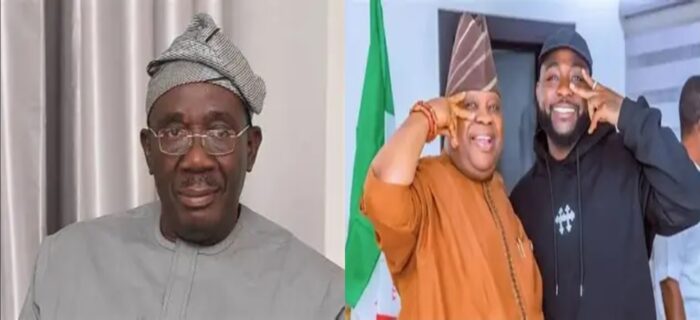
I have never personally met Senator Francis Fadahunsi, Governor Ademola Adeleke, or Davido. My interest is not partisan or personal. My concern is strictly with democracy, peaceful elections, responsible political behavior, and the psychological and criminal-justice consequences of threatening political rhetoric.
Sometimes in politics, an attempt to weaken an opponent produces precisely the opposite result. A threatening statement intended to frighten political opponents can mobilize them. Words intended to demonstrate political strength can reveal vulnerability. And rhetoric designed for a local audience can suddenly travel across national borders, attracting precisely the international attention that political actors would rather avoid.
This may be what Senator Francis Fadahunsi has unintentionally accomplished in Osun State.
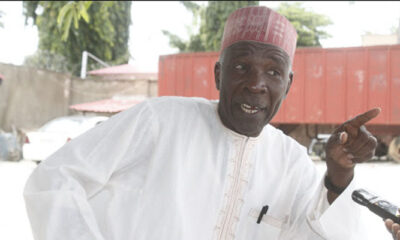
According to reports surrounding a widely circulated video, Senator Fadahunsi, representing Osun East, allegedly warned supporters of the Accord Party against coming near Ilesa and reportedly used language suggesting deadly consequences if they were seen. Reports also attributed threatening language toward traditional chiefs accused of supporting the Accord Party. These allegations have emerged amid broader accusations of intimidation, arrests, attacks, and political violence surrounding the Osun contest.
This is not ordinary political language.
From a psychological and behavioral perspective, threatening rhetoric during a tense election must be examined beyond the personality of the individual speaker. I am not diagnosing Senator Fadahunsi, nor should political disagreement be converted into amateur psychological diagnosis. The more important question concerns the behavioral effects of words spoken by a powerful political figure.
Political leaders function as behavioral models. Their supporters listen not only to their policies but also to their emotional tone, choice of language, and definitions of who should be regarded as an adversary. When leaders communicate restraint, followers receive one kind of social signal. When leaders speak in language that can reasonably be understood as legitimizing retaliation or violence, they send another.
This is where social psychology becomes important.
People behave differently in groups than they sometimes would individually. Political crowds can intensify emotion, strengthen identification with an in-group, and sharpen perceptions of an opposing group as threatening. Under conditions of fear, anger, competition, and uncertainty, inflammatory rhetoric can further reduce psychological distance between thinking about violence and acting upon it.
A senator therefore cannot speak as though he were merely another excited person standing in a crowd. Political power magnifies language.
The higher the office, the heavier the words.
The Walk-Back Cannot Erase the First Message
The political difficulty becomes even greater when threatening words are recorded.
In an earlier political era, controversial remarks delivered before a local audience might have disappeared when the rally ended. That world is gone.
There are smartphones everywhere. There are social-media platforms. There are Nigerians throughout Europe, North America, Africa, Asia, and the Caribbean who can receive a political video within minutes. There are journalists, diplomats, researchers, election observers, human-rights organizations, and members of the Nigerian diaspora watching events in real time.
Once a political statement enters that digital environment, its speaker loses control over its destination.
A later clarification may explain intention, but it cannot erase what millions of people may already have heard.
That distinction matters here because political damage control appears to have followed the controversy. Yet psychologically, the first message frequently carries exceptional power. People remember dramatic, emotionally charged information. A subsequent explanation competes against the images, words, and emotions already stored in public memory.
In other words, you cannot easily put a viral statement back into the mouth of the speaker.
The Greatest Political Irony: Adeleke Could Benefit
Here lies the extraordinary political irony.
Senator Fadahunsi’s alleged words may ultimately help Governor Ademola Adeleke more than hurt him.
That does not mean the election outcome can be predicted from one incident. Elections involve party organization, turnout, public attitudes, candidates, local issues, economic conditions, electoral administration, security, and many other variables.
But politically, threatening rhetoric associated with one side can produce a powerful backfire effect.
Voters who were undecided may begin asking why threats are necessary.
Opposition supporters who were discouraged may become more determined to vote.
Citizens who were politically indifferent may become interested.
Journalists who were watching casually may begin watching closely.
Security agencies may face increased pressure to demonstrate neutrality.
And international observers may pay closer attention to events that otherwise might have received limited attention outside Nigeria.
This is how intimidation can become mobilization.
The senator may have attempted to communicate political dominance, but the psychological result could be increased sympathy for those perceived as targets of intimidation.
Osun Is No Longer Merely Being Watched From Osun
Another development makes this particularly significant.
Nigerian musician Davido publicly appealed to the United States and the broader international community to monitor the election because of concerns about possible violence and intimidation.
Combine such an appeal with viral footage involving a sitting federal lawmaker, and the psychological meaning of the election changes.
What might have remained a state political contest becomes part of a larger conversation about democratic credibility.
The world does not need to physically stand at every polling unit to watch an election anymore.
Phones are observers.
Cameras are observers.
Citizens are observers.
Diaspora communities are observers.
Social media has created millions of unofficial election monitors.
This means politicians must understand a new reality: local political behavior can have global consequences within minutes.
Threatening Political Language Is Also a Criminal-Justice Concern
As a criminal justice specialist, I am especially concerned about the normalization of violent language surrounding elections.
Law enforcement should never have to determine which political party’s threat deserves attention.
The standard should be behavior.
Political violence must not become acceptable because the person speaking belongs to the ruling party, the opposition, a major party, or a minor party.
The police and other security institutions have an obligation to protect Nigerians regardless of political affiliation. Traditional rulers, campaign workers, journalists, election officials, voters, and ordinary residents must be able to participate in democratic life without fearing retaliation.
Equally important, allegations must be investigated fairly. A viral video should be examined in its full context. Statements should be accurately translated where necessary. The speaker should have an opportunity to explain what was intended. Witnesses and available evidence should be considered.
Accountability must never become political vengeance.
But neither should political influence become immunity.
Leadership Requires Emotional Restraint
There is another psychological issue here: emotional regulation.
Leadership is tested most severely when emotions are highest.
Anyone can appear democratic when winning comfortably. Democratic character becomes visible when political competition becomes threatening, frustrating, uncertain, and personal.
A political leader must possess the ability to experience anger without converting anger into dangerous rhetoric.
That is not weakness.
That is psychological discipline.
A senator occupies one of the highest legislative offices in Nigeria. Such an individual should be lowering the emotional temperature of an election, not contributing to an atmosphere in which citizens wonder whether political disagreement could place their lives in danger.
Political leaders should be able to tell supporters:
Vote.
Organize.
Campaign.
Persuade your neighbors.
Protect your ballots lawfully.
Report irregularities.
But do not attack another Nigerian because that person supports another candidate.
That is democratic leadership.
Political Parties Must Police Their Own Rhetoric
Nigeria’s political parties also have responsibilities beyond winning elections.
When controversial rhetoric comes from within a party, the institution should not automatically treat criticism as an attack requiring partisan defense.
Sometimes the strongest demonstration of institutional maturity is simply saying: this language does not represent us.
That principle should apply to every Nigerian political party.
APC.
PDP.
Accord.
Labour Party.
Every party.
If democracy means anything, it means that political opponents remain citizens after Election Day.
Today’s opponent may be tomorrow’s coalition partner, neighbor, senator, governor, minister, or president.
Political competition cannot therefore be transformed into psychological warfare against entire communities.
The Camera Has Changed Nigerian Politics Forever
Senator Fadahunsi’s controversy teaches Nigerian politicians another lesson that many still appear reluctant to accept.
There is almost no such thing as a private political rally anymore.
Somebody is recording.
Somebody is streaming.
Somebody is forwarding.
And somewhere outside Nigeria, somebody may be watching.
The smartphone has become one of the most powerful accountability instruments in modern democracy.
This changes political psychology because leaders can no longer easily maintain one message for supporters and another for the broader public. A statement delivered emotionally before loyalists can appear on international screens before the politician has even left the venue.
The distance between Ilesa and Washington, London, Ottawa, Brussels, Johannesburg, or anywhere else is now measured in seconds.
The Election Must Belong to the Voters
Ultimately, Osun citizens must determine their governor.
Not threats.
Not intimidation.
Not political violence.
Not powerful personalities.
The voters.
If Governor Adeleke deserves reelection, Osun voters should decide that peacefully.
If another candidate deserves to replace him, Osun voters should decide that peacefully.
Democracy becomes meaningless when citizens enter polling stations wondering whether choosing the “wrong” candidate could expose them to retaliation.
Whatever Senator Fadahunsi intended, the controversy surrounding his reported remarks has created consequences extending far beyond one political gathering. It has provided opponents with an argument, journalists with a story, citizens with a reason for concern, and international audiences with another reason to watch Osun closely.
And therein lies the remarkable political paradox.
An attempt to project strength may have exposed weakness.
An attempt at intimidation may increase turnout.
An attempt to frighten opponents may strengthen their determination.
And words apparently aimed at hurting Governor Adeleke’s political prospects may ultimately contribute to the conditions that help him.
Senator Fadahunsi may therefore have accomplished something no Adeleke campaign strategist could easily purchase with advertising money: he may have helped transform the Osun governorship election into a global democratic watch.
Whether Adeleke is reelected remains entirely for the voters to decide.
But one thing has already changed.
The world has been given a reason to watch.
About the Author
Professor John Egbeazien Oshodi, PhD, is an American forensic and clinical psychologist, policing and corrections expert, criminal justice educator, researcher, author, and public scholar. His expertise spans forensic, legal, clinical, cross-cultural, and organizational psychology, criminal behavior, public safety, leadership, public ethics, governance, and institutional accountability.
A native of Uromi, Edo State, Nigeria, and son of a 37-year veteran of the Nigeria Police Force, Professor Oshodi has devoted his career to the intersection of psychology, justice, education, public policy, and institutional development. In 2011, he helped introduce advanced forensic psychology into Nigerian higher education through the National Universities Commission and Nasarawa State University, Keffi, where he served as Associate Professor of Psychology.
He teaches at Nova Southeastern University and Walden University and serves as Visiting Virtual Professor of Forensic and Clinical Psychology at Nasarawa State University, Keffi, Nigeria. He is also President and Chief Psychologist of the Oshodi Foundation, Center for Psychological and Forensic Services, United States.
Professor Oshodi is a Black Republican in the United States but belongs to no political party in Nigeria. His scholarship and public commentary are independent and guided by justice, constitutional democracy, good governance, institutional accountability, ethical leadership, and Africa’s sustainable development.
He is the founder of Psychoafricalysis (Psychoafricalytic Psychology), a culturally grounded framework integrating African sociocultural realities, historical consciousness, indigenous knowledge, and future-oriented identity into psychological science and practice.
Professor Oshodi has authored more than 1,000 articles, multiple books, and numerous peer-reviewed publications on forensic and correctional psychology, policing, criminal justice, mental health, higher education, democracy, governance, and African development. His work with Africans, the African diaspora, and culturally diverse populations in the United States and internationally continues to inform his advocacy for culturally responsive psychology, ethical leadership, stronger institutions, and evidence-based public policy.





















You must be logged in to post a comment Login