Forgotten Dairies
Has Beijing become the New Jerusalem of Global Diplomacy? -By John Kokome
So, has Beijing become the New Jerusalem of diplomacy? Not quite. But it is fast becoming something arguably more consequential in modern terms: a central node in a multipolar world where influence is negotiated, rather than ordained. Unlike Jerusalem’s spiritual magnetism, Beijing’s pull is strategic, calculated, and deeply embedded in the realities of 21st-century power.

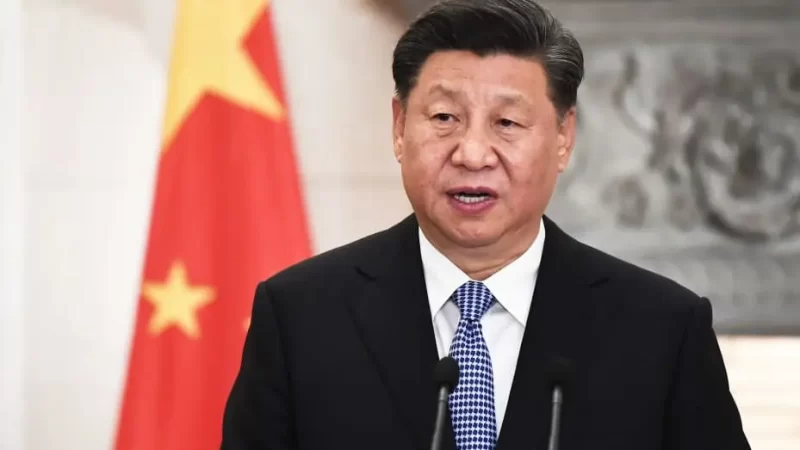
In ancient times, Jerusalem stood not only as a sacred centre of faith but also as a symbolic crossroads of power, pilgrimage, and politics. Kings, prophets, and empires gravitated toward it, not merely for worship, but for influence. Today, a provocative question emerges in diplomatic circles: has Beijing assumed a similar gravitational pull in global geopolitics?
The recent high-profile visits by Donald Trump and Vladimir Putin, two figures emblematic of nationalist resurgence and geopolitical recalibration, have reignited this conversation. While their motivations differ, the symbolism is striking: both men, representing competing or controversial visions of global order, have found it necessary to engage Beijing at a time when traditional Western diplomatic centres appear less dominant.
For decades, cities like Washington, D.C., London, and Brussels have been the epicentres of global diplomacy. Decisions taken in these capitals shaped economic systems, security alliances, and ideological alignments. However, the 21st century is witnessing a gradual but undeniable shift. Beijing is no longer just a participant in global affairs; it is increasingly the arena where the world’s most consequential conversations unfold.
China’s rise is, of course, central to this transformation. Under Xi Jinping, the country has pursued an assertive foreign policy, anchored by initiatives like the Belt and Road and a strategic expansion of its diplomatic footprint across Africa, Asia, and Latin America. Beijing’s appeal lies in its ability to engage across ideological divides, hosting democratic leaders, authoritarian regimes, and everything in between, often without the normative conditions that Western capitals tend to impose.
The visits by Trump and Putin illustrate different but converging realities. For Putin, Beijing represents a critical lifeline amid Western isolation. As Russia recalibrates its global alliances, China offers both economic partnership and geopolitical cover. For Trump, who remains a potent force in American politics, engagement with Beijing signals recognition of China’s centrality, regardless of adversarial rhetoric. In both cases, Beijing becomes unavoidable.
Yet, to liken Beijing to Jerusalem is to suggest more than influence; it implies a kind of diplomatic sanctity or inevitability. That may be an overreach. Unlike Jerusalem, whose significance transcends politics into the realm of identity and belief, Beijing’s rise is rooted in material power: economic might, technological advancement, and strategic leverage. Its influence is transactional, not transcendental.
Moreover, Beijing’s growing centrality raises complex questions. Is it a neutral convening ground, or a stage carefully managed to project Chinese interests? Can it truly serve as a global diplomatic hub when concerns about transparency, human rights, and strategic coercion persist? These tensions complicate the narrative of Beijing as a universal centre.
Still, perception matters in diplomacy. The optics of global leaders, especially those at odds with the West, making their way to Beijing reinforces a subtle but powerful message: the axis of engagement is shifting. In a fragmented world order, where multilateral institutions struggle and traditional alliances are under strain, countries are increasingly hedging their bets. Beijing offers an alternative pole, one that is pragmatic, resource-rich, and increasingly confident.
For emerging economies, particularly in Africa, this shift is especially significant. Nations are no longer compelled to look exclusively Westward for partnerships. Beijing’s rise expands the diplomatic map, creating new opportunities and new dependencies. The challenge will be navigating this evolving landscape without merely replacing one centre of gravity with another.
So, has Beijing become the New Jerusalem of diplomacy? Not quite. But it is fast becoming something arguably more consequential in modern terms: a central node in a multipolar world where influence is negotiated, rather than ordained. Unlike Jerusalem’s spiritual magnetism, Beijing’s pull is strategic, calculated, and deeply embedded in the realities of 21st-century power.
In the end, the metaphor may be imperfect, but the message is clear. If global diplomacy once had a single altar, it is now being replaced by multiple centres of gravity, and Beijing stands firmly among the most powerful of them.
John Kokome
A Communications Strategist and Public Affairs Analyst writes from Lagos
kokomejohn@yahoo.com