
Africa
How Sincere Are We When We Mouth “Though Tribe And Tongue May Differ, In Brotherhood We Stand” At Events? -By Isaac Asabor
Aptly put, the slogan must always match our Spirit. We must stop being ceremonial Nigerians. True patriotism is not just singing the anthem, it is living its values. Unity must move from our lips into our hearts and from our hearts into our institutions. The phrase “Though tribe and tongue may differ, in brotherhood we stand” must become more than a chorus, it must become our national culture. The foregoing is cautionary as we have from time to time over the years seen the damage that division brings. It is time we tasted the blessings that true unity offers.

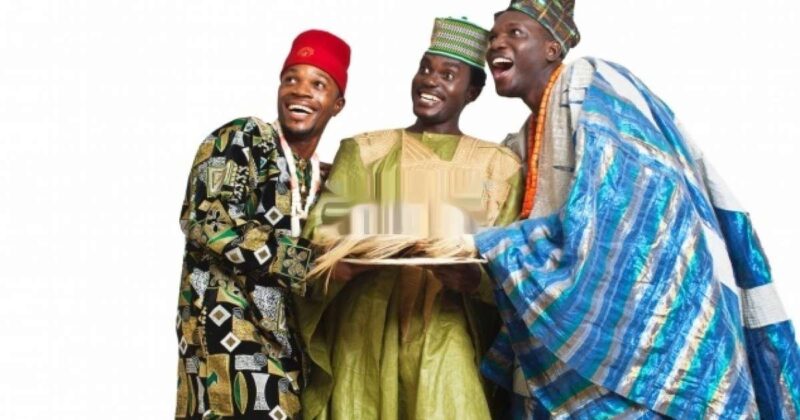
If there is one line that has echoed across generations, stamped into our national anthem and our collective consciousness, it is: “Though tribe and tongue may differ, in brotherhood we stand.” It is a noble ideal, meant to reflect Nigeria’s vision of unity amidst diversity. But decades after independence, that line increasingly sounds more like a ceremonial slogan than a sincere commitment.
We recite it at school assemblies, political rallies, state banquets, and award ceremonies. We use it to kick off unity conferences and close youth empowerment forums. Yet, outside those events, Nigeria remains a patchwork of ethnic suspicion, mutual distrust, and bitter divisions. The question is not whether we say it, the question is: Do we mean it? And more importantly, how can we begin to truly live it?
Let us face it: Nigeria is still more of a country of tribes than a united nation. From the way people vote, to the way they hire, to the way they trust, or do not trust others, everything is filtered through the lens of ethnicity and religion.
When crises erupt, Nigerians do not rally together as one people first; they quickly retreat into tribal camps. The first question many ask is not “What happened?” but “Which tribe was involved?” That alone shows how far we have drifted from the ideal of brotherhood. The dream of a Nigeria where every citizen is seen as simply Nigerian remains largely unrealized.
Every time that line is mouthed at public events, it carries with it a weight of responsibility, one we have largely failed to uphold. Speeches can inspire, but actions cement unity. The absence of inclusive policies, marginalization in federal appointments, ethnically divisive political rhetoric, and discriminatory practices in many states show that unity in Nigeria is often cosmetic.
If we are serious about brotherhood, it must reflect in how we structure our politics, our governance, and our daily lives. It should show in our hiring practices, our federal character compliance, and our respect for other cultures. Brotherhood should not end with the national anthem; it should begin there.
In fact, the lack of unity is not just a moral or emotional issue, it is a matter of national survival. Nigeria’s failure to build strong national cohesion has contributed to insurgencies, secessionist movements, ethnic clashes, religious crises, and a general mistrust that permeates society. How do you develop a nation when its people do not even trust one another?
Our security forces are overstretched largely because they are often deployed to calm tensions rooted in ethnic or religious grievances. Economic opportunities are lost because some investors fear instability. Talent is wasted because many Nigerians are denied opportunities simply because of where they come from or what language they speak.
We can no longer afford to keep patching the cracks with empty platitudes. We must start building genuine bridges, and the reason of the foregoing view is why we must embrace real unity now.
In fact, it is expedient for to unite because diversity is a strength, not a threat. Without a doubt, the very thing that we often fight over, tribe and tongue, is what should make Nigeria exceptional. Over 250 ethnic groups, each with unique cultures, skills, and traditions, give Nigeria a richness that many homogeneous countries envy. But instead of harnessing this as strength, we treat it as a threat.
For the sake of clarity, unity does not mean uniformity. We do not have to be the same to be united. What we need is mutual respect, shared values, and a commitment to fairness. That is what makes diversity powerful.
Because no region can build Nigeria alone, it is germane we unite. To this writer, we should unite “By Fire by Force” as a sect in the Christendom is wont to say.
Let us be blunt in this context: no region can develop Nigeria in isolation. The North needs the South; the South needs the East; the East needs the West. Oil from the Niger Delta cannot build a nation alone. Agriculture from the North would not build it alone either. Tech innovation from Lagos cannot take us all the way without collaboration.
Without a doubt, we need each other. Not out of sentiment, but out of necessity. Particularly as the youth are watching In fact, a dangerous consequence of our performative unity is the cynicism it breeds among the youth. They see politicians preach unity on TV but practice tribalism in appointments. They see national leaders attend interfaith events in the morning and endorse bigotry by night.
What kind of nation are we handing over to them? If young Nigerians continue to see the country as a place where your name, tribe, or religion determines your destiny more than your competence or character, then we are raising a generation that will see tribalism as a legitimate survival strategy, not a societal flaw.
This must change. The way forward is for us to build a brotherhood that goes beyond words. In fact, we need to move from slogan to substance, we must begin to take deliberate steps, and the strategies we must adopt in attaining unity and brotherhood should cut across the reformation of the Federal Character principle, enforcement of anti-discrimination laws, teaching of national history in schools, promotion of inter-ethnic dialogue and partnerships and holding leaders accountable for divisive rhetoric
Explanatorily put, rather than being a tokenistic check-box in recruitment, the federal character principle should be restructured to promote genuine inclusion. It must ensure that merit and diversity go hand in hand. The North, South, East, and West should all see themselves reflected in the nation’s leadership, not as tokens, but as stakeholders.
In a similar vein, states and local governments that deny certain ethnic groups access to land, jobs, or opportunities should face federal sanctions. There must be consequences for undermining national unity.
It is worrisome that many young Nigerians are growing up without a clear understanding of our collective history. Against the foregoing backdrop, it is not out of place to opine in this context that civic education and history should be reintroduced in schools, with strong emphasis on what unites us, not just what divides us.
From business to education, efforts must be made to encourage collaboration across ethnic lines. Inter-ethnic marriages, student exchanges, joint community projects, these small initiatives can rebuild trust and plant the seeds of unity.
Also, there should be an urgent need to hold leaders accountable for divisive Rhetoric. To attain the foregoing, any political or religious leader that fans the flames of tribal or religious hatred should be called out and held accountable. Brotherhood cannot thrive where hate speech is normalized.
Aptly put, the slogan must always match our Spirit. We must stop being ceremonial Nigerians. True patriotism is not just singing the anthem, it is living its values. Unity must move from our lips into our hearts and from our hearts into our institutions. The phrase “Though tribe and tongue may differ, in brotherhood we stand” must become more than a chorus, it must become our national culture. The foregoing is cautionary as we have from time to time over the years seen the damage that division brings. It is time we tasted the blessings that true unity offers.
Without a doubt, Nigeria is at a crossroads. The signs are everywhere as ethnic tensions, calls for secession, rising mistrust are here with us. But there is still time to reset the narrative. We can still reclaim that ideal of brotherhood, but only if we are intentional about it.
So next time we rise to our feet at a national event and chant, “Though tribe and tongue may differ, in brotherhood we stand,” let’s ask ourselves: Do I live this? Do I mean it? If not, then those words are nothing more than noise.


























You must be logged in to post a comment Login