Africa
How Tiwa Savage’s Knack For Afrobeats Changed The Rules -By Isaac Asabor
As Afrobeats continues its global ascent, there will be debates about its pioneers, its icons, and its defining figures. When that history is written honestly, Tiwa Savage’s name will not be an afterthought. She will be recognized as a foundational presence, an artist who insisted on staying, demanded respect, and altered the trajectory of Nigerian popular music by sheer force of endurance.

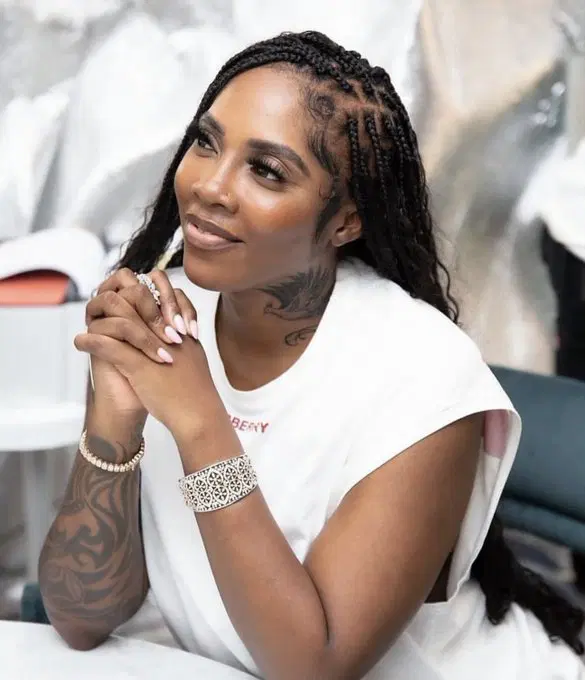
Afrobeats did not become a global force by accident. It grew out of years of experimentation, resilience, cultural confidence, and the stubborn refusal of Nigerian artists to be limited by local constraints or foreign expectations. While the global narrative often credits the genre’s rise to a handful of breakout male stars, that version of history is incomplete. It overlooks the role of women who fought to be visible, relevant, and enduring in an industry that rarely made room for them. At the centre of that overlooked story stands Tiwa Savage, an artist whose career has not only mirrored the evolution of Afrobeats but has actively reshaped it.
Tiwa Savage’s significance lies not merely in her success, but in the context of that success. She emerged in an industry that was structurally unfriendly to women, especially those who dared to aim for longevity. Female artists were often treated as seasonal attractions, celebrated briefly, then quietly sidelined. Tiwa disrupted that cycle, not through noise or gimmicks, but through preparation, clarity of purpose, and sustained excellence.
Her journey into Nigerian music was anything but conventional. Before she became a household name at home, Tiwa had already built a foundation abroad. With formal music education and experience as a backup singer for international acts, she understood the discipline, competitiveness, and business realities of a global music industry. That background gave her a crucial advantage when she returned to Nigeria: she was not learning on the job; she was executing a plan.
When Tiwa Savage broke into the Nigerian mainstream, it was immediately clear that she was different. Her early releases did more than secure airplay; they announced an artist with intent. Songs like “Kele Kele Love” and “Love Me (x3)” positioned her as a lead voice in a space where women were often written as supporting characters in male-centered narratives. She sang about love, desire, and vulnerability without shrinking herself or seeking permission. It was a subtle but powerful shift.
As Afrobeats evolved, Tiwa evolved with it, but never lost her centre. The genre itself has never been static. It has absorbed influences from hip-hop, R&B, dancehall, highlife, and more recently, amapiano. Many artists struggled to survive these shifts, falling out of relevance as trends moved on. Tiwa, however, demonstrated an intuitive understanding of adaptation. She did not chase trends blindly; she interpreted them through her own artistic lens. Whether delivering club-ready anthems or emotionally grounded Afro-pop records, she always sounded like herself.
That consistency is one of the most underrated elements of her success. In an industry obsessed with reinvention, Tiwa Savage showed that evolution does not require erasure. Her sound matured, her themes deepened, but her identity remained intact. This balance allowed her to appeal across generations, connecting with early fans while remaining accessible to younger audiences discovering Afrobeats in its global phase.
Perhaps Tiwa’s most radical act, however, was staying. Nigerian pop culture has historically been unforgiving to women who refuse to exit quietly. Marriage, motherhood, ageing, or public controversy has often marked the beginning of the end for female careers. Tiwa Savage confronted all of these realities in full public view, and refused to disappear. Her continued visibility challenged one of the industry’s most damaging assumptions: that female relevance has an expiration date.
By remaining present, competitive, and commercially viable, Tiwa changed the ecosystem. Today, Nigerian music boasts a strong lineup of female stars who operate with confidence, autonomy, and global ambition. While their success is their own, it exists within a landscape shaped by pioneers who absorbed the pressure before them. Tiwa Savage is central to that lineage. She helped normalize the idea that women can occupy the core of Afrobeats, not its edges.
Her influence is also deeply sonic. Tiwa’s voice carries emotional intelligence that sets her apart. In a genre driven heavily by rhythm and bravado, she brought feeling to the foreground. Her music often explores love, heartbreak, self-worth, and resilience, not as abstract themes, but as lived experiences. She can be tender without sounding weak, assertive without sounding forced. That balance has influenced how femininity is expressed in Afrobeats today.
On the global stage, Tiwa Savage represents a confident version of Nigerian artistry. Unlike earlier eras where international crossover often meant dilution, Tiwa exports Nigerian identity with minimal compromise. Her collaborations and performances abroad do not feel like attempts to impress; they feel like extensions of a career already validated at home. She arrives as a peer, not a novelty. That distinction matters in an industry that has historically eroticized African artists while controlling their narratives.
Equally important is Tiwa’s understanding of the business of music. Beyond talent, she has demonstrated strategic awareness, navigating record labels, brand partnerships, and international exposure with calculated intent. In an industry notorious for exploiting artists, especially women, her sustained leverage is a quiet form of power. She understands that relevance is not just cultural, but economic.
Tiwa Savage has also refused to conform to the industry’s expectations of silence. She has been outspoken, and openly human. Critics often seize on these moments to undermine her credibility, but that reaction reveals a deeper discomfort with female assertiveness. Male artists are celebrated for defiance; women are punished for it. Tiwa’s refusal to perform perfection has made her a target, but it has also made her real.
That authenticity is part of why her career resonates beyond music. Tiwa Savage represents a generation of Nigerian women navigating ambition in spaces that are still resistant to female authority. Her visibility, struggles, and resilience reflect broader social realities. She is not just an entertainer; she is a cultural symbol of persistence.
What Tiwa Savage has ultimately rewritten is expectation. She has expanded what is imaginable for women in Afrobeats, how long they can last, how powerful they can become, and how visible they can remain. She has shown that success does not require retreat, and that longevity does not demand silence.
As Afrobeats continues its global ascent, there will be debates about its pioneers, its icons, and its defining figures. When that history is written honestly, Tiwa Savage’s name will not be an afterthought. She will be recognized as a foundational presence, an artist who insisted on staying, demanded respect, and altered the trajectory of Nigerian popular music by sheer force of endurance.
In an industry built on rhythm, repetition, and rapid turnover, Tiwa Savage changed the pattern. She proved that women could be central to Afrobeats’ past, present, and future. And in doing so, she has permanently rewritten Nigeria’s Afrobeats story.