
Africa
HYPOTHETICAL – PHONE CALL TRANSCRIPT – Completely Fictional -By John Egbeazien Oshodi
This transcript is entirely fictional—a dramatized dialogue meant to capture the emotional, political, and constitutional weight of the Natasha Akpoti-Uduaghan standoff. It does not reflect real events, real conversations, or the views of any public officials. It is a symbolic representation of how power, pride, and principle might collide in the crucible of democratic reckoning.

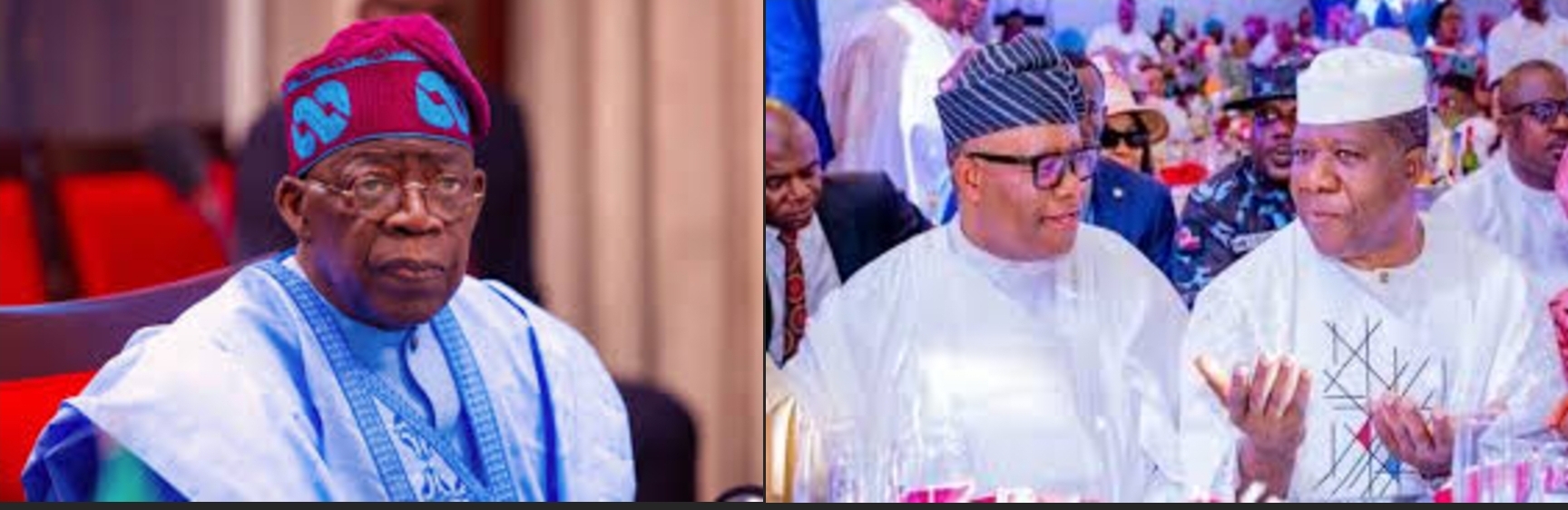
Participants: President Bola Ahmed Tinubu & Senate President Godswill Akpabio
Context: Imminent court-ordered return of Senator Natasha Akpoti-Uduaghan amid national mourning for former President Muhammadu Buhari
President Tinubu (voice heavy, emotionally loaded, opens without greeting):
“Godswill… happy Sunday. But let’s go straight to why I called you. We are in seven days of mourning. Seven days. We just buried Buhari today in Daura. The soil is still unsettled over his grave. And now this—this crisis. This quiet volcano under the carpet. One woman… and we are on the brink of a full-blown constitutional rupture. She’s not just a senator anymore. She’s become a symbol, a verdict, and a threat.”
(He doesn’t pause. His voice quickens—layered with disbelief and rising panic.)
“Flags are still at half-mast. Ministers still wearing black armbands. And I’m hearing DSS is preparing logistics. Police convoys. Barricades. Full security lockdown at the National Assembly. I even heard whispers—armored vehicles might be moved into position. Godswill, for what? For whom? Natasha. July 22nd. She says she’s coming back—and not quietly. Not politely. She says she’s coming with the Constitution. But we both know better. She’s coming with fire. With a crowd. With cameras. With chants. And with the full momentum of public grievance marching at her back.
If one uniformed man—just one—dares to block her path, it won’t look like Senate discipline. It will look like state violence. And it will stain us permanently.”
Akpabio (tense, trying to explain):
“Mr. President, I hear you. But I also have a duty—to protect the Senate as an institution. My legal team went through Justice Nyako’s ruling line by line. They insist it wasn’t absolute. The language was careful—‘in her view,’ ‘should recall,’ ‘believes.’ That leaves some discretion. We’ve filed an appeal. The matter is still legally open.”
Tinubu (erupts—voice thunderous, words like iron):
“Discretion?! Godswill, this is not literature class—we are confronting a federal court order! You want to hide behind adjectives and semantics while dragging this government toward disgrace? Read the ruling again. It begins: ‘IT IS HEREBY ORDERED.’ Not suggested. Not advised. Ordered. That one sentence is thunder. That’s the law. And it binds us.”
(He breathes heavily—his tone sharp, almost surgical.)
“You think you’re protecting the Senate’s pride. But what you’re really doing is tying my presidency to a constitutional landmine. If Natasha is stopped—by even a single officer—it will be my name in the headlines. Not yours. Not Nyako’s. Tinubu defies court. Tinubu blocks justice. Tinubu crushes female senator’s return. That’s the story they’ll run. And no press conference will cleanse that image.”
Akpabio (voice low, bitter, emotionally raw):
“Sir… it’s not just the court. She didn’t stop there. She took it to the press. She went global. She didn’t just accuse me of political manipulation—she accused me of sexual harassment. Directly. By name. She said I tried to silence her, that I endangered her, that I’m part of a conspiracy. It’s out there now. New York media. Diaspora news. She painted me as a predator. She targeted not just my office—she targeted my humanity. And by extension, she humiliated Nigeria’s image. And now, after all that, she wants to walk back in like none of it happened?”
Tinubu (biting, fast, filled with restrained rage):
“And your solution is what? Block her with tanks? Humiliate her on camera? Confirm to the world that we punish women who speak up? You think that clears your name? It doesn’t. It immortalizes hers. She said the system would try to silence her—and you want to prove her right in real time, on national television, with armed security?”
(His tone slows—razor-sharp, cutting deeper than anger.)
“You’re trying to douse a personal fire with institutional fuel. And when it blows, it won’t just take you—it will engulf me. This is no longer about whether you were offended. It’s about how the world sees Nigeria handle dissent—especially when that dissent wears lipstick and refuses to bow.
Right now, Natasha is not just a senator. She’s the youngest female lawmaker in a chamber ruled by male hierarchy. She speaks with no godfather. No dynasty. Just raw courage. And the world sees her surrounded by men in suits, arguing about grammar, while the court order sits there—waiting to be obeyed. You call it Senate protocol. The public sees a gender war dressed in uniform.”
Akpabio (quietly, unsure):
“So what are we supposed to do? Just let her walk in like nothing happened?”
Tinubu (voice drops like a hammer):
“Yes. Let her walk in. Not for her. For us.”
(A pause—then his voice becomes presidential, but cracked by urgency.)
“Let her in because we’re already bleeding public trust. Let her in because if she’s blocked, the symbolism will spread farther than the law can reach. You think you’re preserving institutional dignity. But what you’ll be doing is destroying moral authority. If that gate is closed on Tuesday, you won’t be upholding rules—you’ll be authoring repression.”
(He slows—voice trembling with foresight and dread.)
“And let me say this clearly: if Natasha is touched, shoved, blocked—on camera, during Buhari’s mourning week—this country will not sit still. These youths? They are not the generation we once knew. Their silence is over. Their patience is gone. If they rise, no DSS line will hold. No Senate barricade will contain the backlash.”
(Final tone—cold, haunting, final):
“Let her in, Godswill. As a final instruction. Not a plea. Because if that gate is locked, if even one boot or baton meets her body, the world won’t analyze court rulings—they’ll cry tyranny. They will say Tinubu used force against justice.”
(He lowers his voice to a whisper, but the words land like thunder.)
“And when that moment is captured—when her being stopped goes viral—we won’t survive it. Not politically. Not historically. This won’t be a Senate scandal. It will be a national disgrace. And both our names will be etched into the downfall.”
NOTE:
This transcript is entirely fictional—a dramatized dialogue meant to capture the emotional, political, and constitutional weight of the Natasha Akpoti-Uduaghan standoff. It does not reflect real events, real conversations, or the views of any public officials. It is a symbolic representation of how power, pride, and principle might collide in the crucible of democratic reckoning.
This writer does not know any of the individuals involved; the focus is solely on upholding democracy, truth, and justice.

John Egbeazien Oshodi
Professor John Egbeazien Oshodi is an American psychologist, educator, and author with deep expertise in forensic, legal, and clinical psychology, cross-cultural psychology, and police and prison science. Born in Uromi, Edo State, Nigeria, and the son of a 37-year veteran of the Nigeria Police Force, his early immersion in law enforcement laid the foundation for a lifelong commitment to justice, institutional transformation, and psychological empowerment.
In 2011, he introduced state-of-the-art forensic psychology to Nigeria through the National Universities Commission and Nasarawa State University, where he served as Associate Professor of Psychology. Over the decades, he has taught at Florida Memorial University, Florida International University, Broward College (as Assistant Professor and Interim Associate Dean), Nova Southeastern University, and Lynn University. He currently teaches at Walden University and holds virtual academic roles with Weldios University and ISCOM University.
In the U.S., Prof. Oshodi serves as a government consultant in forensic-clinical psychology and leads professional and research initiatives through the Oshodi Foundation, the Center for Psychological and Forensic Services. He is the originator of Psychoafricalysis, a culturally anchored psychological model that integrates African sociocultural realities, historical memory, and symbolic-spiritual consciousness—offering a transformative alternative to dominant Western psychological paradigms.
A proud Black Republican, Professor Oshodi is a strong advocate for ethical leadership, institutional accountability, and renewed bonds between Africa and its global diaspora—working across borders to inspire psychological resilience, systemic reform, and forward-looking public dialogue.
























You must be logged in to post a comment Login