
Africa
ICPC And The Struggle To Cleanse Nigeria’s Public Sector -By Rosemary Robson
As the country battles to shake off the shackles of corruption, the ICPC’s role is more important than ever. If empowered and truly independent, it could help cleanse Nigeria’s public sector and set the nation on a path to genuine transparency and good governance.

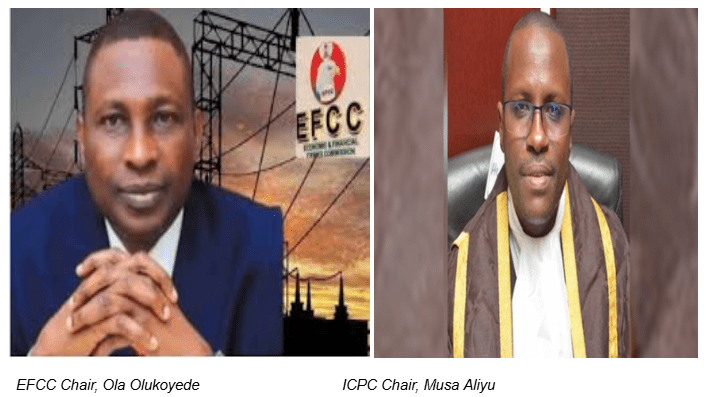
Corruption remains one of Nigeria’s greatest obstacles to development. It drains public resources, undermines governance, and deepens poverty. While the Economic and Financial Crimes Commission (EFCC) often takes the spotlight in the anti-graft war, the Independent Corrupt Practices and Other Related Offences Commission (ICPC) quietly tackles corruption from a different angle. Established in 2000, the ICPC was designed not only to prosecute offenders but also to prevent corruption before it happens.
Unlike the EFCC, which focuses heavily on financial crimes and money laundering, the ICPC’s mandate is broader. It investigates cases of bribery, abuse of office, and misappropriation of public funds, while also working to instill ethical values in public institutions. This dual focus on enforcement and prevention sets it apart, making it a key player in Nigeria’s anti-corruption architecture.
One of the ICPC’s most impactful initiatives has been its scrutiny of government budgets and projects. Through its “Constituency Project Tracking” programme, the commission monitors how funds allocated for local projects are spent. This initiative has uncovered abandoned or poorly executed projects, forcing accountability from public officials. For communities across Nigeria, it has brought renewed hope that long-promised infrastructure will no longer disappear into thin air.
The commission has also Invested heavily in anti-corruption education. From secondary schools to universities, ICPC has launched integrity clubs and campaigns to instill values of honesty and accountability in young Nigerians. The idea is that fighting corruption is not just about punishing offenders but also about changing a culture that has normalized it. This preventive approach is slow and subtle, but its long-term impact could be transformative.
However, the ICPC faces significant challenges. Like the EFCC, it is often accused of being hampered by political interference. Critics argue that some cases are pursued selectively, while powerful individuals sometimes escape prosecution. This perception undermines confidence in the commission’s independence and raises doubts about whether it can truly deliver justice without fear or favour.
Funding and manpower constraints also limit the ICPC’s effectiveness. With corruption widespread across multiple sectors—from education to health, oil to infrastructure—the commission’s capacity to investigate and prosecute cases is overstretched. Many Nigerians believe that without greater resources, ICPC will remain reactive rather than proactive in the battle against graft.
Another obstacle is Nigeria’s slow judicial process. Corruption cases drag on for years in the courts, often outlasting the attention of the public. By the time verdicts are reached, many citizens have lost faith in the process. This judicial bottleneck weakens the deterrent effect of the ICPC’s prosecutions.
Despite these challenges, the commission has scored some victories. From securing convictions of public servants who demanded bribes to recovering misappropriated funds, the ICPC has demonstrated that accountability is possible. Its preventive programmes, though less visible, are quietly shaping a new generation of Nigerians who see integrity as a virtue rather than a weakness.
For Nigeria to truly succeed in the anti-corruption fight, however, the ICPC must be strengthened. This means greater financial independence, stronger political backing, and legal reforms to speed up corruption trials. Equally important is ensuring that its leadership remains impartial and resistant to political pressure.
The ICPC stands as a reminder that corruption cannot be tackled by arrests alone. It must be fought through a combination of enforcement, prevention, and cultural reorientation. Whether the commission can rise above its challenges and deliver on this mission will determine its place in Nigeria’s fight for accountability.
As the country battles to shake off the shackles of corruption, the ICPC’s role is more important than ever. If empowered and truly independent, it could help cleanse Nigeria’s public sector and set the nation on a path to genuine transparency and good governance.
ROSEMARY ROBSON IS A 300 LEVEL STUDENT FROM MASS COMMUNICATION DEPARTMENT UNIVERSITY OF MAIDUGURI.
























You must be logged in to post a comment Login