Africa
In Defense Of Abike Dabiri-Erewa: Sharing Post Online Does Not Mean Endorsing -By Isaac Asabor
Social media may thrive on outrage, but Nigeria must thrive on truth. And the truth is this: Abike Dabiri-Erewa deserves better than the unfair label of anti-Igbo. She deserves fairness, perspective, and acknowledgment of her long-standing service to Nigerians of all backgrounds.

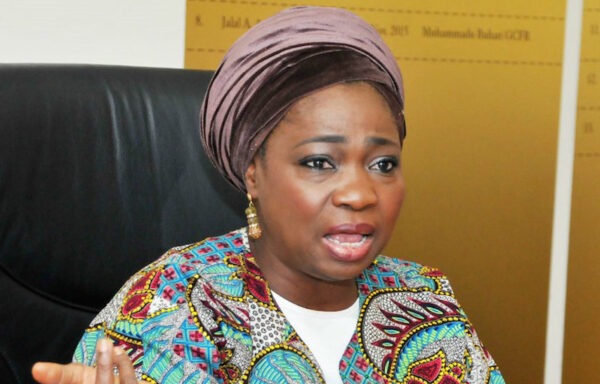
In today’s age of hyper-digital connectivity, the simple act of sharing a post online has become an unforgiving minefield. The very tools designed to promote discussion, information exchange, and accountability have mutated into weapons of distortion. A person no longer needs to author a controversial statement to be crucified; merely clicking “share” has become enough to invite accusations, misinterpretation, and persecution. This unfortunate reality is what Hon. Abike Dabiri-Erewa, Chairman/CEO of the Nigerians in Diaspora Commission (NIDCOM), has found herself entangled in.
Dabiri-Erewa, a woman whose professional life has been defined by public service and diplomacy, is being wrongfully branded as anti-Igbo simply because of a post she shared. The post, according to her critics, allegedly “showcases hatred” towards the Igbo people. But to draw that conclusion is to ignore context, intentions, and most importantly, her proven track record of inclusivity and service across Nigeria’s ethnic divides.
The truth is far less sinister: Abike Dabiri-Erewa might have shared that content to inform, to provoke debate, or to hold individuals accountable, not to endorse, nor to spew hatred. And in this debate, one truth must be stated boldly: “sharing is not subscribing.”
Social media platforms were designed as tools of connectivity. They allow us to inform our peers, highlight issues, provoke debates, and even raise accountability questions before authorities. But the rules of engagement have shifted drastically. Instead of being judged by the intent behind what we share, we are now judged by the loudest interpretation that trolls or opportunists attach to it.
The consequence is grave: bright minds are no longer free to engage with issues out of fear that their actions will be weaponized. And this is precisely what is happening to Dabiri-Erewa. Her critics are not interrogating the purpose behind her action; they are simply pinning on her a toxic label that fits their narrative.
But if sharing automatically equals endorsing, does it then follow that journalists who report crime also endorse crime? Or that those activists who circulate evidence of abuse endorse abuse? The logic collapses under its own weight.
It is important to unpack why people share content online. Broadly, content is shared for three main reasons: Firstly is to inform. People share stories, videos, or images to ensure others are aware of issues that might otherwise be overlooked. Dabiri-Erewa, in her official and personal capacity, has consistently used her platforms to keep Nigerians abreast of diaspora-related challenges and triumphs. Sharing does not mean she agrees, it means she is bringing the issue to our collective attention.
Secondly is to debate. Sometimes, sharing content sparks a wider conversation. Leaders, policymakers, and influencers know that silence breeds ignorance. By putting controversial material in the public square, they invite scrutiny, dialogue, and alternative perspectives.
Thirdly is to invoke accountability. Many times, leaders share content to challenge wrongdoing and call those responsible to account. To mistake this act for endorsement is to erase the very essence of democratic discourse.
When we apply these categories to Abike Dabiri-Erewa’s case, it becomes clear that her action can be interpreted through these lenses, none of which equates to hatred.
Beyond the fleeting noise of social media, a person’s legacy is measured by their deeds. Dabiri-Erewa’s tenure in public service is replete with examples that directly contradict the accusation of anti-Igbo sentiment.
As Chair of NIDCOM, she has intervened in cases involving Nigerians in distress abroad, regardless of their ethnicity. From South Africa to the Middle East, from Europe to Asia, she has stood as a voice for all Nigerians. Many of those she has helped are Igbo sons and daughters striving to build a future outside Nigeria’s borders.
Even domestically, she has worked with communities across the country, championing issues of migration, diaspora investment, and cultural diplomacy. To say such a woman “hates Igbos” because of a shared post is an insult not just to her but to the intelligence of Nigerians who know her record.
The deeper issue here is not about Abike Dabiri-Erewa alone; it is about the dangerous culture that social media has fostered. Platforms like X, Facebook, and Instagram now operate as courts of public opinion where due process is abandoned, and judgment is swift.
In this digital courtroom, intent no longer matters, context is discarded, and nuance is murdered. Instead, mob outrage dictates the verdict. The result is a society where public figures, indeed, all citizens, must censor themselves for fear of being misunderstood.
But this is not sustainable. If we continue this trajectory, Nigeria risks silencing thoughtful engagement. Instead of promoting dialogue, we will be cultivating a climate of fear and mistrust.
Another question worth asking is why outrage is selectively applied. The same critics who pounce on Dabiri-Erewa for sharing content are often guilty of sharing far worse. Many amplify tribal slurs, hate speech, and divisive rhetoric daily, yet they feel emboldened to drag her for something far milder and more debatable.
Why the double standard? Why the eagerness to vilify one woman who has devoted her career to public service, while ignoring the venom that pours unchecked from countless other accounts? The answer lies not in truth, but in politics, prejudice, and opportunism.
It is time Nigerians stopped equating sharing with subscribing. It is time we recognized that posting a piece of content does not equate to endorsing every line in it. And it is time we gave public servants like Dabiri-Erewa the benefit of context, rather than rushing to brand them with toxic labels.
More importantly, we must remember that our leaders, like us, are human beings navigating a complex social media landscape. They are not immune to mistakes, but neither should they be crucified for imagined sins.
If a woman like Abike Dabiri-Erewa, who has helped countless Nigerians, including Igbos, at home and abroad, can be so easily branded as anti-Igbo, then no one is safe from the tyranny of misinterpretation.
Let us cut the nonsense. A shared post is not a manifesto. It is not an oath. It is not an eternal declaration of prejudice. Sometimes, it is simply a way of saying, “Here, look at this. What do you think? Should we do better?”
That is what Abike Dabiri-Erewa might have been doing. And until proven otherwise, it is unjust, even malicious; to twist her action into something it is not.
Social media may thrive on outrage, but Nigeria must thrive on truth. And the truth is this: Abike Dabiri-Erewa deserves better than the unfair label of anti-Igbo. She deserves fairness, perspective, and acknowledgment of her long-standing service to Nigerians of all backgrounds.
Because if we continue to destroy reputations over misunderstood shares, we will not just ruin individuals, we will ruin the possibility of honest discourse in our democracy.