Africa
Injury To Cameroonian Democracy By Paul Biya Is Injury To African Democracy -By Isaac Asabor
If Africa fails to defend democracy in Cameroon, it loses moral ground to defend it anywhere else. Because when democracy dies in one African country, it weakens it in all. And when a single man can hold a nation hostage for over four decades, the dream of African self-governance stands mocked before the world.

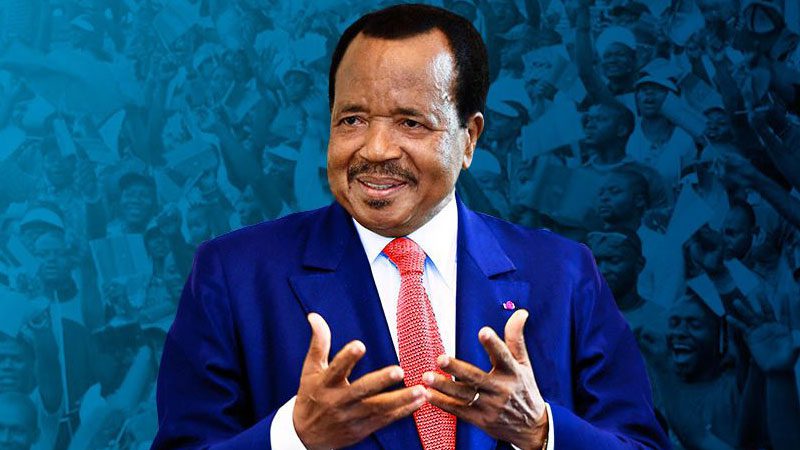
When Paul Biya took over the leadership of Cameroon in 1982, many across Africa hoped that the quiet technocrat would usher in an era of stability and reform. More than forty years later, that hope has curdled into disillusionment. Cameroon under Biya has become a cautionary tale, a democracy in name, a dictatorship in practice. The damage he has inflicted on Cameroon’s political system is not confined to its borders; it weakens the very idea of African democracy itself.
Cameroon may hold elections and maintain multiple political parties, but what exists there is little more than democratic theatre. Institutions that should guarantee transparency and accountability, such as the judiciary, legislature, and electoral commission, have been reduced to rubber stamps. Dissent is punished, opposition movements are systematically weakened, and citizens have become spectators in their own political process.
The most recent assault came with the barring of Maurice Kamto, the leading opposition figure, from contesting the 2025 presidential election. This was not a mere technical disqualification, it was a calculated move to eliminate competition and maintain Biya’s unbroken grip on power. Civil society, religious leaders, and even members of the political elite have called for the 92-year-old president to step down, yet repression has only intensified.
Cameroon’s democratic decay exposes a brutal truth: when power becomes personal rather than institutional, democracy transforms into tyranny with a ballot box.
Paul Biya’s endless rule sends a dangerous signal to the rest of the continent. It tells other leaders that longevity in power is achievable if you can manipulate institutions, suppress dissent, and control public perception. The erosion of term limits and the manipulation of constitutions are now recurring patterns across Africa, from Central to West and even Southern Africa.
Regional and continental bodies like the African Union (AU) and the Economic Community of Central African States (ECCAS) have been complicit through their silence. Their inability to confront democratic violations in Cameroon renders their lofty declarations about good governance hollow. Every year Biya remains in power, the precedent deepens: that legality can be twisted to serve autocracy and that impunity has no consequences.
Without a doubt, the wound which Paul Biya has so far inflicted on Cameroon’s democracy is no doubt a wound that bleeds beyond borders. In fact, the injury to Cameroon’s democracy does not end in Yaoundé, it bleeds into Africa’s collective body politic. When one country normalizes repression, it lowers the democratic bar for others.
By allowing Biya’s continued rule, Africa signals that constitutional term limits are optional and accountability negotiable. That precedent corrodes the moral fabric of regional institutions meant to safeguard democracy.
When elections become empty rituals, citizens lose faith in democracy itself. In Cameroon, this cynicism has translated into apathy among the youth and the retreat of civil society. Across Africa, similar disenchantment fuels populism, military takeovers, and the resurgence of strongmen politics.
The ongoing Anglophone crisis is a tragic reminder of what happens when legitimate dissent is suppressed. Entire communities in Cameroon’s English-speaking regions have endured violence, displacement, and human rights abuses. As refugees spill across borders, instability spreads. This is not just Cameroon’s problem, it is Africa’s headache.
Biya’s prolonged rule has crippled governance and suffocated development. Cameroon, rich in natural and human resources, now suffers from decaying infrastructure, rampant corruption, and mass youth unemployment. Investors shun instability, and citizens with talent and ambition flee abroad. When democracy fails, prosperity dies with it, and Africa pays the price in lost potential.
If democracy in Cameroon is to recover, the healing must start with truth and accountability. Cameroon’s electoral body, Elections Cameroon (ELECAM), must be reformed into a truly independent electoral body. The judiciary must be insulated from political interference. Constitutional term limits must be enforced not ignored.
Cameroonian civil society, churches, and professional bodies must continue to speak out, even in the face of intimidation. The growing cracks in Biya’s once unshakeable façade, seen in public criticism from the church and even from members of his own family, show that resistance, though costly, is not futile.
Regional and international organizations must stop hiding behind diplomatic niceties. The AU, ECCAS, and global partners must recognize that silence is complicity. Sanctions, targeted restrictions, and credible mediation efforts must replace toothless communiqués. Africa cannot continue to watch democracy rot and pretend it is someone else’s problem.
The demise of Cameroonian democracy is not just a national tragedy, it is a continental betrayal. If we allow one of our nations to lose its democratic soul, we set fire to the principles we claim to cherish: freedom, justice, and accountability.
Paul Biya’s decades-long rule should serve as a warning to Africa. Democracy can die quietly, not through coups, but through gradual suffocation by those who claim to protect it. What we see in Cameroon is not just authoritarianism; it is the normalization of decay.
Cameroon’s injury under Paul Biya is Africa’s wound. Each year of his prolonged rule chips away at the continent’s democratic integrity. The silence of African leaders in the face of Biya’s excesses is not diplomacy, it is betrayal.
If Africa fails to defend democracy in Cameroon, it loses moral ground to defend it anywhere else. Because when democracy dies in one African country, it weakens it in all. And when a single man can hold a nation hostage for over four decades, the dream of African self-governance stands mocked before the world.
At this juncture, it is cautionary to remind the electorates that voting for Paul Biya again, or allowing to rig his way again on October 12, 2025 again is an Injury to Cameroonian democracy, and that it is indeed an injury to African democracy.