
Middle East War
Iranians, Beware Of Israel To Avoid Saying “Had We Known…” -By Isaac Asabor
In today’s volatile world, where nuclear threats, drone warfare, and AI-driven combat systems define the rules of engagement, Iran would be better served focusing on diplomacy than on ideological warfare. The cost of hubris could be more than it can afford, both militarily and spiritually.

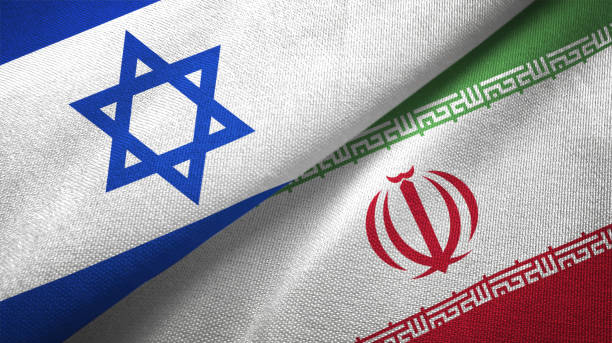
In a world marked by geopolitical volatility and ideological warfare, one nation seems to consistently defy the odds: Israel. From biblical times to the modern battlefield, Israel’s history is one of survival, resilience, and astonishing military triumphs, often against enemies far larger in number and might. Whether one interprets this from a secular geopolitical lens or from a divine theological framework, the evidence is overwhelmingly consistent: Israel is not an ordinary nation, and challenging it has historically led adversaries to regret their decisions, often bitterly.
The recent flare-up between Iran and Israel once again brings this historical and spiritual reality to the forefront. In retaliation to a precise Israeli strike that took out top-ranking Iranian military officials, presumably linked to threats against Israel, Iran launched its own attack. While some celebrated it as a show of strength, a closer look reveals that such a move may eventually lead Iran down a familiar, tragic road, a road littered with regret and the haunting phrase, “Had we known…”
The reason for the foregoing view cannot be farfetched as narratives in biblical history show that Israel, in war is always been led by God-backed fortress.
To understand Israel’s unique standing, one must first look at the Bible, arguably the most referenced spiritual and historical document in relation to the Jewish people. The Scriptures are unambiguous about God’s covenant with Israel and His pledge to protect them against all odds. The promise of divine protection was not a fleeting assurance; it was a foundational aspect of Israel’s existence.
Take Joshua 21:44, for instance: “And the LORD gave them rest on every side, just as He had sworn to their fathers. None of their enemies could stand against them, for the LORD delivered all their enemies into their hand.”
The forgoing verse alone encapsulates the divine insurance policy that Israel has always had, a God who fights their battles.
Further in Joshua 23:1-16, the narrative grows stronger: “No one has been able to defeat you. One of you routs a thousand, because the LORD your God fights for you, just as he promised.”
Can any military analyst or historian ignore the eerily accurate modern-day manifestations of this scripture? Against Arab coalitions, against terrorism, against missile attacks, Israel often emerges not just intact but stronger. Even in Deuteronomy 7, God’s promises are laced with specific instruction and consequence:
“When the LORD your God brings you into the land, you must destroy them totally. Make no treaty with them and show them no mercy.”
This is not just poetic religious text, it has been the operational template of Israeli defense strategies: preemptive, decisive, and unforgiving when provoked.
In fact, weighting the strength of Israel at war in this contemporary times, there is no denying the fact that she has a track record of tactical superiority. Moving from scripture to recent history, Israel’s ability to defend itself, often in hostile regional conditions, is nothing short of remarkable. From the 1948 War of Independence to the Six-Day War in 1967 and the Yom Kippur War of 1973, Israel has repeatedly turned what looked like impending disaster into overwhelming victories. Each time, enemies were left licking their wounds, asking themselves what went wrong.
Fast-forward to the 21st century, and not much has changed. In 2006, Hezbollah underestimated Israel and suffered severe casualties. Hamas, despite its constant provocations from Gaza, has seen its leadership and infrastructure dismantled again and again.
Now, Iran has decided to tempt fate. After years of proxy warfare through Hezbollah and Hamas, Tehran decided to directly confront Israel. While the recent Israeli strike inside Iranian territory was bold, it was also precise, targeted at high-value military leaders, with minimum collateral damage. Iran’s retaliation, though dramatic, achieved little strategically. The world now watches and waits for Israel’s next move.
In fact, there is no denying the fact that there are dangers lurking for Iran as she has no doubt miscalculated Israel’s resolve. Iran, like many before it, seems to be under the delusion that numbers and ideology can overwhelm Israeli deterrence. But history has shown time and again that underestimating Israel is not just foolish, it is fatal.
One does not even have to be religious to acknowledge this. Analysts at top military think tanks have often expressed admiration, and puzzlement, at how Israel, surrounded by hostile neighbors, continues to thrive and repel threats. With one of the most technologically advanced militaries in the world, a mandatory military service culture, and an intelligence network (Mossad, Shin Bet) considered among the world’s best, Israel’s defense capabilities are unmatched in the region.
Iran, with all its revolutionary zeal, must ask itself a hard question: Can we truly handle a full-scale confrontation with Israel without devastating consequences? The answer is likely “No.” Even worse, any major misstep could invite a broader coalition of Western allies, further complicating Iran’s strategic calculations. From spiritual implication, there is no denying the fact Iran, with its retaliation, would be fighting against divine will?
The reason for the foregoing view cannot be farfetched as it is obvious that for those who understand the spiritual significance of Israel, Iran’s aggression is not just political, it is theological suicide. This is as Isaiah 54:17 declares: “No weapon formed against you shall prosper, and every tongue which rises against you in judgment you shall condemn…”
This scripture does not speak of a possibility; it speaks in absolutes. No weapon. Every tongue. For a nation like Iran that takes pride in its religious identity, one would expect more caution when dealing with a nation that the God of Abraham, Isaac, and Jacob explicitly defends.
And let us not forget 2 Chronicles 20:15, where God told King Jehoshaphat: “Do not be afraid or discouraged because of this vast army. For the battle is not yours, but God’s.”
Iran must ask itself: Do we truly want to pick a battle that might ultimately not be with Israel, but with the Almighty Himself?
Against the backdrop of the foregoing scriptural views, it is germane to recall, particularly from the ashes of history that the voices of history echo this warning clearly: Egypt, Syria, Jordan, Lebanon, and even global powers like the Russia have tried to bring Israel to its knees. All failed.
Then, one is compelled to ask, “Why would Iran be the exception?” The answer cannot be farfetched as it is on record that when ancient Egypt defied Israel, its armies drowned. When Babylon took them captive, they eventually fell. When Rome crushed Jerusalem, the empire itself dissolved into history, while Israel reemerged thousands of years later in 1948, a miracle by every geopolitical standard.
Given the foregoing victories recorded by Israel in times of war or crisis, one is compelled to ask again, “Do the rulers in Tehran think their story will be any different?”
Against the backdrop of the foregoing, it is germane to tell the Iranians that they should let history repeat itself.
At this juncture, it is germane to clarify that this article is not a cheerleader’s chant for Israel, nor is it a one-sided celebration of war. It is a sober warning wrapped in layers of history, scripture, and strategic reality. Iran must realize that fighting Israel is not just a war against flesh and blood, but potentially against a people whose defense mechanism includes the supernatural.
In today’s volatile world, where nuclear threats, drone warfare, and AI-driven combat systems define the rules of engagement, Iran would be better served focusing on diplomacy than on ideological warfare. The cost of hubris could be more than it can afford, both militarily and spiritually.
To the leadership and military command of Iran, a humble word of caution: Do not let pride blind you to the lessons of history and the warnings of prophecy. If you proceed recklessly, the time may come when you will sit amid ruins and say, “Had we known…”



























You must be logged in to post a comment Login