Forgotten Dairies
It Is A Pity: So, This Is All Nigerians Can Get From Tinubu’s ‘Emilokan’ Declaration -By Isaac Asabor
That shift in public consciousness may ultimately become the most important legacy of the “Emilokan” era. As economic pressures continue to mount and citizens demand greater accountability, the focus is gradually moving away from whose turn it is and toward what has been achieved. And that is exactly how democracy should function.

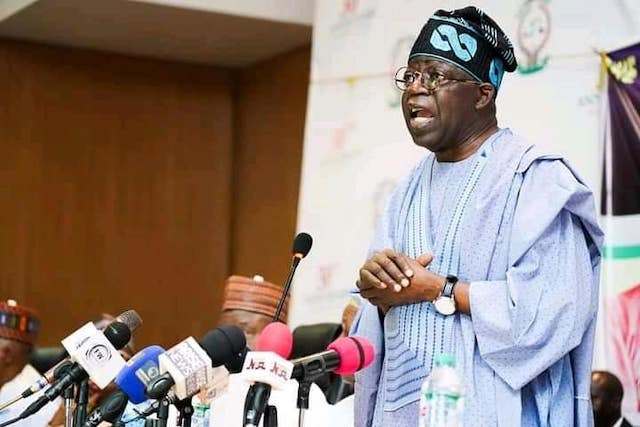
When Bola Ahmed Tinubu stood before supporters during the 2023 presidential campaign and declared, “Emilokan”, meaning “It is my turn” in Yoruba, the statement instantly became one of the most memorable political slogans in Nigeria’s democratic history.
For his loyalists, it was a powerful declaration of a man who had paid his dues. They argued that after years of political engineering, kingmaking, and strategic investments in Nigeria’s political landscape, Tinubu had every right to seek the presidency. To them, “Emilokan” was not merely a slogan; it was the culmination of a political journey decades in the making.
Three years into his presidency, however, many Nigerians are beginning to ask a painful question: Is this all the country can get from the much-celebrated “Emilokan” declaration?
The question is not born out of political hostility. Rather, it emerges from the harsh realities confronting ordinary Nigerians daily. From soaring inflation and rising food prices to worsening economic hardship and declining purchasing power coupled with worsening state of insecurity, many citizens find themselves struggling to see the promised dividends that should accompany the emergence of a leader who so confidently claimed it was his turn.
Perhaps the greatest tragedy of the “Emilokan philosophy” is that it elevated entitlement above aspiration. Instead of convincing Nigerians primarily on the basis of what he intended to do differently, the campaign became heavily centered on why he deserved the office.
There is a significant difference between earning the trust of the electorate and claiming a political inheritance.
Democracy thrives when candidates persuade voters with ideas, competence, and vision. It suffers when leadership becomes framed as a reward for political longevity. The danger is that governance can become more focused on validating past political investments than on solving present national problems.
Today, many Nigerians are not interested in whether it was Tinubu’s turn. They are concerned about whether their lives have improved. This is as the market woman battling rising food costs does not care about political succession arrangements. The unemployed graduate searching endlessly for work is not comforted by elite power calculations. The struggling small business owner facing multiple taxes and shrinking consumer demand is not interested in who waited longest in the corridors of power.
However, what matters to citizens is performance. Unfortunately, the realities on the ground have created a growing disconnect between the expectations generated by “Emilokan” and the lived experiences of millions of Nigerians.
Indeed, every government inherits challenges. No fair observer can deny that the administration came into office amid severe economic and structural problems. Years of policy inconsistencies, mounting debt, insecurity, and weak productivity had already placed enormous pressure on the nation. Yet leadership is ultimately measured not by the excuses available but by the solutions delivered.
This is why the “Emilokan” declaration continues to haunt public discourse. It was a bold promise wrapped in a bold claim. Naturally, Nigerians expected equally bold results. Unfortunately, what they have largely received instead are explanations for hardship, appeals for patience, and repeated assurances that better days lie ahead.
While governments often require time to implement reforms, citizens equally have a right to evaluate outcomes. After all, they were not asked to vote for patience. They were asked to vote for leadership.
The irony is that “Emilokan” may ultimately be remembered less as a declaration of political triumph and more as a symbol of the dangers of entitlement politics. It exposed a culture in which political actors often view power as a reward rather than a responsibility. It highlighted a system where access to leadership can sometimes appear predetermined by elite arrangements rather than driven by a contest of ideas.
Most importantly, it triggered a broader national conversation about what Nigerians should expect from those who seek public office.
The emergence of politically conscious young voters, particularly during the last election cycle, demonstrated that many Nigerians are increasingly rejecting the notion that anyone deserves power simply because they have waited for it. They want leaders who can articulate solutions, inspire confidence, and deliver measurable progress.
That shift in public consciousness may ultimately become the most important legacy of the “Emilokan” era. As economic pressures continue to mount and citizens demand greater accountability, the focus is gradually moving away from whose turn it is and toward what has been achieved. And that is exactly how democracy should function.
History is rarely kind to leaders who secure power through narratives of entitlement but fail to translate that power into tangible improvements in the lives of the people. Citizens may tolerate hardship for a while, but they never stop keeping score.
The verdict on any administration is not written by political allies, party loyalists, or enthusiastic campaigners. It is written by history and by the people who live with the consequences of governance.
That is why many Nigerians are increasingly looking at the famous Emilokan declaration and asking, with disappointment rather than admiration: So, this is all we can get?
If that question continues to echo across the country, it will not be because the slogan was powerful. It will be because the expectations it created have not been matched by the outcomes many Nigerians desperately hoped to see.
This version is more forceful, more newspaper-opinion oriented, and frames the argument around public disappointment with the outcomes associated with the “Emilokan” narrative rather than merely analyzing the slogan itself.