Forgotten Dairies
State Police in Nigeria: Why Did It Take So Long to Prioritize Citizens’ Security Amid Rising Insecurity? -By Daniel Nduka Okonkwo
The tragedy unfolding in Oriire Local Government Area provides a painful reminder of what is at stake. Every delay in strengthening Nigeria’s security architecture leaves more citizens exposed to violence, fear, and uncertainty. The debate over state police is no longer merely about governance structures or constitutional technicalities. It is about protecting lives, preserving freedoms, and ensuring that no Nigerian child, teacher, farmer, or family must live under the threat of criminal terror.


In the heart of Oyo State, where classrooms should echo with the laughter of children and the wisdom of teachers, fear has instead taken root. The abduction of pupils and educators in Oriire Local Government Area, with kidnappers demanding not only an impossible ransom but also the imposition of religious law, emphasizes the devastating consequences of Nigeria’s fragile security architecture. When citizens are stripped of their right to worship freely and forced to live under the shadow of violence, the very essence of democracy is threatened. The call for the creation of state police is not just a policy debate, it is a cry for survival, a demand for justice, and a plea for protection. By empowering states to command their own security forces, Nigeria can begin to dismantle the networks of terror, restore dignity to its people, and reaffirm the promise of freedom that every citizen deserves.
The reported abduction of pupils and teachers in Oriire Local Government Area has once again exposed the deep vulnerabilities within Nigeria’s security framework. According to reports, the kidnappers are demanding a staggering ₦1 billion ransom and the implementation of Sharia law as conditions for the release of the victims. Such demands are not only criminal but also represent a direct challenge to Nigeria’s constitutional order, religious freedom, and national sovereignty.
For many Nigerians, incidents like this have reignited a longstanding question: Why has the country delayed the establishment of state police despite years of worsening insecurity?
For decades, Nigeria has relied on a highly centralized policing system controlled by the Federal Government. This structure was largely shaped by post-Civil War security considerations, with successive administrations believing that a unified national police force was necessary to preserve national unity and prevent regional fragmentation. However, the realities of modern security challenges—including terrorism, banditry, kidnapping, communal violence, and organized crime, have increasingly exposed the limitations of this centralized model.
The local communities are best positioned to defend themselves. State and community-based police forces possess a natural advantage: they understand the terrain, speak the local languages, recognize community dynamics, and can identify unfamiliar elements more quickly than officers deployed from distant locations. This local knowledge can significantly improve intelligence gathering, enable faster responses to threats, and make it easier to infiltrate criminal and terrorist networks.
The benefits of decentralization extend beyond intelligence. Under the current arrangement, governors often serve as chief security officers of their states in title but lack direct operational control over police personnel. Security responses frequently require approvals and coordination from federal authorities, creating delays during emergencies. A state-controlled police force would allow governors to deploy officers immediately in response to kidnappings, attacks, and emerging threats without waiting for federal authorization. In many cases, such rapid intervention could mean the difference between life and death.
The urgency of reform has become increasingly difficult to ignore. Communities across Nigeria continue to face relentless attacks from bandits, terrorists, kidnappers, and criminal gangs. Schools, farms, highways, and rural communities have become frequent targets. The growing insecurity has weakened public confidence in the state’s ability to protect lives and property, forcing many communities to rely on vigilante groups and informal security arrangements.
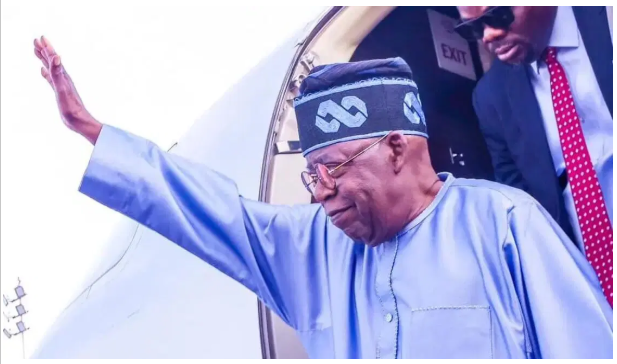
Recognizing these challenges, momentum toward state police has accelerated under the administration of President Bola Ahmed Tinubu. Following extensive consultations directed by the President, the Presidency recently confirmed that significant progress has been made toward establishing a constitutional framework for state police. Speaking after a high-level consultative meeting at the State House in Abuja, Chief of Staff to the President, Femi Gbajabiamila, disclosed that discussions had advanced to the stage of considering the constitutional amendments required for implementation.
The National Assembly is currently examining constitutional reforms, including amendments to Section 214 of the Constitution, which presently establishes a single Nigeria Police Force. These amendments would effectively move policing responsibilities from the Exclusive Legislative List to a structure that allows greater participation by states. Such reforms require approval by the National Assembly and ratification by at least two-thirds of the 36 State Houses of Assembly.
Despite the growing support for state police, opposition has historically been strong. Critics often point to the experience of the First Republic, when Native Authority Police forces were accused of political intimidation, abuse of power, and partisan enforcement. Many feared that state governors could use local police forces to harass political opponents, manipulate elections, suppress dissent, and undermine democratic institutions.
Previous administrations, including that of former President Muhammadu Buhari, consistently cited these concerns in opposing state police. Critics argued that Nigeria’s democratic institutions were not sufficiently mature to prevent abuse of a decentralized policing system. There were also fears that state police could become instruments of ethnic or religious interests, potentially deepening divisions in one of the world’s most diverse nations.
Financial concerns have also contributed to the delay. Many state governments continue to struggle with salary payments, pension obligations, and basic infrastructure funding. Skeptics question whether states possess the financial capacity to recruit, train, equip, and maintain professional police services without creating new fiscal crises. The prospect of underfunded police agencies raises concerns about corruption, inefficiency, and operational weakness.
Federal security institutions have likewise expressed reservations. The Nigerian Police Force and other federal security agencies have warned that decentralization would involve enormous logistical, legal, and operational challenges. Restructuring a force comprising hundreds of thousands of personnel would require extensive coordination, clear jurisdictional boundaries, and mechanisms to prevent conflicts between federal and state security authorities.
Yet, for many advocates, these concerns can no longer justify continued inaction. Every year of delay has carried a human cost measured in lives lost, communities displaced, schools closed, and economic opportunities destroyed. The growing sophistication of criminal networks and the persistence of insecurity have strengthened arguments that maintaining the status quo is no longer sustainable.
The proposed establishment of state police is expected to fundamentally alter Nigeria’s security landscape. By bringing law enforcement closer to the people, states would be empowered to respond rapidly to threats, strengthen local intelligence networks, and provide more effective protection for vulnerable communities. It would also create greater accountability by allowing citizens to engage more directly with security institutions operating within their communities.
Current indications suggest that the framework for state police is nearing completion. Constitutional amendments are advancing through legislative review, and political consultations continue at both the federal and state levels. If the process proceeds as anticipated, many observers believe the necessary legislation could be enacted before the end of 2026.
The central question, however, remains unavoidable: if decentralizing security offers such clear advantages, why did Nigeria wait this long?
The tragedy unfolding in Oriire Local Government Area provides a painful reminder of what is at stake. Every delay in strengthening Nigeria’s security architecture leaves more citizens exposed to violence, fear, and uncertainty. The debate over state police is no longer merely about governance structures or constitutional technicalities. It is about protecting lives, preserving freedoms, and ensuring that no Nigerian child, teacher, farmer, or family must live under the threat of criminal terror.
As Nigeria moves closer to implementing one of the most significant security reforms in its history, the challenge will be to establish state police with strong safeguards against political abuse, clear accountability mechanisms, professional standards, and sustainable funding. If done correctly, state police could become a transformative tool for restoring public safety and rebuilding citizens’ confidence in government.
For a nation confronting some of the most complex security challenges in its history, the real question may no longer be whether Nigeria should establish state police, but why it took so long to act.
Daniel Nduka Okonkwo is an investigative journalist, human rights advocate, and policy analyst based in Abuja, Nigeria. He is the publisher of Profiles International Human Rights Advocate, a platform focused on accountability journalism, governance reporting, and the documentation of human rights issues across Africa. His work examines the intersection of political power, institutional accountability, systemic failure, and the human impact of corruption, with particular focus on Nigeria and the wider African continent.
Okonkwo’s reporting and analysis have been published in Sahara Reporters, African Defence Forum, Daily Trust, Vanguard, Daily Intel, Opinion Nigeria, African Angle, Local Newsbreak, and other international media outlets. His work is driven by a commitment to transparency, democratic governance, and justice. He also collaborates with Daniels Entertainment on human rights initiatives, extending his advocacy beyond traditional journalism into broader public engagement.
He is based in Abuja, Nigeria, and can be reached at dan.okonkwo.73@gmail.com.