Forgotten Dairies
Dennis Amachree’s Account of Abacha’s Death: One More Theory or Something More Sinister? -By Vitus Ozoke, PhD
Evidence must come before certainty. Documentation must come before declaration. Verification must come before finality. History is too important to be rewritten by assertion. History also carries enormous political power. Those who rewrite history often shape the future as much as they reinterpret the past. That is why historical claims – especially those capable of inflaming ethnic passions or altering public perceptions during an election season – must be subjected to the highest standards of scrutiny. A nation that fails to question politically convenient versions of its past risks becoming captive to them in its future.

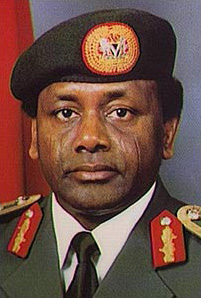
Dennis Amachree’s newly published account of General Sani Abacha’s death does more than reopen one of Nigeria’s greatest political mysteries. It raises an even more disturbing question: Why is Nigeria being presented with a new ethnic narrative nearly three decades after the event?
Mr. Amachree dismisses virtually every previous account of Abacha’s death. He rejects the poisoned apple theory. He rejects the poisoned handshake theory. He rejects the CIA theory. He rejects the Viagra theory. He rejects the medical explanations. He rejects the recollections of those who served closest to Abacha.
According to Amachree, everyone else got it wrong. Only he got it right. That is an extraordinary claim. Extraordinary claims require extraordinary evidence. Instead, what Nigerians are offered is a story whose most politically explosive element rests almost entirely on the author’s own recollection.
For nearly three decades, Nigerians have heard countless versions of how General Abacha died. Some claimed poisoning. Others claimed cardiac arrest. Some alleged foreign intelligence involvement. Others suggested complications arising from sexual activity. Whether true or false, one remarkable feature united virtually all those narratives: None transformed Abacha’s death into an ethnic story.
Until now.
Suddenly, almost thirty years later, Nigerians are told that the woman in whose company Abacha allegedly died was not merely a woman. She was an Igbo woman. Not only that. Her sister was also allegedly involved in the sequence of events. That ethnic identification contributes absolutely nothing to explaining the medical cause of Sani Abacha’s death.
If the objective is historical accuracy, why is ethnicity relevant at all? Why does Nigeria need to know that the woman was allegedly Igbo? What historical question does that answer? What evidentiary gap does it fill? The answer appears to be none. It simply inserts ethnicity into a story where ethnicity previously played no meaningful role. That should concern every Nigerian. History teaches painful lessons. Nigeria has repeatedly paid a terrible price whenever ethnic narratives replace evidence.
The January 1966 coup was simplistically branded an “Igbo coup.” That label, repeated often enough, became accepted by millions despite the historical complexities that later emerged. The consequences were catastrophic. Mass killings. Pogroms. Civil war. Millions dead. Decades later, even some principal actors, including Gen. Ibrahim Babangida, acknowledged that the story Nigerians had long been told was, at best, incomplete and, at worst, profoundly misleading. History should have taught us caution. Instead, we appear determined to repeat old habits.
Mr. Amachree asks Nigerians to accept that this previously unknown account represents the definitive truth. Very well. Then the obvious questions must also be answered. Who were these Igbo women? Why are their identities still concealed? If they truly existed, why withhold their names after nearly three decades? Who authorized the continued secrecy? What became of them? Are they still alive? If not, what happened to them? When did they die? Were they ever questioned publicly? Were their statements recorded? Are those statements available? Did any official investigative report corroborate this version? Or are Nigerians simply expected to accept one retired officer’s memory as conclusive while every competing account is dismissed as false?
That is not how history is written. Nor is it how serious investigations are evaluated. Mr. Amachree repeatedly insists that his version is “the authentic account.” But authenticity is not established through confidence. It is established through evidence. If the evidence cannot be independently examined, then Amachree’s account occupies precisely the same category as every theory he dismisses: an unverified narrative awaiting corroboration.
There is another issue that cannot be ignored: timing.
Books are rarely published in political vacuums. Narratives rarely emerge without context. Nigeria is once again approaching a fiercely contested presidential election. Ethnic identity has once again become one of the defining fault lines of our politics. An Igbo politician once again occupies a prominent place on the national political stage. Against that backdrop, a book suddenly emerges nearly three decades after General Sani Abacha’s death, introducing an entirely new and ethnically charged dimension to one of the most controversial episodes in Nigeria’s political history. A new version of history suddenly appears, linking the death of one of Nigeria’s most powerful Fulani rulers to unnamed Igbo women.
There is, therefore, one final question that Nigerians should not shy away from asking: Is this merely the publication of a long-suppressed historical account, or is it a politically consequential narrative arriving at a politically consequential moment? That question is not an accusation. It is an invitation to critical thinking.
Reasonable Nigerians are entitled to ask whether this timing is purely coincidental. If the central historical fact is simply that Abacha died during a sexual encounter, why is the ethnicity of the woman suddenly elevated into the story? Why is that detail considered historically indispensable today when it was absent from virtually every major account that preceded it? Why introduce ethnicity into the narrative on the eve of a presidential election in which a popular Igbo politician heads a major opposition ticket?
These questions become even more compelling because the women remain anonymous. Their identities cannot be independently verified. Their accounts cannot be publicly examined. Their very existence, as presented in the book, rests almost entirely on the author’s narration. Yet the single identifiable characteristic attached to them is that they were allegedly Igbo. Why? Why should ethnicity be the only detail revealed while identity is withheld? Given Nigeria’s dangerous and painful history of ethnic scapegoating, that is not a trivial editorial choice. It is a profoundly consequential one.
Perhaps there is an entirely innocent explanation. Perhaps the timing is nothing more than coincidence. Perhaps the ethnic reference serves a legitimate historical purpose that has not yet been fully explained. But until those explanations are provided, Nigerians are justified in asking a simple question: Is this a work of historical clarification, or has history itself become another battlefield in Nigeria’s electoral politics?
That question deserves an answer, not because it vindicates one political candidate or condemns another, but because a nation that has repeatedly suffered from politically weaponized history cannot afford to stop asking difficult questions whenever old stories suddenly acquire new ethnic villains.
If the women remain anonymous, how can independent historians, journalists, or researchers verify this account? If verification is impossible, why should this version be regarded as more authoritative than every other account Mr. Amachree dismisses? These are not hostile questions. They are the minimum questions that serious historians, investigative journalists, and conscientious citizens should ask before accepting a narrative that introduces an entirely new ethnic dimension into one of Nigeria’s defining historical events.
Nigeria has suffered too much from convenient historical myths. Entire ethnic groups have carried the burden of narratives later shown to be incomplete, exaggerated, or false. That history imposes a special responsibility upon anyone introducing an ethnically charged revision of a nationally significant event.
One cannot casually insert an ethnic label into one of Nigeria’s defining historical episodes and then expect the public to suspend critical inquiry. Mr. Amachree has every right to publish his recollections. But Nigerians have an equal right to interrogate them. Indeed, because Amachree claims exclusive access to the truth, his account deserves more scrutiny – not less.
Evidence must come before certainty. Documentation must come before declaration. Verification must come before finality. History is too important to be rewritten by assertion. History also carries enormous political power. Those who rewrite history often shape the future as much as they reinterpret the past. That is why historical claims – especially those capable of inflaming ethnic passions or altering public perceptions during an election season – must be subjected to the highest standards of scrutiny. A nation that fails to question politically convenient versions of its past risks becoming captive to them in its future.
Until the unanswered questions surrounding these alleged women are addressed – until identities, records, corroborating evidence, and investigative documentation are produced – Mr. Amachree’s narrative remains exactly what every previous account of Abacha’s death has been: One more theory. Perhaps a fascinating one. Perhaps even a plausible one. But a theory, nonetheless. And Nigerians should resist any attempt – whether intentional or inadvertent – to transform an unverified narrative into an ethnic indictment. We have been down that road before. Our history bears the scars. We should not allow it to happen again.
Not again! Not ever!
Dr. Vitus Ozoke is a lawyer, human rights activist, and public affairs analyst based in the United States. He writes on politics, governance, and the moral costs of leadership failure in Africa.