Africa
Job Creation, Food Security And NDDC’s Present Efforts, by Jerome-Mario Utomi

In the words of Justin Menkes, author and member of the Strategic Leadership Service Practice, there are clear thinkers, muddled thinkers and people that fall in between. Clear thinkers -are the ones that can cull everything down into the right points-are very hard to find. But if you get yourself a team of clear thinkers, the possibilities are endless. These are men who see tomorrow, trailblazers and high-level executives, but most often misunderstood by some fellow countrymen who are still stuck in the old normal of yesterday.
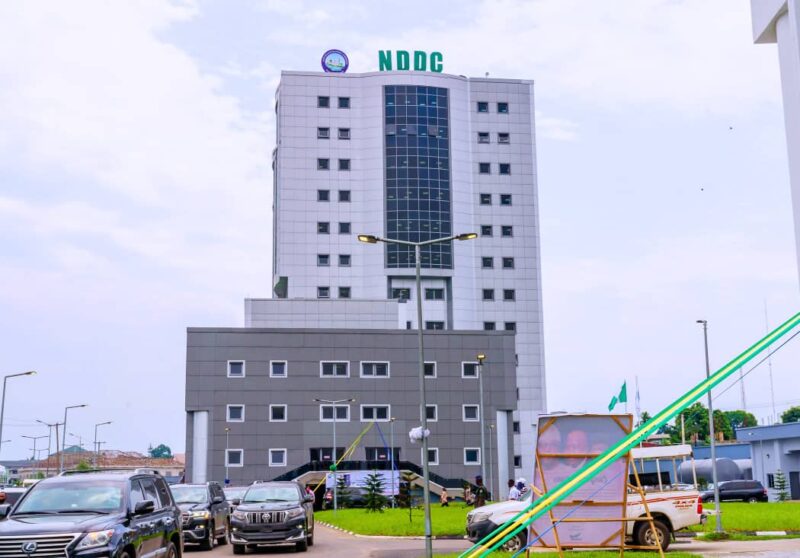
Essentially, members of the governing board and management of the Niger Delta Development Commission (NDDC) amply fit into the above description. This particular conclusion emerged after reading the news report that the Commission has re-stated commitment to promoting projects and programmes that would guarantee food security and sustainable growth in the Niger Delta region.
Chief Monday Igbuya, the Delta state Representative at the Commission’s Governing Board, who spoke at the flag-off of a training and empowerment programme for women and youths in livestock farming and agro-processing at Amukpe, in Sapele Local Government Area of Delta State described the training as capable of improving both the socio-economic lives and promoting peace in the region, noting that the decision by the NDDC to prioritize training on livestock training was also in line with President Ahmed Bola Tinubu Renewed Hope Agenda of developing capacity.
He said: “The Niger Delta Development Commission, as an interventionist body, has a policy thrust of promoting programmes that would guarantee food security and agricultural growth in multi-sectoral areas as a way of improving the living standards of the people. This is because for any socio-economic development to take place, there is a need to develop manpower in the agricultural sector.”
while he called on the various state governments in the region to emulate the Commission in improving the lives of the people, which according to him could serve as a panacea to restiveness, the Delta state representative at the Commission enjoined the participants to take advantage of the training programme and to judiciously utilise the start-up package that would be presented to them to invest in agriculture.
This is coming few days after the Commission in a similar style inaugurated Livelihood Improvement Family Enterprises – Niger Delta (LIFE-ND) initiative, a scheme that would be funded by NDDC and the International Fund for Agricultural Development (IFAD), with IFAD contributing $60 million (N95.31 billion) and NDDC providing $30 million (N47.65 billion).
According to the Commission’s Managing Director, Mr Samuel Ogbuku, the project will would not only address unemployment, reduce youth restiveness, and promote agribusiness in the region but transform the lives of over 38,000 direct beneficiaries over six years in the three NDDC-funded states of Akwa Ibom, Imo, and Rivers.
“We are using this launch to reaffirm our commitment to economically empower our youths and women to build businesses that uplift their future, families, and communities, This project is not just ploughing through the fields of agribusiness but will break new ground and cultivate opportunities for wealth and stability. It will create new opportunities, providing fertile soil for growth in areas that were once dry and barren for the region’s youth and women. Agribusiness seemed out of reach for many in the past, but today we are bridging that gap by opening doors to entrepreneurship, financial independence, and sustainable livelihoods,” he added.
For me, in addition to these programmes and initiatives coming at a time when policy makers across the globe are actively integrating sustainable policy frameworks that both protect the rights and opportunities of coming generations and contributes to compatible approaches, one strategic tailored importance of the Commission’s ongoing efforts is that it is a principally changing narrative and enthroning reorientation.
Take as an illustration, for many years, there exists a veiled agreement that one of the perverse and unintended consequences of the discovery of oil in Nigeria is that governments have almost completely abandoned agriculture in the mad quest for petrol dollars. The nation is a mono-economy, depending on the volatile fortunes of oil. Added to this governance failure is the further deterioration in agricultural fortunes caused by oil pollution. Thereby, oil pollution becomes an indirect violation of the right to life, even as it is a violation of the right to a safe and habitable environment.
In view of the above ecological challenge, many environmental analysts have in the past argued that it will be futile to hope that investment of inputs and skills into the sector will boost food supply in rural communities without first addressing adverse oil operation activities. Environmental regulations, they added, must be enforced in order to aid rural development. To others, the first step is for the government to recognize that destruction of agricultural prospects in rural communities through irresponsible oil operations is an indirect violation of the right to life and the right to a safe environment, and also a negation of the policy of economic diversification.
But with the ongoing agricultural programmes by NDDC, it appears the above arguments have ended in the dustbin of history!
Beyond changing narratives, averting malnutrition which constitutes a serious setback to socio-economic development of any nation, by ensuring food security for the people of the Niger Delta region in particular and the nation in general is another important reason why the Commission’s agricultural efforts must be acknowledged and celebrated.
Food security, going by reports, is achieved when all people, at all times, have physical and economic access to sufficient, safe and nutritious food to meet their dietary needs and food preferences for an active and healthy life. Food security has many different dimensions, i.e., food availability, food access, food utilization and stability of food supply, and is closely linked to livelihood security, i.e., the ability to provide for the basic needs of the family such as food, shelter, clean water, education, etc.
The above point becomes even more appreciated when one remembers a recent commentary which noted that in Nigeria, an estimated 2.5 million children under-five suffer from severe acute malnutrition (sam) annually, exposing nearly 420,000 children within that age bracket to early death from common childhood illness such as diarrhoea, pneumonia and malaria.
Viewed broadly, NDDC’s relentless push to domesticate agricultural programmes and initiatives on our domain aligns completely with global thinking.
Study indicates that over the past century in the United State of America (USA), there exists a shift in the locations and occupations of urban consumers. In 1900, about 40% of the total population was employed on the farm, and 60% lived in rural areas. Today, the respective figures are only about 1% and 20%. Over the past half century, the number of farms has fallen by a factor of three. As a result, the ratio of urban eaters to rural farmers has markedly risen, giving the food consumer a more prominent role in shaping the food and farming system. The changing dynamic has also played a role in public calls to reform federal policy to focus more on the consumer implications of the food supply chain.
Therefore, is NDDC doing more to encourage more farmers than urban eaters, this piece is particularly thrilled about the Commission’s recognition that It is in the interest of the government and the nation at large to create jobs for the youth through agricultural initiatives as a formidable way of curbing crime and reducing threatening insecurity in the country.
Also worth mentioning is the fact that this is happening not merely for political considerations but from the standpoint of national development as sustainable growth is achievable only under an environment in which the generality of the people is exposed to balanced diet, not just food.
Jerome Utomi, A Media Professional, Writes From Lagos, Nigeria. He could be reached Via; jeromeutomi@yahoo.com or 08032725374,
(L-R): Mr. Chiedu Ebie, Chairman, Governing board of Niger Delta Development Commission (Nddc), Dr. Samuel Ogbuku, NDDC Managing Director and Rt. Hon. Monday Igbuya, Delta State Representative at NDDC board