Economy
Joe Igbokwe’s Paradox: From Tinubu’s Loyalist To A Critic Of A Crumbling Economy, by Isaac Asabor

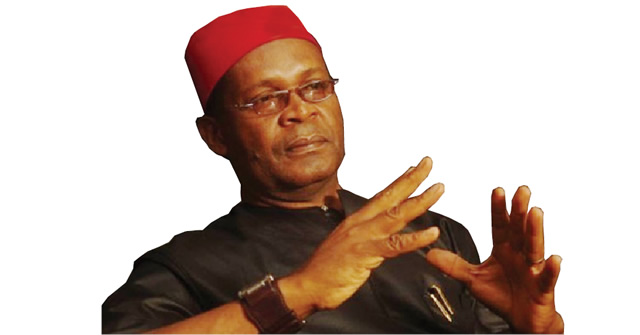
For anyone who has followed Joe Igbokwe on social media over the years, it is almost impossible to miss his unwavering admiration for Bola Ahmed Tinubu, Igbokwe, who has held several key positions in Lagos State under Tinubu’s influence, often praises the former Lagos governor and current Nigerian president as the architect of his political rise. His social media pages brim with effusive adulations for Tinubu, often portraying him as a larger-than-life figure who has shaped his career and life trajectory.
Tinubu, to Igbokwe, is not just a political godfather; some would argue that he views him as a demi-god, an untouchable figure who could do no wrong in the world of Nigerian politics. This sentiment is shared by many of Igbokwe’s followers who have, over time, come to associate his loyalty with unwavering support for whatever Tinubu represents.
However, a rather ironic twist has emerged recently. Despite his long-standing devotion, Joe Igbokwe has begun to lament the state of the Nigerian economy, which, unfortunately, is largely a reflection of the current leadership under his benefactor, Bola Ahmed Tinubu. For someone who has consistently sung the praises of Tinubu, this shift in tone feels like a political paradox. How does a man who has long lauded his godfather now reconcile the worsening economic realities with the leadership of the same individual he once revered?
Joe Igbokwe’s loyalty to Bola Ahmed Tinubu is not a secret. Over the years, Igbokwe has been an outspoken advocate for Tinubu, constantly reminding anyone who would listen of Tinubu’s political genius and the opportunities he created for individuals like him. Serving as the Publicity Secretary of the Lagos chapter of the All Progressives Congress (APC) and holding key administrative roles in the Lagos State government, Igbokwe often credited his political and social stature to the influence of Tinubu.
His social media accounts have been flooded with posts praising Tinubu’s leadership, declaring him the mastermind behind modern Lagos and a political juggernaut whose wisdom should be emulated nationwide. In many ways, Joe Igbokwe presented himself as a product of the “Tinubu School of Leadership,” constantly attributing his success and respectability in Nigeria’s political landscape to Tinubu’s mentorship.
For Igbokwe, Tinubu is not just a politician; he is a visionary, a leader who sees potential in people and helped them actualize it. It is little wonder that Igbokwe’s social media space often read like a shrine of adulation for Tinubu, with critics occasionally accusing him of idolizing the former Lagos governor, now Nigeria’s President.
However, it seems the honeymoon is over. As Nigeria’s economic realities worsen, with inflation skyrocketing, unemployment hitting alarming levels, and the cost of living becoming almost unbearable for the average Nigerian, Igbokwe has begun to express dissatisfaction. And this is where the paradox lies: Joe Igbokwe, a man who once considered Tinubu a political demigod, is now caught in the web of a deteriorating economy orchestrated, in part, by his very own benefactor.
In a recent Facebook post, Igbokwe lamented the rising cost of living, expressing concern over the difficulty faced by Nigerians in putting food on the table. While he did not directly criticize Tinubu, the undertone was hard to miss. For many, it was a shocking moment, a once unflinching loyalist expressing frustration over the very system his godfather presides over.
To put things in perspective, Joe Igbokwe’s lamentation mirrors the reality of millions of Nigerians who are grappling with an economy that seems to be on a steep decline. Despite the promises made during Tinubu’s campaign, many are questioning whether the administration has the capacity to turn the tide. Fuel subsidy removal, foreign exchange volatility, and rising costs of essential goods have left Nigerians in despair, with no clear solution in sight. Even Igbokwe, who once basked in the glory of Tinubu’s leadership, seems unable to ignore the economic storm brewing in the country.
So how does Joe Igbokwe reconcile his loyalty to Tinubu with the current economic hardship? The answer might not be straightforward, but it highlights a common paradox in Nigerian politics: the tension between loyalty and the harsh realities of governance. For someone like Igbokwe, whose political rise is tied to Tinubu’s influence, it is a delicate balancing act. On one hand, he remains indebted to Tinubu for the opportunities and platform he provided him. On the other hand, as a public figure, he cannot ignore the palpable suffering of Nigerians under an administration that he has long supported.
This paradox is not unique to Igbokwe. Across Nigeria’s political landscape, many loyalists find themselves in a similar position, torn between defending their political benefactors and acknowledging the mounting failures of the systems they helped bring to power. For Igbokwe, it is a sobering reminder that political loyalty, while admirable, can only stretch so far when faced with the undeniable realities of a struggling economy.
Bola Ahmed Tinubu’s rise to the presidency was seen by many as the climax of a long and storied political career. Having ruled Lagos for eight years and orchestrated the political success of many protégés, Tinubu was heralded as a master strategist capable of steering Nigeria towards a brighter future. However, just a few months into his presidency, Nigeria finds itself at a crossroads, with many questioning whether the much-promised economic reforms will materialize.
For loyalists like Joe Igbokwe, the current state of affairs is a hard pill to swallow. It forces them to confront the uncomfortable truth that even the most revered political figures can fall short of expectations when tasked with the burden of governance.
Igbokwe’s situation offers a cautionary tale for political loyalists across Nigeria. While loyalty and gratitude to a benefactor are commendable, they should never cloud one’s judgment when the people are suffering. As Nigeria grapples with its economic woes, it is crucial for political figures to speak truth to power, even when it involves the very individuals who helped them rise to prominence.
Joe Igbokwe’s recent lamentations reflect the growing frustration among Nigerians, even within Tinubu’s camp. While he may still hold Tinubu in high regard, it is clear that the worsening economic situation is becoming too significant to ignore, even for the most loyal of supporters.
Joe Igbokwe’s paradoxical position, praising Tinubu as a political godfather while lamenting the economic downturn under his leadership, serves as a reminder of the complexities of political loyalty in Nigeria. It also raises important questions about the responsibilities of those in power and the expectations of their supporters. For Igbokwe, it is a delicate balancing act between gratitude and reality, one that will likely continue to unfold as the Tinubu administration navigates the troubled waters of Nigeria’s economy.