
Africa
Kemi Badenoch and How Not to Denigrate Your Country, by Zayd Ibn Isah


The leader of the British Conservative Party, Mrs. Kemi Badenoch, recently found herself at the center of heated controversy after her unsavory remarks about Nigeria sparked widespread outrage. In one of her videos circulating on social media, Kemi stated that she doesn’t want her adopted country, Britain, to “look like the one she ran away from.” Unsurprisingly, this statement did not sit well with many well-meaning Nigerians, including Vice President Kashim Shettima, who found it far from amusing.
Born on January 2, 1980, in Wimbledon, London, Olukemi Olufunto Adegoke, now known as Kemi Badenoch, spent her early years shuttling between Lagos, Nigeria, and the United States, where her mother, a Professor of Physiology, lived and lectured. Kemi is always quick to reference her African lineage, yet whenever she does, she peddles a single narrative of suffering, underdevelopment, and lack. Her remarks remind me of Chimamanda Ngozi Adichie’s TED Talk, “The Danger of a Single Story.” Kemi Badenoch once described Nigeria as a living hell—a place where she had to walk miles to fetch water and where, according to her, “lizards run out of the taps.”

This childhood experience, as narrated by Kemi to her British audience, doesn’t add up. According to information available on Wikipedia, her mother traveled from Nigeria to the UK to give birth at St. Teresa’s private hospital before the British Nationality Act 1981 abolished automatic birthright citizenship for those born in the United Kingdom. She then returned to Nigeria shortly after Kemi was born. Now, an average Nigerian family living in Lagos on a meager salary could not have afforded such expenses to travel to London to give birth. They would have opted for a general hospital in Oshodi or Idumota. This should cast doubt on Kemi’s claim of walking miles to fetch water since her background doesn’t appear humble.
Some may argue that she experienced this hard life whenever she traveled home for Christmas or other occasions. But we all know how children born and brought up in the city are pampered and overprotected by their grandparents and other relatives whenever they traveled to the village.
Even if that is her reality, is Kemi’s “shalaye” necessary? Such denigration might be excusable from a foreigner, but here we have a Nigerian stooping low to pander to the sentiments of her adopted country, essentially saying what they want to hear to gain favor.
One is forced to wonder if Kemi Badenoch is merely sticking to a familiar script by ostensibly selling her fatherland short to bolster her chances of becoming the British Prime Minister one day. While we wish her success in her political aspirations, we must remind her of the time-tested African adage: “A man who denigrates his father or place of origin to gain applause is like a child who defecates in his own mother’s lap”.

Her divisive rhetoric extends even further. Kemi, in another moment of self-serving commentary, declared that she is Yoruba and has “nothing in common with people from the north of the country, the Boko Haram where Islamism is.” This inflammatory statement, rife with stereotypes, not only seeks to disassociate her from a significant portion of Nigeria’s population but also perpetuates a dangerous narrative that feeds into ethnic and religious divides.
Such a remark is deeply irresponsible, especially coming from someone of Nigerian heritage. Nigeria’s strength lies in its diversity—over 250 ethnic groups and multiple religions coexisting under one flag. Reducing a region and its people to a single negative label is not just inaccurate but harmful, as it reinforces stereotypes that undermine national unity and mutual understanding.
Kemi may be seen as suave and savvy in the UK for casting aspersions on Nigeria, but history is replete with Nigerians who were once darlings of the British media, only to be cast aside when the tides turned. In the end, they often ran back to the country they once disparaged. She may think she has escaped Nigeria for good, but as Chinua Achebe reminds us in Arrow of God: “The little bird which hops off the ground and lands on an ant-hill may not know it, but it is still on the ground.”*
Nations, like individuals, have imperfections. Nigeria is no exception, grappling with corruption, insecurity, and economic woes. Yet, these challenges are not unique to Nigeria. Many nations face similar struggles but are seldom dissected with the same fervor by their own nationals in public. When Nigerians, especially those in influential positions, speak ill of the country, it reinforces stereotypes and undermines efforts to rebrand and develop the nation.
In an effort to address Kemi’s persistent denigration of Nigeria, Vice-President Kashim Shettima suggested that she could “remove the Kemi from her name” if she was not proud of her “nation of origin.” Mrs. Badenoch’s tone-deaf response, issued through her spokesman, was that “she stands by what she says” and “is not the PR for Nigeria.” Clearly, this stubborn response only serves to worsen matters. Let’s be frank: Nigeria does not need her PR. And even if we did, we would not force her. What we are asking from her is not too much. If you are not the PR for Nigeria, then do not be the opposite, “nitori oloun”. Besides, this country already has great men and women, both at home and abroad, who are flying its colors high. Individuals like Amina J. Mohammed, Akinwumi Adesina, Ngozi Okonjo-Iweala, Chimamanda Ngozi Adichie, and even footballer Ademola Lookman have shown the world that Nigeria’s strengths and talents far outweigh its challenges.
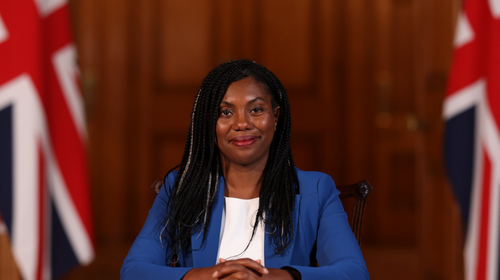
Mrs. Badenoch’s remarks serve as a cautionary tale for all Nigerians, whether at home or abroad. Constructive criticism is necessary for growth, but the manner in which such critique is delivered matters immensely. Leaders and public figures must balance honesty with diplomacy, ensuring their words do not inadvertently harm the very people and places they claim to care about.
Mrs. Badenoch could take a cue from former American President Barack Obama, who never denigrated Kenya, his father’s homeland, despite its numerous challenges. Instead, he celebrated Kenya’s potential and its role as a symbol of hope for Africa. Similarly, great Nigerians in the diaspora, like the aforementioned, exemplify how to critique one’s homeland constructively while celebrating its culture, people, and aspirations. They understand the weight of their words and use them to inspire hope, not despair.
It is worth noting that narratives about Nigeria, or any country, are often influenced by those who control the global conversation. For every criticism, there should be an equal effort to highlight the country’s resilience, cultural richness, and untapped potential. A nation’s story is multifaceted, and no single aspect should define it.
That said, although Kemi has goofed, she is still one of us. We will not throw the baby out with the bathwater. However, she must learn from those who have gone before her. The likes of Rishi Sunak never spoke ill of India, yet he became the British Prime Minister. Kemi does not need to ride on Nigeria’s shortcomings to reach the UK government house. After all, it is the Nigerian spirit in her that is propelling her to greatness.
Mrs. Badenoch’s case underscores the need for Nigerians to take ownership of their narrative. From the halls of Westminster to the streets of Lagos, every Nigerian has a role in shaping the image of the country. While acknowledging our flaws, we must also celebrate our strengths, countering negativity with hope and progress.
As Mrs. Badenoch navigates the fallout from her remarks, one hopes she will reflect on the power of her words and their impact. Criticism, when done with love and an eye toward solutions, can inspire change. But when laced with disdain, it alienates and demoralizes.
Ultimately, patriotism is not blind loyalty, but neither is it relentless disparagement. It is a delicate balance—a lesson Kemi Badenoch, and all of us, would do well to remember.
Zayd Ibn Isah can be reached at lawcadet1@gmail.com


























You must be logged in to post a comment Login