
Africa
Kole Omololu’s Misguided Critique Of Obasanjo: A Case Of A Prophet Not Recognized By His Own People?, by Isaac Asabor

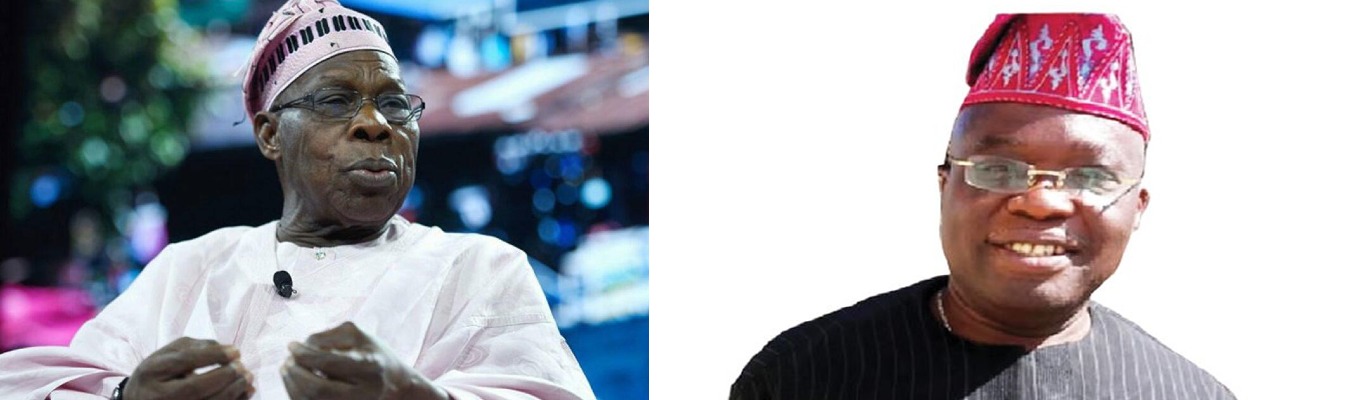
The recent statements by Kole Omololu, a chieftain of Afenifere, labeling former President Olusegun Obasanjo as a leader who mismanaged his presidency, are not only inaccurate but also reflect a glaring case of a prophet not recognized by his own people and a lack of appreciation for the achievements of one of Nigeria’s most impactful leaders. Omololu’s sweeping criticism, while glowing over President Tinubu’s recent economic moves, is a prime example of the proverbial saying that a prophet is never honored in his own land.
Before delving into Omololu’s critiques, it is crucial to recognize Obasanjo’s transformative leadership during his time as president from 1999 to 2007. While no administration is devoid of flaws, Obasanjo’s tenure was marked by significant strides that set Nigeria on a course toward economic recovery and democratic consolidation. Under his watch, Nigeria saw substantial debt relief, economic reforms, and efforts to stabilize a post-military democratic era.
The achievements of the Obasanjo administration are often overshadowed by selective criticism, usually from quarters unwilling to acknowledge the broader impact of his policies. The dismissal of Obasanjo’s legacy as one of failure is, therefore, not only unfair but reveals a narrow, ethnocentric perspective that disregards the complex realities of nation-building in a post-military Nigeria.
Could it be that Omololu’s harsh critique of Obasanjo is colored by their shared Yoruba ethnicity, making it difficult for him to objectively assess the former president’s accomplishments? It’s not unusual for people to be more critical of those who hail from their own ethnic or regional background, perhaps holding them to higher, and sometimes unrealistic, and standards. In this case, Omololu’s statements might be seen as a classic case of failing to recognize the worth of a leader who is “too close to home.”
The biblical adage that “a prophet is not recognized in his own country” rings true here. Despite Obasanjo’s enduring influence and global recognition, his achievements are often downplayed by those who should know better, perhaps because they are too familiar with his perceived flaws. This tendency to criticize one’s own kin, while embracing outsiders, is one of the complexities of Nigeria’s political landscape, where “see finish” can sometimes cloud objective judgment.
Omololu’s comparison of Tinubu’songoing brief tenure with Obasanjo’s eight-year presidency appears premature, especially when one considers the long-term impacts of governance. It is no secret that economic reforms like the removal of fuel subsidies and forex rate unification, championed by Tinubu, are necessary steps. However, they have come at a significant cost to the already impoverished Nigerian populace, leading to widespread suffering. It is one thing to praise bold economic decisions, but it is quite another to assess their real impact on the lives of ordinary Nigerians.
Omololu highlights the economic indicators under Tinubu, such as improvements in the Nigerian Stock Exchange and trade surplus records. Yet, these metrics do not tell the whole story. Obasanjo’s era was about laying the foundation for macroeconomic stability, debt relief, and creating a new image for Nigeria on the global stage. By contrast, Tinubu’s reforms have so far brought more pain than relief to the average Nigerian struggling with inflation and unemployment.
Omololu attempts to score points by comparing corruption ratings under Obasanjo and Tinubu. He cites Transparency International’s recent report, suggesting that Nigeria’s corruption perception has improved under Tinubu. However, reducing the complexities of corruption to mere rankings on global indices does a disservice to the broader, systemic issues Nigeria faces. Obasanjo, for all his faults, did take decisive steps to tackle corruption, including establishing the Economic and Financial Crimes Commission (EFCC) and the Independent Corrupt Practices Commission (ICPC), both of which remain central to Nigeria’s anti-corruption fight today.
Moreover, Omololu’s reference to the public fallout between Obasanjo and his deputy, AtikuAbubakar, as evidence of Obasanjo’s inability to manage his presidency is a shallow argument. Leadership, especially in a diverse nation like Nigeria, involves managing difficult personalities and interests. It is this very openness in Nigerian politics, where internal disagreements are aired in public,that fosters a democratic spirit, even if it sometimes appears chaotic.
Obasanjo’s willingness to critique the current state of affairs, including under President Tinubu, is not a reflection of bitterness or failed leadership but of his commitment to Nigeria’s progress. It takes courage and experience to speak out against the prevailing winds, especially when those winds blow from one’s own ethnic enclave.
Kole Omololu’s assertion that Obasanjo has no moral standing to criticize Tinubu is not only misplaced but also suggests a lack of historical understanding. Leaders like Obasanjo, who have seen Nigeria through its tumultuous journey, should not be silenced for the sake of political expediency. The real question is not whether Obasanjo managed his presidency perfectly but whether his criticisms, however uncomfortable, hold merit in addressing Nigeria’s current trajectory.
In the final analysis, it is crucial to remember that governance is a marathon, not a sprint. Omololu may be quick to shower praises on Tinubu’s “bold reforms,” but only time will tell if these policies truly benefit Nigeria or simply provide short-term gains with long-term consequences. Meanwhile, Obasanjo’s criticisms should not be dismissed as “habitual attention-seeking” but rather seen as part of a necessary dialogue to hold leaders accountable.
Indeed, a prophet is often not recognized by his own people. But history has a way of vindicating those who speak truth to power, even when their words are uncomfortable. Omololu and others may be eager to sideline Obasanjo, but the enduring legacy of Nigeria’s past leaders should not be so easily erased from the national consciousness.

























You must be logged in to post a comment Login