
Africa
Kukah’s 2025 Easter Message: Worth Digesting And Ruminating Over -By Isaac Asabor
Kukah’s homily takes a darker turn when he reminds Nigerians that some of today’s bandits were once political tools. “Some of our public officers confessed that they brought our current killers into our country as a strategy for upstaging the government of the day.” This is a chilling revelation, and one that indicts the political class across board. It lays bare the reality that Nigeria’s insecurity is not an accident, it is, in part, a consequence of calculated greed and a hunger for power.

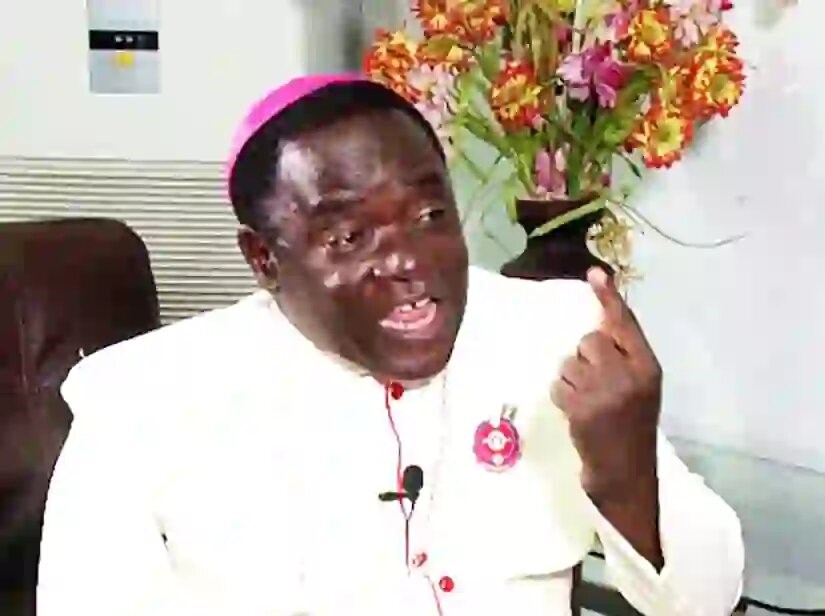
In a time when most religious homilies have been reduced to performative sermons void of national relevance, Bishop Matthew Hassan Kukah of the Catholic Diocese of Sokoto continues to remind Nigerians that the pulpit can still be a place of truth, courage, and accountability. His 2025 Easter Message, delivered during the Holy Saturday Service, is not just a homily, it is a clarion call that holds a mirror up to the Nigerian state and its leadership. In a country plagued by hypocrisy and muffled truths, Bishop Kukah’s sermon is, indeed, worth digesting and ruminating over.
His message, rich in metaphor and grounded in the harsh realities of Nigeria, forces us to reckon with the nation’s spiritual and socio-political condition. Using the cross as a metaphor, Kukah paints a grim yet honest portrait of a country bleeding from every corner, crippled by insecurity, hunger, and poor governance. He doesn’t mince words, and in doing so, he does what many in positions of influence fear: he speaks truth to power.
Kukah opens his homily by drawing a parallel between the crucifixion of Christ and the suffering of Nigerians. He refers to the nation’s current situation as being akin to dangling on a cross, innocent, tortured, and abandoned. “Mr. President, Nigeria is reaching a breaking point. The nation is gradually becoming a huge national morgue,” he warns.
This metaphor is not poetic exaggeration, it is brutally accurate. From Sokoto to Enugu, Maiduguri to Lagos, families wake up unsure of whether they or their loved ones will fall victim to the day’s dose of savagery. Kidnappings, killings, and general insecurity have become so normalized that the announcement of tragedies barely elicits shock anymore. Nigeria, Kukah rightly notes, is hanging on a cross constructed by decades of political recklessness, but now, the nails are being driven deeper by a government that seems increasingly detached from the agony below.
One of the boldest elements of the homily is Kukah’s direct address to President Bola Ahmed Tinubu. “Mr. President, we all admit that you neither erected this cross nor did you effect our collective crucifixion,” he says, acknowledging that Tinubu inherited a mess. But that is where the understanding ends. The bishop swiftly pivots to reality: Nigerians are tired of hanging on this cross.
Kukah demands action, not explanations, not excuses. His tone is firm but not disrespectful, clear but not confrontational. In a country where sycophancy has become a norm among many religious leaders, his audacity to call on the President to “bring us down from this cross” is not only refreshing but necessary.
Kukah does not dwell only on physical suffering. He expands the discussion to the moral and psychological torment of Nigerians. He highlights the culture of cynicism, hopelessness, and loss of faith in leadership. The bishop reminds Christians, however, that Easter is fundamentally a season of hope, hope that defies logic and endures beyond pain.
This is a critical spiritual and philosophical insight. Nigerians have endured so much pain that many no longer expect improvement, they merely hope to survive. And this is dangerous. A nation that no longer expects progress that no longer believes in its future is on a fast track to implosion. Kukah is essentially saying: reigniting hope is not just spiritual, it is political. It must be backed by tangible action.
In what could be described as one of the most piercing portions of the homily, Kukah calls out the futility of palliative-driven policies. He rightly points out that “mere palliative distribution diminishes the dignity of citizens.” Nigeria has become a nation where government handouts are presented as policy achievements, and Kukah is having none of it.
He presses the President to make food security a fundamental right, not a seasonal handout. His challenge goes beyond hunger. It speaks to the heart of a broken governance system, one that has mastered the art of temporary relief but fails at sustainable solutions.
Kukah’s homily takes a darker turn when he reminds Nigerians that some of today’s bandits were once political tools. “Some of our public officers confessed that they brought our current killers into our country as a strategy for upstaging the government of the day.” This is a chilling revelation, and one that indicts the political class across board. It lays bare the reality that Nigeria’s insecurity is not an accident, it is, in part, a consequence of calculated greed and a hunger for power.
Now, these political tools have mutated into monsters. They no longer take orders, they issue them. Kukah warns that Nigeria’s very foundation is under threat from these “ravenous predators.” If these threats are not dismantled immediately, Nigeria risks becoming a failed state in both function and soul.
Kukah ends his message with a dire warning: that government inaction is beginning to look suspicious. He questions whether the persistence of insecurity is due to incompetence or whether those in power are benefiting from the chaos. “Are Nigerians lambs being sacrificed to an unknown god?” he asks. That’s not just a rhetorical question; it’s a haunting accusation.
This is perhaps the most damning part of the homily. It questions the very moral fiber of the nation’s leadership. Is the state merely overwhelmed, or is it compromised? Are our leaders simply helpless, or are they profiting from our helplessness?
Even as Kukah critiques and challenges the nation’s leaders, he does not lose sight of the essence of Easter. He reminds Christians that Christ’s resurrection is the ultimate emblem of hope. This is not a message of despair, it is a call to action, a spiritual charge to believe again, act again, and reclaim our country.
Kukah’s sermon is what a prophetic message should be: bold, honest, faith-filled, and politically aware. It is a message that should make leaders uncomfortable and citizens reflective. It is a sermon that forces us to think, not just about what is, but about what ought to be.
In a country starved of sincerity, Bishop Kukah’s 2025 Easter message serves as both mirror and map. It reflects the nation’s failings with unapologetic clarity, and at the same time, offers a roadmap for renewal. This is no ordinary sermon, it is a national document of conscience.
Nigeria needs more leaders like Kukah, who are not afraid to tell uncomfortable.

























You must be logged in to post a comment Login