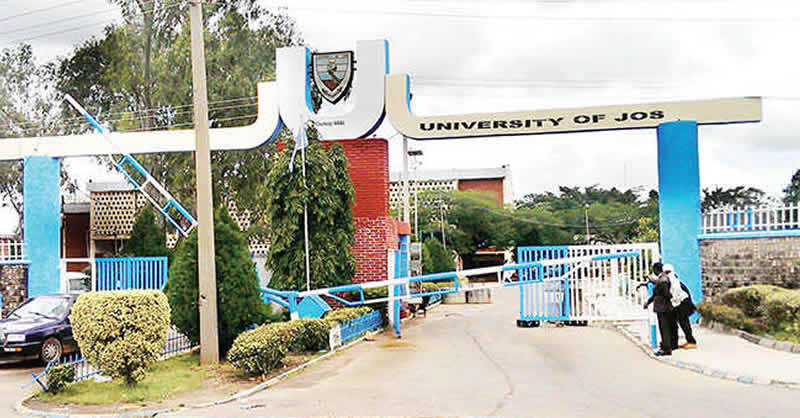
When Unijos recently announced that it had placed ninth among Nigerian universities in the World University Rankings 2026, the news reverberated far beyond Plateau State. It was not just a statistical event; it was a symbolic assertion and proof that vision, consistency, and institutional courage can pierce even the hardest ceilings. For the first time, Unijos entered a league long dominated by better-funded, older, or private institutions. For its vice-chancellor, Prof. Tanko Yusuf, who had promised to reposition the institution globally, this was no small victory. It was validation that leadership when both disciplined and daring can still produce results in a system where mediocrity too often feels inevitable.
To understand the gravity of this accomplishment, one must remember the terrain of Nigerian higher education: erratic funding, weak infrastructure, poor research incentives, and endless bureaucratic hurdles. The journey toward global recognition for any public university is a marathon through mud. Faculty juggle heavy teaching loads and administrative burdens. Research often lacks funding, laboratories decay, and power supply remains unreliable. In such conditions, to break into the global conversation is to defy odds that many had come to accept as permanent.
For Unijos, this new ranking means more than prestige. It signals recognition that peers, databases, and assessors now see its work. It validates years of quiet toil by faculty, students, and administrators who refused to surrender to frustration. It also changes perception: Unijos can no longer be viewed as a peripheral regional institution, but one stepping onto the world stage with credibility. Global ranking visibility attracts attention from funders, partners, and aspiring students. It becomes a currency of legitimacy.
But recognition also brings responsibility. The harder test is not to enter the table, but to stay there. To sustain such a ranking, Unijos must resist complacency and institutional fatigue. Beyond charisma, it must entrench systems in research management, funding diversification, graduate studies, and international collaboration. Rankings thrive on consistency, data, and visibility. The real challenge is to turn this moment into momentum.
Tracing Unijos’s evolution reveals how much resilience underpins this success. From its modest origins in 1971 as a satellite of the University of Ibadan to its 1975 independence, the institution endured decades of interrupted growth. For years, it hovered in middle positions in rankings such as EduRank or Scimago; respectable but not remarkable. Thus, to now break into Nigeria’s top ten globally ranked universities is not just progress; it’s a historic leap and transformation from invisibility to visibility.
Such progress, however, must be situated within Nigeria’s wider university crisis. Most public institutions face suffocating underfunding, labor strikes, and infrastructural decay. Many academics leave for foreign universities, eroding institutional memory. Students contend with overcrowded hostels, unstable calendars, and dwindling morale. Meanwhile, ranking systems often privilege factors that Nigerian universities find hardest to sustain, like high-impact research, international collaboration, and citation visibility.
That Unijos climbed despite these constraints makes its story more remarkable. It’s an emblem of possibility; a sign that public universities, if led with integrity, can still achieve excellence. The Vice-Chancellor’s leadership has evidently prioritized clarity, collaboration, and creativity: fostering faculty motivation, improving research culture, and leveraging partnerships. Leadership here is not a title; it’s the daily art of inspiring commitment despite adversity.
True leadership in such settings requires juggling multiple crises from managing budget shortfalls to soothing restive unions, from keeping the lights on to ensuring academic quality. It also demands humility like the readiness to listen, to delegate, to build alliances with faculty, alumni, and local communities. A visionary VC must also invest in “soft” capacities of trust, morale, shared ownership because universities thrive on collective spirit, not commands.
To deepen its new status, Unijos must now pursue strategic imperatives: invest in research capacity, mentor young academics, incentivize interdisciplinary collaboration, and expand graduate studies. Publishing more papers is good, but publishing well in peer-reviewed journals with impact is better. Partnerships with global universities can bring joint grants, co-authorships, and student exchanges. Local industry collaborations and alumni endowments must also become sources of funding, not just government subvention.
This progress also calls for better infrastructure: digitized libraries, research databases, reliable internet, functional laboratories, and clean energy. Internationalization should not be cosmetic. It must include attracting foreign faculty, exchange students, and joint programs that build credibility and global exposure.
When Unijos hosts the NUGA games this November, it will not just be welcoming athletes; it will be hosting a metaphor. Sport, like scholarship, is about endurance, teamwork, and discipline. As the university basks in the applause of its 9th-place recognition, it must remember that medals fade, but systems sustain. The challenge ahead is to make this victory a habit, not a headline.
In the language of the streets, “Unijos don carry first.” But leadership must now ensure that “carrying first” is not a one-time sprint but a continuous relay across faculties, administrations, and generations. The baton of excellence must not drop. Congratulations my Vice Chancellor, and may University of Jos and Nigeria win.