
Africa
Mr. President, This Is Not Good for Your Government, Your Legacy, or Your Spirit: A Plea for Conscience, Law, and Justice in the Case of Senator Natasha Akpoti-Uduaghan -By John Egbeazien Oshodi
In Nigeria, such fears are not paranoid—they are historical. Political cases have often ended in chaos, physical assault, or worse. Her fear reflects a lived Nigerian reality: the courthouse can sometimes be more dangerous than the crime scene.

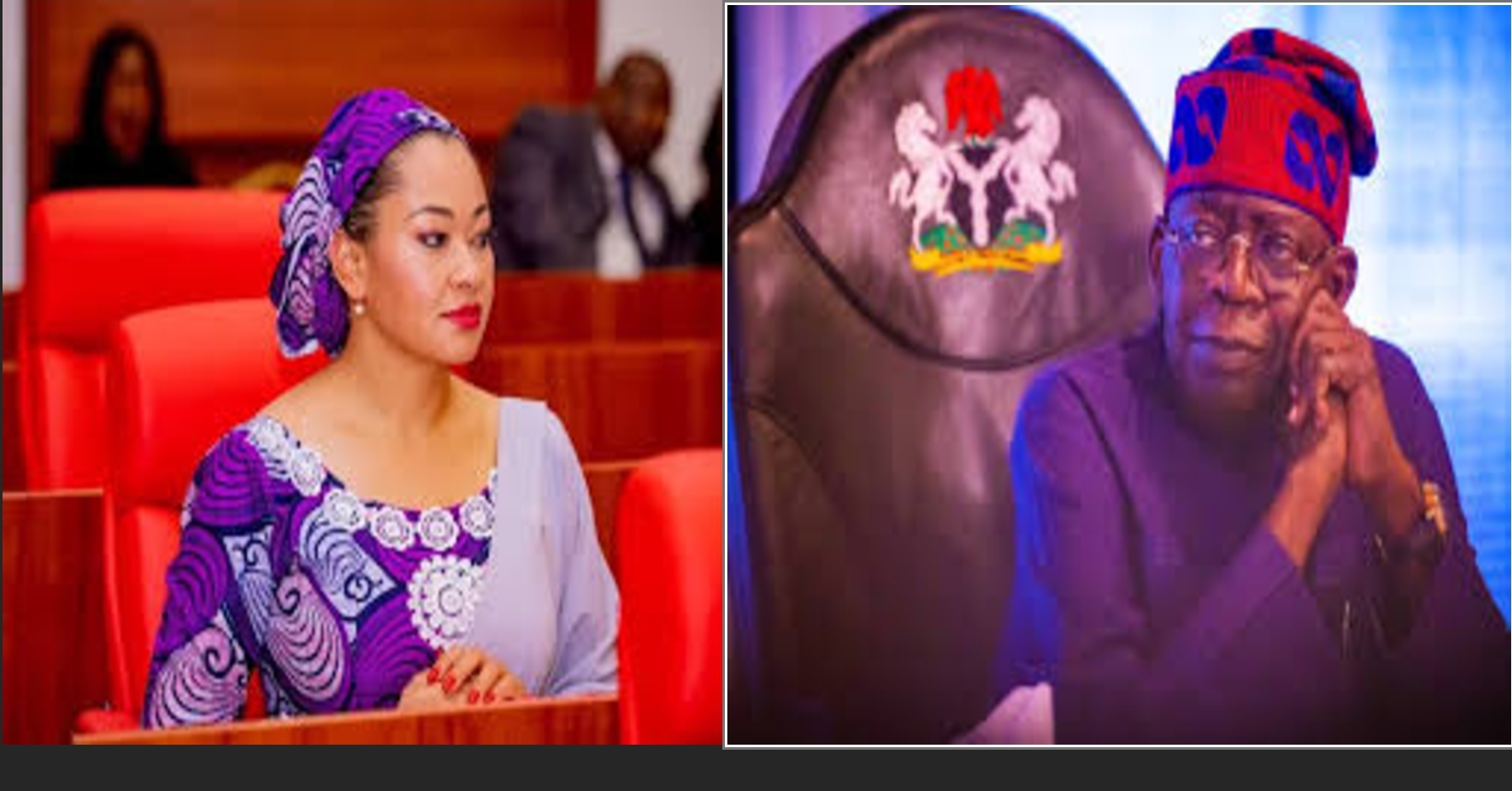
Twelve Petitions Ignored, One Woman Endangered
Between March and May 2025, Senator Natasha Akpoti-Uduaghan filed twelve documented petitions with Nigeria’s law enforcement agencies. These were not media antics—they were formal legal submissions detailing threats to life, cyberstalking, defamation, withdrawal of security, and an alleged assassination plot involving high-ranking officials.
And yet, astonishingly, none were acknowledged. None investigated. Not one earned even a basic reply. The silence from state institutions was total. The machinery of justice, which should be neutral and vigilant, chose passivity. It created a dangerous precedent: that a woman elected by the people can cry out twelve times, and the system will turn its face away.
However, when she publicly restated her fears in a televised interview—referring to alleged “discussions” between Senate President Godswill Akpabio and Yahaya Bello about eliminating her—the state moved swiftly. Within days, your government, Mr. President, through the Attorney-General, filed criminal defamation charges against her.
Twelve ignored pleas. One rapid prosecution.
This pattern, Mr. President, does not reflect democratic fairness. It reflects selective suppression. Even if you were unaware of the operational specifics, the symbolic weight rests squarely on your leadership. And yes, Mr. President, even if you did not authorize these actions directly, they are carried out in your name. That is what the world sees. That is what history will record.
A Letter Only After Shame—And With No Date
In an exclusive interview with journalist Adeola Fayehun, Natasha revealed a troubling development: following her lawyer’s public outcry over state silence, a long-overdue “invitation letter” was issued by the police.
But when displayed on screen, the letter bore no date. No time. No reference to prior petitions. It was empty—hastily crafted to deflect public scrutiny rather than to serve justice. It lacked the seriousness that should accompany the rule of law. It appeared not as a legal document, but a public relations afterthought.
Mr. President, this is not mere administrative error. This is symptomatic of a deeper decay—where reactive governance substitutes authentic justice. If this is the coordination permitted under your administration, then silence becomes your unwelcome signature.
She Returns Alone—Fearing Jail, or Worse
Senator Natasha has announced that she will return from London on June 3, 2025, to face the charges against her. This is not a triumphant return—it is a cautious, fearful one. She has voiced, with visible anxiety, that she fears possible violence, even death, in or around the courthouse.
In Nigeria, such fears are not paranoid—they are historical. Political cases have often ended in chaos, physical assault, or worse. Her fear reflects a lived Nigerian reality: the courthouse can sometimes be more dangerous than the crime scene.
She has invited the public to witness this moment—not just for support, but for safety. Mr. President, she is returning not just to defend herself—but to test whether justice still breathes in this country. Will your government show up for truth—or only for power?
Selective Justice Hurts the Nation and Your Legacy
It is now public knowledge that Akpabio, Bello, and others named in her petitions have not been invited, questioned, or investigated in any way. This imbalance tears at the fabric of democracy.
Your Inspector General of Police and Attorney-General appear to be practicing a dangerous double standard: they pounce on the accuser, while shielding the accused.
Mr. President, what does this say about your legacy? That those with power are immune? That courageous women should expect persecution for speaking up?
This is not just an injustice to one woman—it is a signal to every Nigerian that justice serves the powerful, not the people.
Conscience and Health: What Your Advisors Won’t Say
As a psychologist, allow me to speak from clinical truth.
When leaders knowingly endorse or allow injustice—when fairness is set aside for political convenience—their bodies pay the price. Sleepless nights. Elevated blood pressure. Tension headaches. Chest tightness. Emotional fatigue.
Medically speaking, when conscience is repressed, the body reacts. The liver, one of the primary stress processors, begins to strain, accumulating cortisol and inflammatory responses. The kidneys—vital regulators of blood and toxin levels—can deteriorate under prolonged stress, leading to hypertension and electrolyte imbalances. The prostate, already susceptible with age, worsens. The heart quietly suffers. Silent damage builds.
Science has long confirmed what faith traditions have always warned: when the soul is disturbed by injustice, the body does not rest. What is unspoken in meetings is expressed in biology. This is not mythology. It is medicine. It is reality.
VI. Mr. President, This Is Your Moment to Act with Moral Courage
History does not remember only the roads a president builds—it remembers the justice he upholds, or abandons.
You may not have written the indictment. You may not have drafted the police memo. But your silence makes it yours.
Mr. President, call for a full institutional review. Let Akpabio, Bello, and all others named be invited for questioning. Ensure Senator Natasha’s petitions are treated with the seriousness they deserve. Ensure that every Nigerian—no matter their gender, status, or power—stands equal before the law.
Let the judiciary serve the people, not punish them. Let your leadership reflect courage, not caution.
A Final Plea to Your Spirit, Legacy, and God
There is still time, Mr. President. Time to be remembered for fairness. Time to reclaim the conscience of your office. Time to make the law what it should be—a tool for protection, not persecution.
Because when institutions are used to silence the weak and shield the mighty, democracy does not only suffer. The soul of a nation sickens.
And when that soul sickens, even the highest office cannot escape its consequences. The world believes these actions bear your name. History will record them beside your legacy.
Choose justice. Choose spiritual peace. Choose to act—not out of fear, but out of moral responsibility.
May God guide your heart toward what is right, and may history remember you as a leader who refused to let injustice define his reign.
This writer does not know any of the individuals involved; the focus is solely on upholding democracy, truth, and justice.
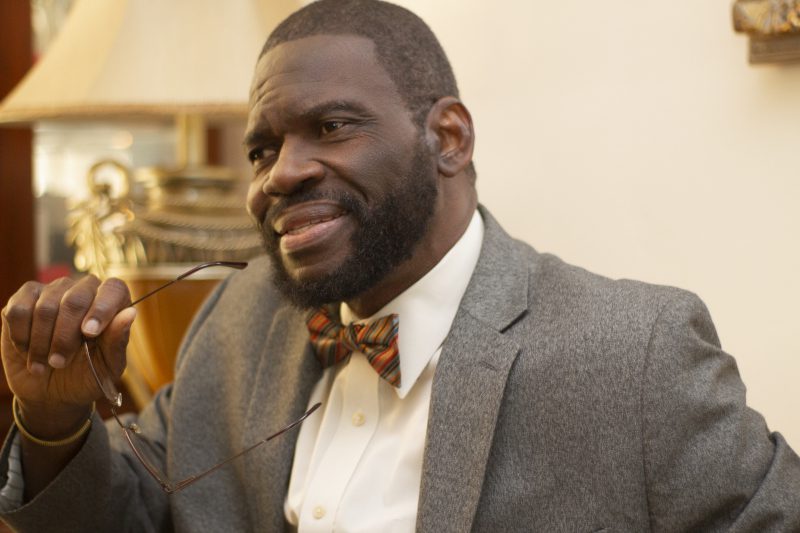
Psychologist John Egbeazien Oshodi
Professor John Egbeazien Oshodi is an American psychologist, educator, and author specializing in forensic, legal, and clinical psychology, cross-cultural psychology, police and prison sciences, and community justice. Born in Uromi, Edo State, Nigeria, he is the son of a 37-year veteran of the Nigeria Police Force—an experience that shaped his enduring commitment to justice, security, and psychological reform.
A pioneer in the field, he introduced state-of-the-art forensic psychology to Nigeria in 2011 through the National Universities Commission and Nasarawa State University, where he served as Associate Professor in the Department of Psychology. His contributions extend beyond academia through the Oshodi Foundation and the Center for Psychological and Forensic Services, advancing mental health, behavioral reform, and institutional transformation.
Professor Oshodi has held faculty positions at Florida Memorial University, Florida International University, Broward College, where he also served as Assistant Professor and Interim Associate Dean, Nova Southeastern University, and Lynn University. He is currently a contributing faculty member at Walden University and a virtual professor with Weldios University and ISCOM University.
In the United States, he serves as a government consultant in forensic-clinical psychology, offering expertise in mental health, behavioral analysis, and institutional evaluation. He is also the founder of Psychoafricalysis, a theoretical framework that integrates African sociocultural dynamics into modern psychology.
A proud Black Republican, Professor Oshodi advocates for individual empowerment, ethical leadership, and institutional integrity. His work focuses on promoting functional governance and sustainable development across Africa.

























You must be logged in to post a comment Login