Politics
Nasir El-Rufai and the Politics of Fear in Nigeria’s Power Struggle -By Muhammad Umar Shehu
El-Rufai himself has long argued that political dominance in Nigeria can be challenged through direct engagement with voters. During a public lecture in Lagos years ago, he pointed out that millions of registered voters often stay away from the polls. His argument was simple. If a politician can mobilize even a fraction of those disengaged citizens, entrenched political structures can be defeated. That message resonates strongly in today’s political climate.

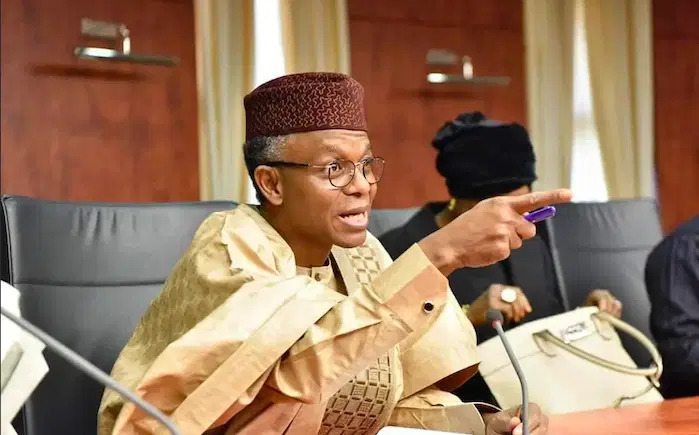
Nigeria’s political arena has never been short of strong personalities, but few figures have remained as consistently relevant as Nasir El-Rufai. Love him or dislike him, it is difficult to ignore the fact that he has been one of the most consequential actors in Nigeria’s political journey since the return to civil rule in 1999. His recent confrontation with security authorities and the attempt to detain him without clear evidence speaks less about law enforcement and more about the anxiety within the ruling establishment.
To understand the current political tension, one must first understand El-Rufai’s place in the system. From his early role in the administration of Olusegun Obasanjo to his strategic alignment in the political transitions that produced Umaru Musa Yar’Adua, Goodluck Jonathan, and later Muhammadu Buhari, El-Rufai has repeatedly demonstrated a rare understanding of how power works in Nigeria. Few politicians can claim to have operated so close to multiple presidencies across different political eras.
His experience is not accidental. As a former Minister of the Federal Capital Territory and later governor of Kaduna State, El-Rufai built a reputation for being both strategic and outspoken. That combination has earned him loyal supporters and fierce critics. Yet even his opponents concede that he understands the inner workings of Nigerian politics better than most of his contemporaries.
What makes the present situation intriguing is the reaction of the current government under President Bola Tinubu. Political watchers note that the administration appears unusually sensitive to El-Rufai’s moves and statements. The attempted arrest at the Nnamdi Azikiwe International Airport in Abuja, which was resisted by supporters who had gathered to welcome him, has only deepened public suspicion that political motivations may be at play.
In any democratic society, the rule of law demands that allegations be backed by evidence. Detaining a prominent political figure without clear justification risks sending the wrong message to the public. It creates the impression that state institutions are being deployed as political tools rather than impartial guardians of justice. Such actions can weaken democratic confidence at a time when many Nigerians are already questioning the direction of the country’s governance.
Beyond the immediate controversy, El-Rufai’s political relevance lies in his networks and influence. In Northern Nigeria, he maintains relationships with traditional leaders, religious authorities, and political elites. His connections with groups such as the Arewa Consultative Forum and his standing among many northern political actors make him a figure whose voice carries weight in national conversations.
This is also why his reported involvement in strengthening the African Democratic Congress has attracted attention. In a political environment where alliances and coalitions often determine electoral outcomes, any figure capable of mobilizing political forces across regions automatically becomes a strategic concern for those in power.
El-Rufai himself has long argued that political dominance in Nigeria can be challenged through direct engagement with voters. During a public lecture in Lagos years ago, he pointed out that millions of registered voters often stay away from the polls. His argument was simple. If a politician can mobilize even a fraction of those disengaged citizens, entrenched political structures can be defeated. That message resonates strongly in today’s political climate.
The lesson from his remarks is that Nigerian democracy still holds untapped potential. Electoral participation remains one of the most powerful tools available to citizens. When politicians connect directly with voters rather than relying solely on elite political arrangements, the balance of power can shift dramatically.
The current political drama surrounding El-Rufai therefore reflects a deeper struggle within Nigeria’s political system. It is not merely about one individual. It is about the anxiety that emerges whenever established power structures sense the rise of alternative political forces.
Whether one agrees with his politics or not, attempting to silence a figure like El-Rufai through intimidation or questionable legal action does not strengthen democracy. If anything, it elevates his profile and reinforces the perception that he represents a genuine challenge to the status quo.
Nigeria’s democracy should be strong enough to accommodate dissent, criticism, and competition. The country has endured decades of political turbulence and should have learned by now that suppressing political voices rarely solves problems. Open contestation, debate, and accountability are the true pillars of democratic progress.
As the political landscape gradually shifts toward the next electoral cycle, figures like Nasir El-Rufai will continue to shape conversations about leadership, power, and the future of governance in Nigeria. The real question is not whether he will remain relevant. The real question is how Nigeria’s political system will respond to voices that challenge the existing order.
If democracy means anything, it must allow strong political actors to participate freely without fear of intimidation. The strength of a nation’s democracy is measured not by how it treats its friends, but by how it treats its critics.
Interesting time ahead.
Muhammad Umar Shehu wrote from Gombe and can be reached via umarmuhammadshehu2@gmail.com