Africa
Natasha’s Plight: A Mirror Reflecting Women’s Misogyny In Nigeria -By Isaac Asabor
If Nigerian women are serious about achieving gender equality, then the cycle of self-sabotage must end. Women must first unlearn the deep-seated biases that make them distrust and undermine their own gender. More female politicians must be supported, not just by progressive men but by women who understand that their representation in governance benefits all women.

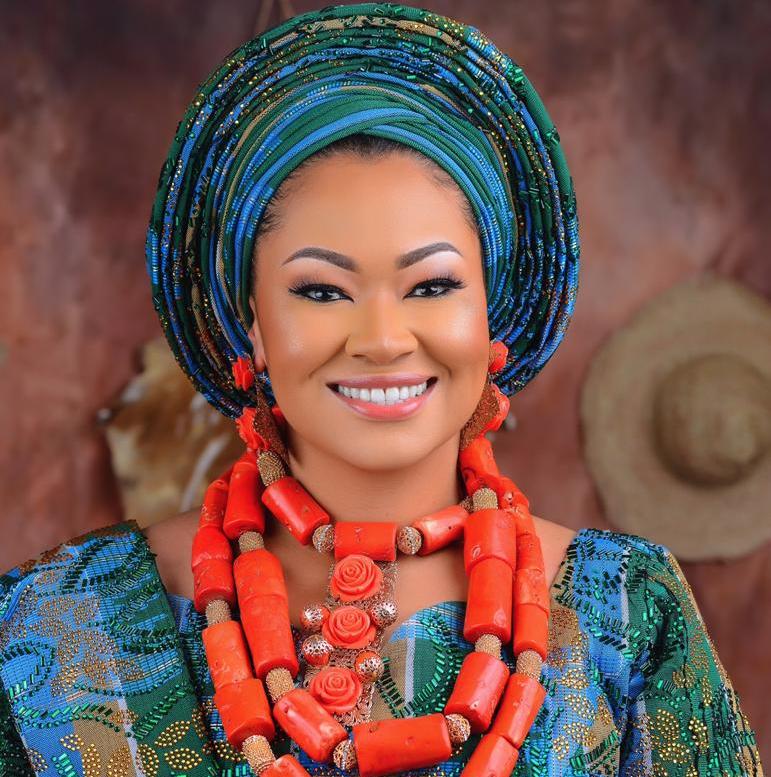
In the struggle for gender equality in Nigeria, one would expect women to rally behind their fellow women, supporting and uplifting them in the face of systemic discrimination. However, the plight of Natasha Akpoti-Uduaghan, a female politician who has faced immense opposition and ridicule, ironically exposes how deeply ingrained misogyny is, not just among men but among Nigerian women themselves. The backlash Natasha has received, not only from male-dominated political circles but also from fellow women, underscores a disturbing reality: women in Nigeria are often the biggest roadblocks to their own liberation.
Natasha Akpoti-Uduaghan, a lawyer, businesswoman, and politician, has been at the receiving end of unfair attacks, not necessarily because of her competence or policies but because of her gender. In her bid to become the first female senator from Kogi State, she faced fierce resistance from many quarters. While the hostility from men was expected, it was shocking to see that a significant portion of the opposition came from fellow women who, rather than champion her cause, actively sought to undermine her efforts.
It is no secret that Nigerian politics is deeply patriarchal, with women being grossly underrepresented in governance. Yet, when a woman like Natasha rises to challenge this status quo, instead of gaining solidarity from her fellow women, she faces criticism, mockery, and outright rejection from them. Several women openly questioned her capability to lead, not based on her political credentials but on sexist stereotypes.
One of the most striking incidents of women standing against Natasha was when female political leaders in Kogi openly endorsed her male opponent, reinforcing the idea that leadership is a man’s domain. Instead of supporting her as a pioneer who could break the gender barrier, they chose to remain complicit in a system that has historically marginalized them.
Similarly, during her campaigns, many market women and female grassroots mobilizers, who should naturally see her as a source of inspiration, ridiculed her ambition. Some went as far as to say that politics is not a place for a woman, suggesting that her presence in the race was an abomination to the traditional order. These sentiments, rather than originating from men, were boldly expressed by women who have long suffered from political and economic exclusion themselves.
Adding to this unfortunate irony, even female journalists and social commentators joined in spreading derogatory narratives about Natasha. Instead of using their platforms to advocate for her and highlight the significance of her political journey, they delved into baseless gossip, questioning her personal life and integrity rather than discussing her policies and leadership qualities. This trend, repeated across Nigerian society, demonstrates that misogyny is not merely a male-driven phenomenon but one that has deeply penetrated the psyche of many women as well.
In fact, misogyny in Nigeria is often attributed solely to men, but Natasha’s ordeal shows that women are also complicit. This self-sabotaging mindset has its roots in cultural conditioning, where women have been socialized to see themselves as second-class citizens. Many Nigerian women have internalized the belief that leadership and power belong to men, making them unwitting enforcers of their own oppression.
This paradox is evident in multiple facets of Nigerian society. For instance, female journalists and social commentators were among the first to spread derogatory rumors about Natasha’s personal life, seeking to discredit her with unfounded accusations rather than debating her policies. Social media platforms saw a rise in women-led attacks, with many attempting to diminish her achievements by branding her as ‘too ambitious’ or questioning her morals, a criticism rarely directed at male politicians.
Even among women’s rights organizations, the response to Natasha’s struggles has been lukewarm. Rather than uniting to defend her from gender-based attacks, many have remained silent, further highlighting the divide among Nigerian women when it comes to supporting one of their own. This selective activism is part of the larger problem; when women’s organizations fail to provide unwavering support for women in politics, it sends a message that female leadership is conditional, rather than an undeniable right.
Rather than standing in firm support of Natasha, prominent female politicians like Ita-Giwa and Ireti Kingibe made comments that did not even add value to her fight against Akpabio and the Senate. Their failure to strongly condemn the systemic oppression Natasha faced further reinforces the idea that women in power sometimes fail to use their influence to uplift other women. Instead of leveraging their positions to rally behind Natasha in her battle against political oppression, their lukewarm responses only added to the frustration of those advocating for true gender equality.
The wider implications of women’s opposition to Natasha’s political aspirations extend beyond her personal ordeal. It highlights why progress in bridging Nigeria’s gender gap has been painfully slow. When women do not support their own, it provides justification for male dominance and exclusionary policies.
In the 2023 general elections, the number of female candidates remained dismally low, with only a handful securing meaningful political positions. If women, who make up nearly half of Nigeria’s population, cannot see the importance of uplifting their own, how then can we expect the political landscape to change? Women’s internalized misogyny has made it easier for male politicians to sideline them, as they do not even need to fight too hard when women themselves enforce the status quo.
This phenomenon is not unique to politics. It is evident in workplaces, where female bosses often make life difficult for their female subordinates, and in families, where mothers-in-law become the greatest adversaries to their daughters-in-law. It is seen in educational institutions, where female lecturers sometimes scrutinize their female students more harshly than their male counterparts. The issue is systemic, and Natasha’s case is just a high-profile example of this disturbing reality.
If Nigerian women are serious about achieving gender equality, then the cycle of self-sabotage must end. Women must first unlearn the deep-seated biases that make them distrust and undermine their own gender. More female politicians must be supported, not just by progressive men but by women who understand that their representation in governance benefits all women.
Additionally, women’s advocacy groups must go beyond rhetoric and take definitive stands in support of female leaders who face gender-based discrimination. It is not enough to call for more women in politics while remaining silent when those women are being vilified. Consistency is key.
At the grassroots level, there needs to be more awareness about the importance of female solidarity. Women in marketplaces, religious settings, and social organizations must begin to see female leadership as a collective victory rather than an anomaly to be feared. Not only that, they should be sensitized, and encouraged to always turn down requests from mischievous politicians who hire them to protest against their own, particularly when enticed with pea-nuts. Also, women in the media also have a significant role to play in reshaping narratives by amplifying the achievements and struggles of female politicians rather than tearing them down.
Without a doubt, Natasha Akpoti-Uduaghan’s journey in Nigerian politics should have been a rallying point for women’s empowerment. Instead, it has exposed the deep-seated misogyny that exists among Nigerian women themselves. When women actively pull down other women, they reinforce the very barriers they seek to dismantle. Until Nigerian women begin to uplift one another with the same energy they use to criticize, bridging the gender gap will remain an elusive dream.