Africa
Natasha’s Return: A Step Towards Healing Our Democracy -By Isaac Asabor
Let this moment not be wasted. Let it serve as a turning point for the Senate to recommit to fairness, transparency, and justice. Let it inspire lawmakers to see themselves first as servants of the people, not as wielders of unchecked power. And let it reassure Nigerians that though slow at times, the wheels of justice and democracy still turn in their favor.

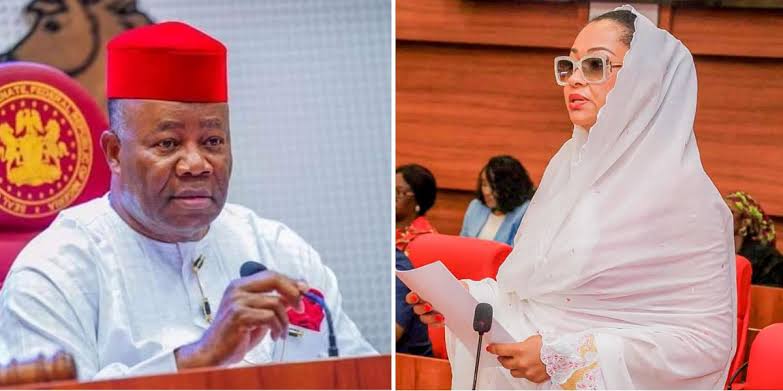
The news that the Nigerian Senate has finally unsealed the office of Senator Natasha Uduaghan Akpoti and granted her access to resume her duties comes as a welcome development to Nigerians who have followed this matter with keen interest over the past six months. This action, though delayed, has reaffirmed the resilience of democracy and the importance of institutions correcting themselves when errors have been made. It is a moment not just for celebration but also for sober reflection on how to deepen our democratic culture in Nigeria.
Senator Natasha’s suspension and the controversy that followed tested the strength of our democracy. For months, Nigerians watched with concern as a duly elected lawmaker, chosen by her people to represent their voices in the National Assembly, was kept from fulfilling her constitutional responsibilities. Many considered the suspension excessive, especially as its extension beyond the official expiration date sent worrying signals about the sanctity of legislative independence and respect for the will of the electorate.
Now that the Senate, under the leadership of Senator Godswill Akpabio, has reversed itself and allowed Natasha to return to her office, a new chapter has opened. It is an opportunity for healing, reconciliation, and the strengthening of Nigeria’s democratic ethos. What the Senate has done, albeit belatedly, is to acknowledge that democracy thrives not when voices are silenced, but when diverse opinions are allowed to contend within the chambers of debate and deliberation.
One of the strengths of democracy is that it provides space for institutions to self-correct. That the Senate has now allowed Senator Natasha to resume work is proof that Nigeria’s legislative arm is still capable of aligning with public expectations and judicial pronouncements. While many Nigerians would have preferred that this decision was made earlier, the important point is that it was made at all. This shows that even in our imperfections, we can still strive to do the right thing.
This episode also highlights the role of the judiciary as a stabilizing force in Nigeria’s democracy. Although delays often frustrate Nigerians, the judiciary in this case lived up to its responsibility of defending justice and the rule of law. By insisting that due process must be followed, the judiciary reminded us all that no institution, no matter how powerful, is above the law. For this, the judiciary deserves commendation.
It is instructive that this development comes on the heels of another positive turn in Nigeria’s democratic journey, the recent lifting of emergency rule in Rivers State. For months, that state had been under political and security strain, with fears that its democracy was being eroded under extraordinary measures. By restoring normal governance in Rivers and now reopening the doors of the Senate to Natasha, Nigeria has sent a signal that no matter how rocky the journey, democracy must prevail.
These two events, happening almost back-to-back, should serve as a lesson to every lawmaking body, whether at the federal, state, or local government level. The sanctity of democracy is non-negotiable. When extraordinary actions such as emergency rules or prolonged suspensions are taken, they must be temporary, fair, and justifiable. Otherwise, they risk undermining the very system they were meant to protect.
When a senator is suspended, it is not just the individual who suffers. It is the people of her constituency who are denied representation. In Senator Natasha’s case, the people of Kogi Central were left without their voice in the Senate for months. This is why caution must always be exercised before punitive measures are taken against elected lawmakers. Democracy is built on the principle of representation, and suspending a senator effectively means silencing an entire community.
This development should remind the leadership of the Senate, and indeed every legislative chamber across Nigeria, that the consequences of internal political disagreements extend beyond the walls of the chamber. Every decision taken has real implications for millions of Nigerians. Hence, lawmakers at all levels must rise above personal interests, political alliances, and institutional pride to uphold the constitution and the mandate of the people.
Now that Senator Natasha is back in her office, it is time for healing. Democracy is not about winners and losers; neither should it be about the humiliation or triumph of one group over another. Rather, it is about finding common ground in the service of the people. The Senate, as an institution, must use this opportunity to demonstrate maturity, magnanimity, and unity.
The leadership should reassure Nigerians that such prolonged suspensions will not happen again, and if disciplinary measures must be taken, they will be done with fairness, transparency, and within the boundaries of the law. Equally, Senator Natasha, having gone through this ordeal, should see her reinstatement as an opportunity to contribute even more meaningfully to the work of nation-building, putting aside the bitterness of the past months and focusing on the urgent needs of her constituents and Nigeria at large.
The lifting of Natasha’s suspension should not be treated as just another headline in the news cycle. It should be seen as a moment for introspection, a chance for us to ask difficult but necessary questions about how our democracy functions and how it can be improved.
For instance, how do we ensure that future disagreements within the legislature are handled in ways that do not undermine representation? How do we strike a balance between maintaining discipline in the Senate and protecting the rights of elected officials? How do we strengthen the relationship between the legislature, the judiciary, and the people, so that no arm of government appears to act with disregard for democratic principles?
Answering these questions requires sincerity and commitment from all stakeholders. It requires that lawmakers remember always that they are in Abuja not for themselves but for the people who sent them there. It requires that the judiciary continues to stand as the impartial guardian of the rule of law. And it requires that Nigerians remain vigilant, holding their leaders accountable and speaking up when democratic norms are under threat.
In this moment of relief, Nigerians must express gratitude to the judiciary for doing the needful, even if belatedly. Without the courts, Senator Natasha might still have been locked out of her office, and democracy would have been the worse for it. Gratitude also goes to Nigerians who kept the issue alive, insisting that the right thing must be done. This vigilance shows that democracy is strongest when citizens refuse to be passive.
That said, the Senate must take this as a cautionary tale. It must avoid actions that create the perception of arbitrariness or injustice. Democracy, fragile as it is, cannot afford repeated blows of this nature. The credibility of the legislature depends on its ability to rise above pettiness and demonstrate fairness at all times.
The unsealing of Senator Natasha’s office marks the restoration of a democratic ideal that had been threatened. It is a reminder that though our democracy may falter, it can be revived; though it may stumble, it can still rise again.
Let this moment not be wasted. Let it serve as a turning point for the Senate to recommit to fairness, transparency, and justice. Let it inspire lawmakers to see themselves first as servants of the people, not as wielders of unchecked power. And let it reassure Nigerians that though slow at times, the wheels of justice and democracy still turn in their favor.
Congratulations, Senator Natasha Uduaghan Akpoti. Welcome back to the chamber of the people. May this new beginning be marked by service, courage, and an unwavering commitment to the Nigeria we all dream of.
In the end, democracy is not about individuals but about all of us. And today, by lifting Natasha’s suspension and ending emergency rule in Rivers, Nigeria’s democracy has breathed again, stronger, wiser, and more resilient.