Africa
Nigeria and the Urgency of Health Sovereignty in Africa -By Patrick Iwelunmor
Sovereignty cannot remain a slogan. It must be felt in every clinic, ward, and laboratory across the continent. Leadership, Shettima reminds us, is about choices—choosing capacity over dependence, dignity over vulnerability, and cooperation over complacency. Health sovereignty is not optional. It is the foundation of a future where Africans can heal themselves with dignity, on their own terms.

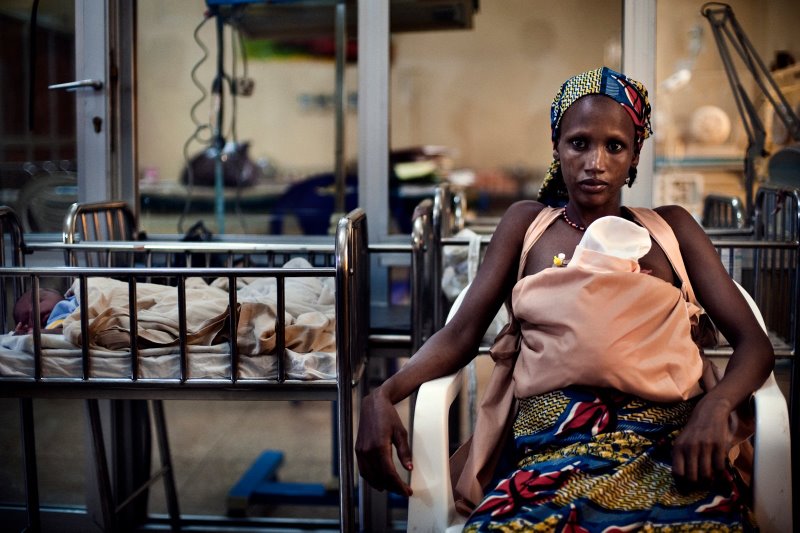
When COVID 19 swept the globe, Africa waited. While wealthier nations secured vaccines, oxygen, and essential medicines, more than a billion people on this continent were left improvising, negotiating, and hoping to survive. Clinics overflowed. Supplies ran out. Families in rural and urban areas alike learned the hard truth: depending on others for your survival comes with a price. These were not just logistical failures—they were a stark reminder that health sovereignty is the difference between life and death.
It was against this reality that Nigeria rose at the 39th Ordinary Session of the Assembly of Heads of State and Government of the African Union in Addis Ababa, on Friday, February 13, 2026. At a high-level side event themed “Building Africa’s Health Security Sovereignty,” the Federal Government called on African nations to move beyond fragile supply chains and dependence on foreign aid. The message was clear: Africa must produce, protect, and deliver its own medicines, vaccines, and medical resources. Anything less is a compromise of dignity and survival.
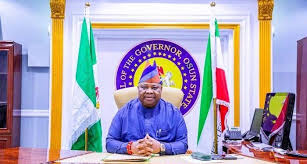
Vice President Kashim Shettima, representing President Bola Ahmed Tinubu, framed the challenge as both moral and practical. Sovereignty, he said, is not measured by speeches or declarations. It is measured in functioning factories, accredited laboratories, trained health workers, dismantled counterfeit drug markets, and citizens who can access care when illness strikes. “When history reflects on this generation of African leadership,” Shettima said, “may it record that when confronted with vulnerability, we chose capacity; when confronted with dependence, we chose dignity; and when confronted with uncertainty, we chose cooperation.”
His words were a call to action. The pandemic taught that resilience alone is not strategy. Waiting, improvising, or adapting in scarcity is survival under constraint—not preparation for the next crisis. Africa cannot continue to rely on the goodwill of others to determine its fate. Health security is national security. On a continent connected by trade, travel, and shared vulnerabilities, national security is continental security. Viruses do not carry passports. Counterfeit medicines do not respect borders. Epidemics do not wait for bureaucracy.
The numbers tell a sobering story. Sub-Saharan Africa, home to 17 percent of the global population, bears roughly 70 percent of the world’s maternal deaths and more than half of under-five child deaths, despite having far fewer births. Nigeria alone has over 800 maternal deaths per 100,000 live births, compared to a global average of 216 per 100,000. Childhood immunization coverage leaves millions of children unprotected against preventable diseases. These are not abstract statistics; they are lives lost to preventable causes.
Nigeria’s health system mirrors these continental challenges. The doctor-to-population ratio remains far below the World Health Organization’s recommended minimum of one physician per 1,000 people. The brain drain persists, with more than 4,000 doctors and dentists emigrating in 2024 alone. Many rural health posts remain unstaffed or poorly equipped, forcing ordinary Nigerians to travel long distances for basic care. The picture is clear: ambition often meets the harsh reality of underfunding, mismanagement, and structural weakness.
Yet there are signs of deliberate action. Nigeria’s proposals at the AU Summit are grounded in strategy. In collaboration with the Africa Centres for Disease Control and Prevention, the country is seeking to mobilize investment in the health workforce, strengthen community-level systems, and sustain immunization programs. The Nigeria Health Sector Renewal Investment Initiative, launched in 2023, secured over 2.2 billion dollars in commitments tied to measurable outcomes. It aims to revitalize over 17,000 primary healthcare centers, train 120,000 frontline health workers, and expand insurance coverage within three years. Sovereignty, Shettima emphasizes, depends not only on infrastructure but on financial protection for citizens, many of whom still face catastrophic out-of-pocket health expenses.
The government is also strengthening epidemic intelligence and emergency preparedness through the Nigeria Centre for Disease Control and Prevention. Laboratory networks are being upgraded, genomic surveillance expanded, and coordination at emergency operations centers reinforced. Regulatory oversight is intensified through NAFDAC, cracking down on substandard and counterfeit medicines, upgrading laboratories, and streamlining approval for compliant manufacturers. Without standards, sovereignty is an illusion.
Beyond infrastructure, Nigeria is pushing to unlock its healthcare value chain through the Presidential Initiative to remove bottlenecks confronting domestic pharmaceutical manufacturers, medical device producers, and biotechnology innovators. By catalyzing local production of drugs, diagnostics, and biotechnology research, Nigeria hopes to reduce import dependence and position itself as a continental hub of excellence. Shettima stressed that government alone cannot achieve this. Private sector participation is essential if true health sovereignty is to be realized.
However, despite these initiatives, the Nigerian health sector’s record remains mixed. Budget allocations continue to fall short of the 15 percent benchmark outlined in the Abuja Declaration, with actual health spending hovering between three and five percent of national budgets for years. Maternal and child mortality rates have declined unevenly, while immunization coverage leaves one in five children under one year old unprotected. Essential medicines remain inconsistently available, especially outside urban centers. Understaffing, inadequate funding, and the emigration of skilled health workers continue to limit progress. Policy ambition has often outpaced implementation.
Continental voices reinforced Nigeria’s stance. Coordinating Minister of Health and Social Welfare, Prof. Muhammad Ali Pate, highlighted the importance of data-driven planning and bridging the gap between urban and rural healthcare delivery. Dr Jean Kaseya, Director-General of Africa CDC, reminded leaders that shortages of skilled health workers and fragile community health systems are challenges across the continent. Ministers from Senegal, Malawi, and Ethiopia pledged support, while representatives from the African Union Commission, GAVI, and UNICEF emphasized the need for sustained investment and political will.
The summit concluded with a communiqué calling on African leaders to prioritize human resources for health and community health workers as central pillars of primary healthcare, universal coverage, and pandemic preparedness. The target of two million community health workers by 2030 was reaffirmed, with calls for increased domestic financing and accelerated implementation of national and continental plans.
Nigeria’s message in Addis Ababa was more than policy. It was a moral imperative. Africa cannot continue to outsource its survival. Medicine security must shift from dependence to dignity, from aspiration to action. The real test is whether these commitments translate into functioning factories, laboratories that detect outbreaks early, and health workers who reach every last community.
Sovereignty cannot remain a slogan. It must be felt in every clinic, ward, and laboratory across the continent. Leadership, Shettima reminds us, is about choices—choosing capacity over dependence, dignity over vulnerability, and cooperation over complacency. Health sovereignty is not optional. It is the foundation of a future where Africans can heal themselves with dignity, on their own terms.
Africa can no longer wait. Nigeria has sounded the alarm. The question is whether the continent will act before the next crisis forces it to do so.