Africa
Nigeria—One Party, Impossicant! -By Prince Charles Dickson, Ph.D
As the dance toward 2027 begins, one truth endures: in a nation where jollof rivalry sparks passion, political complacency is a recipe for disaster. Nigeria’s democracy, like its parties, thrives on vibrancy, not monochrome. The next act awaits—and the audience is starving for change—May Nigeria win!

Nigeria is a nation of parties—literal and metaphorical. It is a Nation too vibrant for monolithic politics. From the fiery debates over whose jollof rice reigns supreme to the cultural pride in regional delicacies like Amala, Tuwo, and protein-laced soups, Nigerians are wired to reject monotony. This culinary diversity mirrors the country’s political appetite: a craving for choice, competition, and flavor. The idea of a one-party system? As implausible as a national consensus on the “best” dish. The 2023 presidential election results, and the political drama unfolding since, only reinforce this truth.
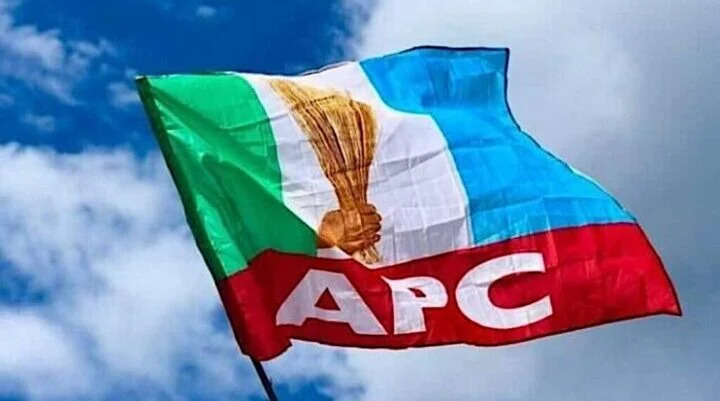
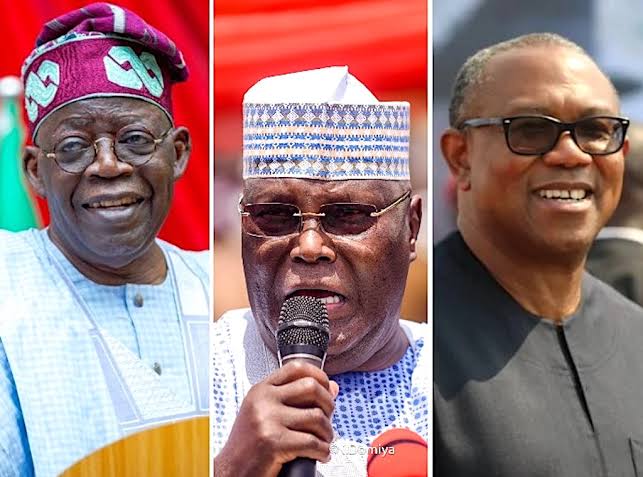
While it is a feast of fractured mandates, a look at the 2023 verdict—whether court-backed, IREV-maligned—reveals no landslide, only a smorgasbord of lessons. The figures speak plainly. President Bola Tinubu of the ruling All Progressives Congress (APC) secured 8,794,726 votes (37% of valid votes), narrowly defeating Atiku Abubakar of the Peoples Democratic Party (PDP) with 6,984,520 votes (29%) and Peter Obi of the Labour Party (LP) with 6,101,533 votes (25%). Rabiu Kwankwaso of the New Nigeria Peoples Party (NNPP) trailed with 1,496,687 votes (6%). Tinubu’s victory was neither a sweep nor a mandate of invincibility. Notably, Atiku and Obi’s combined votes (13 million) dwarfed Tinubu’s tally, underscoring a fragmented opposition’s self-inflicted defeat. Had Kwankwaso aligned with Obi or Atiku swallowed his ambition to back a single challenger, the APC’s grip might have snapped.
But let’s not sugarcoat it: the opposition’s failure wasn’t just tactical—it was existential. The PDP, once a behemoth that governed for 16 years, now resembles a retirement home for recycled ideas, while the LP’s surge, though impressive, relied more on Obi’s cult of personality than institutional depth. The NNPP? A regional footnote. Meanwhile, Tinubu’s 37%—the lowest winning share since 1999—exposes a leader ruling with a fractured mandate in a nation where 63% voted against him.
We see a geography of discontent with the nation sliced three ways, such that it further diluted Tinubu’s dominance. He won 12 states, the same as Atiku, while Obi clinched 11 states plus the Federal Capital Territory (FCT). This regional split—Tinubu in the Southwest, Atiku in the Northwest/Northeast, Obi in the Southeast/South-South—reveals a nation divided yet defiant against hegemony. In Lagos, Tinubu’s “kingmaker” aura cracked as Obi snatched the state, a symbolic blow to the godfather’s invincibility. In Kano, Kwankwaso’s NNPP trounced APC, proving that even the North’s political machine isn’t monolithic.
But here’s the rub: Nigeria’s voting patterns are less about ideology and more about identity. Ethnicity and religion still dictate ballots, with parties serving as vehicles for regional champions. The Southeast’s embrace of Obi, a Christian Igbo, and the North’s loyalty to Atiku, a Fulani Muslim, underscore this reality. Tinubu’s “national” victory? A patchwork of backroom deals, not a unifying vision.
For APC, it must be a gathering storm or a gathering rot, two years is a lifetime in Nigerian politics. The PDP’s 16-year rule collapsed in 2015 under the weight of arrogance and corruption. Today, the APC faces similar vulnerabilities, even as it parades new defectors. Since 2023, the party has absorbed governors, senators, and influencers from the PDP and LP—a trend it touts as strength. But history warns otherwise.
Defectors in Nigerian politics are political nomads, driven by opportunism, not ideology. Recall how Governor Godwin Obaseki defected from APC to PDP in 2020, only to later feud with his new party. Or Senator Dino Melaye, a serial defector whose loyalty shifts with the wind. These “fair-weather allies” dilute party cohesion, breeding internal strife and policy paralysis. The APC’s swelling ranks now resemble a crowded marketplace—full of noise, low on trust. Is this a Trojan horse strategy to implode the party from within? Perhaps. After all, a party bloated with rivals becomes a theatre of war.
It is also important to note that there is also the opposition’s inertia, more like the art of snatching defeat from the jaws of victory. While the APC grapples with defection-driven chaos, the opposition’s inertia is equally glaring. Beyond critiquing the APC’s failures—rising insecurity, economic ruin, corruption—the PDP and LP offer little innovation. Their playbook? Recycled promises from the 1990s. Where are the bold visions for Nigeria’s 21st-century crises?
Take youth unemployment: 53% of young Nigerians are jobless, yet neither PDP nor LP has articulated a credible plan to harness this demographic time bomb. Where is the Marshall Plan for renewable energy in a nation where 92 million lack electricity? Or the blueprint for healthcare in a country losing doctors to global brain drains? Instead, opposition leaders recycle slogans like “restructuring” and “unity,” buzzwords as empty as a campaign promise.
Peter Obi’s 2023 momentum, fuelled by youth disillusionment, exposed a hunger for fresh faces. Yet, the LP’s post-election strategy has devolved into legal theatrics and social media hype. Meanwhile, Atiku, 77, clings to his perennial candidacy like a relic, oblivious to a nation where 63% of the population is under 25. The opposition’s fatal flaw? Mistaking anti-APC sentiment for pro-opposition fervor. Nigerians crave solutions, not slogans.
Scary for analysts like us, is the silent majority, the 36 Million ghost voters and our democracy’s unseen crisis. They are perhaps the loudest message from 2023, the 36 million registered voters who stayed home. With just 24 million votes cast (29% of 93 million registered voters), apathy overshadowed enthusiasm. In 2015, turnout was 44%; by 2023, it plummeted to a historic low. For many, politics feels like a choice between “the devil and the deep blue sea.”
But apathy isn’t indifference—it’s dissent. Nigerians are protesting a system rigged against them: a 2023 election marred by voter suppression, technical glitches, and allegations of judicial complicity. Why vote when the courts “correct” the people’s “mistakes”? Why engage when politicians swap parties like runway models change outfits?
This disillusionment is a tinderbox. If 2027 mirrors 2023’s apathy, Nigeria risks a legitimacy crisis—a government elected by a minority, ruling over a seething majority. The stakes? Not just democracy’s survival, but social stability in a nation where 70% live in poverty.
Yet, Nigerian politics thrives on chaos and surprise. Today’s underdog could be tomorrow’s kingmaker. President Muhammadu Buhari lost three elections before clinching power in 2015. Peter Obi rose from LP’s obscurity to win 25% of the 2023 vote. Who’s next?
Watch the youth. With 42% of Nigerians under 14, the next generation is a sleeping giant. Movements like #EndSARS proved their power—and their rage. A candidate leveraging youth angst, tech, and social media could redraw the political map. Imagine a “zebra” candidate—an outsider like #EndSARS activist—channelling this energy into a presidential bid.
Or watch the states. Governors like Babajide Sanwo-Olu (Lagos) or Alex Otti (Abia) are building subnational legacies that could eclipse federal failures. A coalition of progressive governors might just bypass Abuja’s dysfunction altogether. I believe that there are wildcards and game-Changers—the zebras in the room.
The kitchen is still hot: No One-Dish Democracy. Nigeria’s political menu will never be a one-dish affair. The APC’s current lead is no guarantee of 2027 success, just as the opposition’s disarray isn’t permanent. For democracy to thrive, parties must evolve beyond transactional defections and tired rhetoric. Voters, too, must re-engage, turning apathy into accountability.
To the political class: Adapt or perish. The youth are watching, the hungry are waiting, and the clock is ticking. To Nigerians: The 2027 pot is simmering. Will you add your ingredient, or let others dictate the flavor?
As the dance toward 2027 begins, one truth endures: in a nation where jollof rivalry sparks passion, political complacency is a recipe for disaster. Nigeria’s democracy, like its parties, thrives on vibrancy, not monochrome. The next act awaits—and the audience is starving for change—May Nigeria win!
—
Prince Charles Dickson PhD
Team Lead
The Tattaaunawa Roundtable Initiative (TRICentre)
Development & Media Practitioner|
Researcher|Policy Analyst|Public Intellect|Teacher
234 803 331 1301, 234 805 715 2301
Alternate Mail: pcdbooks@yahoo.com
Skype ID: princecharlesdickson