Africa
Nigeria’s Wasting Maritime Assets -By Pius Mordi
Since President Bola Tinubu has boldly scrapped subsidy on refined petroleum products, the same level of boldness should be adopted by NPA’s management to seek the deployment of the seven percent surcharge on import duties for the purpose it was set up – the regular maintenance dredging of seaports in Delta State as well the ones in Calabar and Port Harcourt.

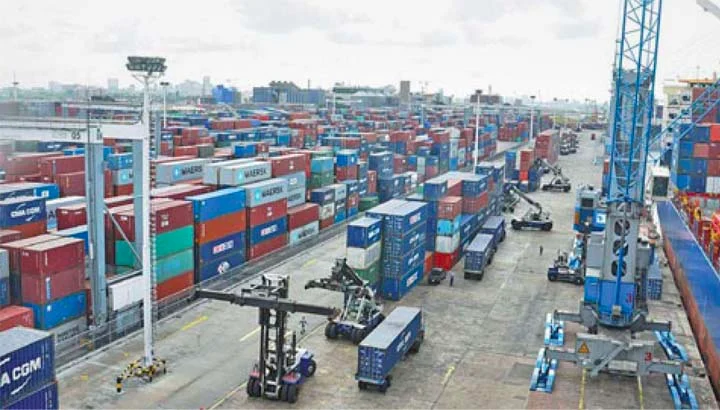
When Rt. Hon. Sheriff Oborevwori, Governor of Delta State, received Senator Adedayo Adeleye, chairman of the board of Nigerian Ports Authority (NPA) who led a delegation including the managing director, Dr. Abubakar Dantsoho, to Asaba, he broached a subject that has festered like a sore thumb. Just why have the seaports outside Lagos been operating well below their capacity? The inadequate explanations proffered over the years have fueled conspiracy theories about a seemingly orchestrated scheme to make eastern and central ports uncompetitive with those in Lagos. This is untrue. There is no such scheme and can never be.
At the end of the Nigerian Civil War in January 1970, the Federal Military Government unveiled a five-year National Development Plan which major thrust was a methodical reconstruction and rehabilitation of the national economy devastated by the war. The second such plan, it aimed to build a chain of seaports across Nigeria’s 853-kilometre coastline to expedite the logistics challenge of post-war reconstruction.
From just Apapa Port inherited at the point of Independence, the plan involved the construction of additional ports in Lagos while new ones were planned to cover the entire coastline. Among such ports were the ones sited in Warri, Sapele, Koko and Burutu in addition to the ones in Port Harcourt, Calabar and Onne.
However, despite the elaborate plan and timely completion of the new ports, ship and cargo congestion became a recurring feature of the Lagos ports of Apapa, Tin Can Island, Container Terminal and RoRo ports. While humongous money was lost through demurrage on ships and cargoes that piled up, the Delta ports progressively declined in patronage as cargo vessels considered the 109 kilometres estuary too shallow and inclement.
At the time of their construction, the advertised draught could accommodate different range of vessels. While the Old Warri Port had a maximum draught of 6.7 metres, that of New Warri Port had draught of up to 11.50 metres, comparing even favourably with Lagos ports which have 10.50 metres draught. The ports in Sapele and Koko had draught of 6.40 metres and 7.32 metres respectively.
These are the depths advertised at the time of their completion. However, to sustain the draughts, the channels leading to the ports had to be regularly dredged as being estuary ports, they are prone to high rate of siltation. Unfortunately, while the channels leading to Lagos ports were regularly dredged, those of Delta ports were abandoned. It is such that after years of abandonment, the draughts are considerably less than what they were at the time of coming on stream. Consequently, the patronage of the ports that were supposed to enjoy similar levels of patronage as Lagos ports has been progressively abysmal. The concession of the ports has not triggered a change in fortune for the ports. All the ports built during the post-war reconstruction are located deep inside rivers, making the channels prone to siltation and requiring regular dredging to maintain the advertised draught. Ports and their management are under the exclusive list and due to the need to carry out the maintenance dredging, a mechanism was put in place to provide regular funding for the exercise.
For every cargo imported into the country, shippers are required to pay a surcharge based on 7 percent of import duty devoted exclusively for the dredging of the channels. Every year, billions of naira are collected through the surcharge. Unfortunately, as with similar taxes imposed for specific purposes, they ultimately get sucked into the revenue portfolio and are seen as such. That is the fate that has befallen Cabotage Fund which vessel owners operating on the coastline pay to fund a special fund to give financial support through soft loans to enable indigenous entrepreneurs acquire their own vessels. The Cabotage Vessel Financing Fund (CVFF) was set up via the Coastal and Inland Shipping (Cabotage) Act of 2003 to provide financial aid to indigenous shipowners to acquire and maintain vessels for coastal shipping. Administered by the Nigerian Maritime Administration and Safety Agency (NIMASA), the Funds available under the CVFF in naira component is about ₦16 billion while contributions in Dollar component hovers around $350 million.
When Governor Oborevwori received a delegation from NPA in his office in Asaba he reminded them of the illogical state of Delta ports. He said the four ports can unlock the full economic potentials of Delta as Nigeria’s maritime hub. Oborevwori stressed that the revitalization of the ports would create jobs, attract investments, and boost national revenue, saying “if these ports are revived, they will create massive employment, stimulate trade, and strengthen the economy of Delta and Nigeria. It is often more impactful to modernize existing ports than to build new ones”.
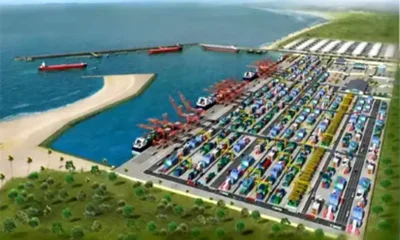
Indeed, at the time of conceptualisation of Delta ports, that of New Warri Port was built to provide all the services available at the Apapa Port and RoRo Port. Altogether, the Delta Ports Complex have 32 conventional berths for hard quays and midstream operations as well as handling ocean going vessels. Some of the quays also provide dry bulk and roll-on-roll-off (RoRo) operations.
The only challenge is the prolonged neglect of the dredging of the channels to the ports which has considerably reduced the advertised draught. Regular maintenance dredging is imperative for the 109-kilometre channel to remain navigable. The other challenge is the Escravos bar which can be resolved also with regular dredging.
The governor recognises the fact that the Delta Ports Complex was designed to service the catchment areas of Kogi, Abuja, Kaduna, Jigawa, Kano, Katsina, Benue, Plateau, Bauchi and Yobe states as well as the business hubs in the entire south east and south south states. The business opportunities inherent in reactivating Delta ports are limitless and it makes the neglect of the ports economically and administratively illogical.
What has been missing is the political will on the part of NPA to implement the duties assigned to it using resources already legally set aside for their funding. The price Nigeria continues to pay for the failure to utilise the assets already provided during post-war reconstruction is tremendous. It is not just about the demurrage paid during the recurring ship and cargo congestion.
The cost of moving import and export cargoes from the north east, Middle Belt, south east and the south south states will be significantly reduced when users of shipping services no longer have to compulsorily use Lagos ports that are prone to congestion in addition to the extra cost incurred through traversing longer distances with contain-laden trucks.
Since President Bola Tinubu has boldly scrapped subsidy on refined petroleum products, the same level of boldness should be adopted by NPA’s management to seek the deployment of the seven percent surcharge on import duties for the purpose it was set up – the regular maintenance dredging of seaports in Delta State as well the ones in Calabar and Port Harcourt.