
Africa
No, Not the Human Blood, the Animal’s -By Ismail Misbahu
The ram holds symbolic importance because it was the substitute for Ismail in the original story. Yet, sacrificing a ram during Eid should be a revered appeal to Allah for subjecting humans to gory killings, a regret for not doing anything like this again. It means a true sacrifice, belief and trust in divine wisdom.

Today the North bleeds again!
The blood however washes away the human sins. The sins of shedding human blood in Maiduguri, Zamfara, Katsina and virtually everywhere in the Northern states of Nigeria. We all bowed and prostrated today before the Merciful, praying that the sacrificial blood of the animals we slaughtered will wash away the human ones shed by Boko Haram and other terrorists in Nigeria.
Wait, what lessons have the massive slaughter of rams taught you today? Did you ever breathe a minute, pondering the divine commandment to slaughter yet a human instead?
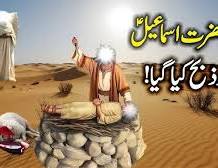
The instruction in the holy Qur’an chapter 37 was originally to slaughter a human. It tells us about the dream of Prophet Ibrahim (A.S) in which he was instructed to slaughter (or saw himself slaughtering) his son, Ismail. Although there are contrasting theological views about whether the prophet to be slaughtered was his first son, Ismail or the second, Ishaq, Bible (Gensis 22: 1-19) speaks of Ishmael as the subject of sacrifice and like the Qur’an, sees this as a ‘test’ from God. Yes, ‘test of faith’—a revalidation of Abraham’s inclined devotion and ultimate submission to Allah.

Humanity scholars interpret this differently, seeing the dream as a trick by the devil and the slaughter of his son a devil’s marauding of Abraham’s spiritual love for humanity. This sacrifice was according to this perspective a trick to his humanistic mission as the messenger of Allah, therefore a ‘misreported deception.’
I would say it is neither a ‘trick’ nor a ‘misreported deception’. For God has never ‘tricked’ his messengers, and prophethood is not a trickery. But there’s a lesson for all of us, the post-truth living humans. It starts with pondering why the first revelation to slaughter a human came down to Abraham? Why then the sudden change from human to animal? For God had not and will never be a ‘killer’ should someone surely ask though.
In this commandment, there is a powerful deterrence, an eternal rebuke to killings. Humans shall not, but animals. Animals too, not by brutal extinction of their kingdom but by sacrificing the blood for spiritual invocation. It is an act of showing unwavering obedience to Allah as demonstrated by prophet Ibrahim. To serve as a reminder, this Muslims’ religious rite perpetuates for good three days in every festive (Eid al-Adha) season.
It is a reminder to the chronic power hubris, leaders in whose hands humanity finds itself in severe cruelty. It nails in the eyes of a perpetrated power, watching the brutal deaths of infant babies, school children, patients in hospitals—all demolished in the now monumental ruins of Gaza. It is a message to Boko Haram in Nigeria that human value is rooted in the tradition of Abrahamic religions—not an invention of secularism—but also a principle in the Islamic Shari’ah.
This very powerful caution: ‘not slaughter human but animal’ is a loudest clarion call to the guilty Fulani in the forest zones to rethink their priority. A reminder that a cow is the object, a human the subject. Animals for human use, not for destruction. It is, on the contrary, a call to man to treat animals kindly because it saved the life of a human, a prophet.
These animals are for purpose, a spiritual one. They should be taken out for grazing, relieving their thirst, for milk production etc. It means a lot to the herding profession Prophet Muhammad also specialised upon. Prayers should be said when subjecting such animals to divine sacrifice; a brutal killing should not be inflicted on them—for slaughtered animals are not carrions.
The Eid Day (10 Dhu’l-hijjah, Friday 6 June, 2025) means to us, Muslims in Nigeria especially, a sober reflection to our very challenging realities. Let the blood of the animals we sacrifice serve us a regret, a repentance to the Mighty, the Merciful for the human blood shed on our land. Eid al-Adha does not only commemorate the story of Prophet Ibrahim (Abraham) and his son, Ismail (Ishmael), but also of Muslims sacrificing animals as a symbol of their deferential repentant to God, a rigorous soul-searching towards human feeling, the sanity of human conscience and his dignity.
The ram holds symbolic importance because it was the substitute for Ismail in the original story. Yet, sacrificing a ram during Eid should be a revered appeal to Allah for subjecting humans to gory killings, a regret for not doing anything like this again. It means a true sacrifice, belief and trust in divine wisdom.
Barka da Sallah
Misbahu
























You must be logged in to post a comment Login