National Issues
Northern Generals’ anger at ‘North as Nigeria’s mortuary’ -By Festus Adedayo
As Tinubu plays Nero to our burning Rome, the North should spare us the spectacle of ineffectual buck-passing. A people cannot outsource responsibility for the monsters they nurtured. Blaming others may soothe wounded pride, but it will not make the North (or Nigeria) any safer.

Published
4 months agoon
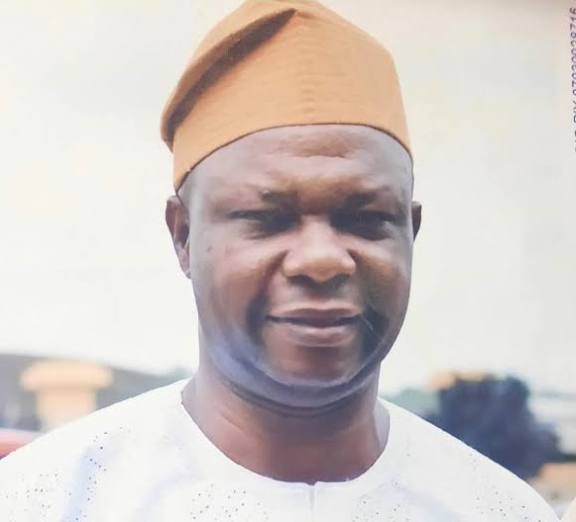
Recently, the progeny of Shehu Usman dan Fodio – the 19th-century Islamic scholar and founder of the Sokoto Caliphate – have been losing their crème de la crème. Northern Nigerians are dying in droves, mostly at the hands of their own sons who have made the thick forests their comfortable abode. The most poignant recent tragedy is that of General Rabe Abubakar. He was murdered in captivity after being abducted alongside his wife near the Matazu area of Katsina State.
From an ancestry that historically valued the sacredness of truth, it is not surprising that the severity of that truth-telling is now blowing westward toward the North. Dan Fodio himself professed his belief in this sacredness, noting that truth is the ultimate moral compass and the only cure for the human conscience. In my own Yoruba culture, truth is equally revered. Elders acknowledge the difficulty of accepting the truth, expressing its harsh but necessary nature in a classic proverb: “Òtítọ ọrọ korò, ṣùgbọn bí a bá gbé itọ́rẹ mì, a máa ṣe ara l’ore” (Truth is bitter, but if the recipient endeavors to swallow its acrid saliva, it will ultimately soothe the body). Ignore the recent traffic of men who, for political survival, queue behind their esophaguses; the elders’ wisdom remains undefeated.
Yes, Northern Nigeria is like a viper. Its rage mirrors the fate of the serpent in Yoruba folklore. Among my people, it is said that the viper is not destroyed by an external enemy but by its own offspring. The young, believed to grow within the mother, eventually tear their way out, killing her in the process. Hence the proverb: “Ọmọ inú ọká níí ṣe ikú pa ọká” — it is the children in the viper’s belly that bring about the viper’s death.
Today, the North appears trapped in a similar tragedy. Much of the violence consuming it comes not from strangers but from sons it nurtured, tolerated or failed to restrain. Yet, that is not its deepest irritation. Its greater discomfort lies in the fact that the rest of Nigeria has begun to notice. The North is less troubled by its missing finger than by the witnesses counting them aloud.
This “viper thesis” was on full display at a press conference held in Kaduna last week by retired military officers and associates of the late Major General Abubakar. The officers – including Ambassador A. Mohammed Musawa, Air Commodore Yusuf Anas (rtd), Brig.-Gen. Maharazu Tsiga (rtd), Ambassador Ibrahim Usman Gafai, and Brig.-Gen. Abdulkadir Abubakar (rtd) – had unsparing words for Southern commentators. I suspect that their ire is specifically against Nigerian Tribune columnist, Lasisi Olagunju, who in a viral piece entitled “Northern Nigeria will soon kill Nigeria” showed that even in its infantility, a child should be able to differentiate the ewe and owe from each other. “Crime may indeed have no ethnicity, but that does not relieve us of the duty to identify the environment that breeds and sustains it. A desert does not cease to be a desert because it contains a few oases” he said. While no one can deny that insurgency and the violent crimes Nigeria faces today originated from the north, that its leaders pampered the criminals with religion and region hands is unassailable.
In his speech, Brig-Gen Abubakar lamented what he called the “selective outrage” of commentators who attribute Nigeria’s security challenges to the Northern region, calling such narratives divisive and counterproductive. “These incidents of insecurity have attracted not only condemnation but also taken ethnic colouration, with some commentators blaming the northern region for all the ills of the Nigerian state,” he argued.
Abubakar’s outrage recalls the Yoruba tale of the giant pouched rat (Òkètè) and its belated plea. It is a story told to whiplash laggards and underscore the perils of ignoring early warning signs. The proverb goes: “Òkètè gbàgbé ìbosí, ó dé ìgbá alátẹ, ó ká’wọ lé’rí.” (The giant rat discounted the need to call for help, and upon its arrival at the market stall, holds its hands up in supplicatory regret).
The tale of the Òkètè is this: Long ago, during a severe famine, human farmers set traps across the animal kingdom. The Òkètè, renowned for being notoriously stubborn and haughty, stepped into a hunter’s trap. Initially, the pain felt inconsequential. He had room to maneuver and an opportunity to cry out for help, but his pride blinded him. He believed his own strength would set him free.
After hours of struggling, his strength faded. By the time he realized the danger of his tardiness and finally cried out, the hunter was already standing over him. A swift machete blow sent the Òkètè to the village market, where he was eviscerated, roasted, and hoisted for sale. Roasting on the iron gauze, his teeth clenched in deep sorrow and his rare legs curled upwards in a mark of ultimate surrender. The moral is clear: one must speak up at the outset of danger, not at its denouement when the consequences have stripped away any claim to morality.
In recent days, a viral letter addressed to the Northern elite – governors, commissioners, Hisbah boards, traditional rulers, and legislators – has been making the rounds. Written by a fellow Northerner, Dr. Zainab Suleiman Buhari, and published in the Daily Trust, it delivered a bitter, hurtful truth that acts as Dan Fodio’s healing balm on the open wound of conscience.
A public health physician and advocate for child developmental science, Dr. Buhari pilloried Northern governors’ retrogressive policies of spending billions on mass marriages. Apart from pillorying northern governors’ retrogressive policies of paying billions of Naira for mass marriages, she told the North that its “street kid factory” culture – what former First Lady Patience Jonathan famously termed the “born trowey” phenomenon – is incubating the very statistics for crime, banditry, and terrorism Nigeria cries over today.
“Terrorism does not start with ideology. It starts with hopelessness,” Dr. Buhari wrote. “Boko Haram, bandits, cults — they do not recruit PhDs. They recruit boys who were ‘produced’ but never raised,” she further lamented
At the risk of awakening the old ghost of the North–South dichotomy, Dr. Buhari was merely restating a warning issued more than six decades ago by Chief Obafemi Awolowo. Renowned for his almost obsessive faith in the transformative power of education, Awolowo repeatedly stressed the need to expand educational opportunities across all regions of Nigeria. He warned Northern leaders that failure to aggressively embrace Western education would breed mass poverty, insecurity and social unrest. His political philosophy was the “development of the human mind”. This, he held, would lead to the tripod of Nigerian-wide political awareness, economic progress, and social stability.
At the heart of Awolowo’s political philosophy was what he called the “development of the human mind.” He believed that an educated populace was the foundation of political consciousness, economic progress and social stability. For him, education was not merely a social service; it was the most potent instrument of nation-building. By 1955, he had fulfilled that in his Free Primary Education in the Western Region he administered.
Awolowo famously declared: “The children of the poor you fail to train will never let your children have peace.” Today, the prophet’s prophecy has caught up with all of us. The fief system of medieval feudalism inherited by the founding fathers of northern Nigeria, and reified over decades by successive Northern leaders, has come home to roost.
As Yoruba Sakara music sage, Yusuff Olatunji once sang, when the rain refuses to pour, the corn refuses to sprout and the yam refuses to flower, everybody pays the price – wives, concubines and their closet lovers alike.
Today, Northerners and Southerners are united by a common pain: the bite of the Salamo ant. For decades, these fierce insects were bred and fed on Northern Nigerian trees. Now they have multiplied beyond their grove and are sinking their sharp teeth into the flesh of the entire nation. Patience Jonathan’s “born trowey” children have matured into the terrorists and bandits ruling today’s jungles.
If we thought decades ago that the killings and kidnappings were restricted to the North, they have now come full throttle to the South. Today, Oriire Local Government of Oyo State suffers the sacrilege of Northern terrorists beheading a Yoruba son and abducting Yoruba children, holding them hostage inside unmanned forests. We’ve collectively entered the forest strewn with èsìsì, the nettle leaves, a plant covered with stinging hairs, famous for the painful rash or skin irritation it causes when touched. Our collective skins are since being burnt by its ferocious anger.
Again, we have always deluded ourselves of an illusion of isolation or even insulation from Northern Nigeria’s children’s ideological war against civilization called Boko Haram. America-based Ifa priest and professor of Arts History, Professor. Moyo Okediji’s recent invocation entitled: “Omoluwabi Omo Yoruba” (Children of Noble Yoruba Parentage), captures the anguish of Southern Nigeria today. To me, the anguish feels like medicine after death. The enemy is here already.
Okediji says in his chant: “There are boundaries northern bandits cannot cross: you cannot steal Yoruba children… We gave you food to eat, water to drink, and a place to sleep. Who knew you had so little regard for children, a people who place the begging bowl in the hands of their offspring and drive them into the streets at the age of four to scavenge for survival? Now woe unto you, stealers of our children… May your upper teeth lock upon your lower teeth like the jaws of a vice, never to open again. You who touch our Yoruba child—the children of Ọṣun—are you not afraid of Our Mothers who fly at midnight?”
Okediji ends the invocation with potent imprecation hauled on the terrorists: “Unless you return our children unscathed, Lùkúlùkú will devastate you and your loved ones….Ọràmfẹ will consume you with eternal flames…Obalúayé will poke your skin with putrid pus… Lákáayé will severe your heads like that of a rabid dog…. Agẹmọ will suck dry your blood out of your veins….Egúngún will turn your music to dirges….Láaróyè will confuse you at every crossroad…. Obàtálá will cripple your limbs, blind your eyes, and render you leprous…”
I could hear thunderous choruses of Asẹẹ (Amen) across all Yoruba circles, home and abroad.
With the exception of Awolowo, we apparently didn’t fully grasp the fact that Northern Nigeria’s nonchalance towards education was not merely self-destructive; it held totalizing destruction for the entire country. We should have known it was not the Ẹlúùlú (Coucal) the brown-feathered bird, known in Yoruba cultural and oral tradition for its mystic ability to invoke rain upon its own head. Had we known that the rain would drench us all and not the Ẹlúùlú who invoked the rain alone, revealing a factual inaccuracy in that bird’s thesis, we probably would have been more urgent and insistence in our warnings. Epo Akara, the Ibadan-born bard, had stated in one of his songs about the totality of the grips of death: it would kill the invocator and the invoked.
The statistics are grim: In just six months, Boko Haram, ISWAP, and armed bandits, sons of the north, have killed at least 5,272 people in Nigeria. Our soldiers – Northerners and Southerners alike – are slaughtered by these sons of perdition as if they were goats. The highest concentration of those fatalities were in northern states. The fate of Gen. Rabe Abubakar and his wife tells us something even more ominous is in the offing. Yet, rather than accept that it left its soup plate unwashed, prompting an invasion of green flies, Northern Nigeria is playing the ostrich. Those northern Generals represent the a pathetic layer of this hypocrisy. Same for the Generals and the elite of the north: Rather than admit that they left their babanriga unwashed and thereby invited lice into their seams and hems, they continue to play the ostrich. The recent lamentations of Northern generals in Kaduna represent perhaps the most pathetic expression of this hypocrisy.
Where were these voices when Muhammadu Buhari, through weak, parochial and indecisive leadership, was busy reducing Nigeria’s insecurity to a game of regional and religious calculations? How many of them publicly challenged his failures? How many confronted the dysfunction that flourished under his watch? Very few did.
Did you also watch the video in which northern leader, Dr. Hakeem Baba-Ahmed, recounts the harrowing 36-day capture of his nephew and two others, and how the family had to cough out ₦175 million for ransom? That happened at a time he was a special adviser to President Bola Tinubu. And the Villa where he was working was helpless. Scary! Perhaps, if they (and we) had collectively cried out when Buhari was patting terror in the back because of its northernness, the magnitude of today’s crisis would have been tamed.
Yes, the Northern Generals are right about one thing: the rising terrorism and kidnapping activities are no longer isolated Northern problems. They have become Nigeria’s national problem. Prior to now, other parts of Nigeria may have looked away from the North’s curse of banditry, kidnapping and terrorism. Today, the viper’s brood has bitten us all.
While Nigerians are agreed that the north and its leaders birthed Nigeria’s most infamous affliction of terrorism, as a result of their lethargy, collaboration in the cloak of region and religion, Prof Okediji’s grouse is the grouse of all. It is that, in his words, “those elected to guard the house act like jẹkúrẹdí, ẹrán jè’lùbọ,” literally translated to mean infirm and ineffective guards of national security. While Tinubu holds the highest capability to tame the shrewd of terrorism, banditry and kidnapping, he will not because his eyes are firmly fixed on the 2027 elections.
As Tinubu plays Nero to our burning Rome, the North should spare us the spectacle of ineffectual buck-passing. A people cannot outsource responsibility for the monsters they nurtured. Blaming others may soothe wounded pride, but it will not make the North (or Nigeria) any safer.
Daniel Bwala on Gov Makinde, and one other story
On Friday last week, Presidential media aide, Daniel Bwala, was on his usual binge of Villa hatchet jobs. He flew into Ibadan, the capital of Oyo State, and of Yoruba politics, to peddle mythical tales of presidential impact in the lives of the Southwest people.
Apparently, Bwala’s brief was to deconstruct Governor Seyi Makinde, a state governor who is one of Aso Rock’s biggest 2027 nightmares. In 24 hours, Bwala moved from one broadcast tree to another delivering his sender’s message. Across all the radio stations where he paraded his ware, the marketing message was same: Deconstruct state governors in the hearts of the people. This, he thought would allow Aso Rock have a pretty smooth ride into victory next year.
However, Bwala met his match in Fresh FM’s Isaac Brown and a few others who squared up to his Ibadan scut-work. It was similar to his earlier encounter on a March 2026 appearance on Al-Jazeera’s Head to Head programme anchored by journalist Mehdi Hasan where Bwala was badly bruised and totally shellacked.
Tongue-in cheek, Bwala raised issues that Nigerians should be bothered about: He spoke on President Bola Tinubu’s reforms and “the Federal Government’s commitment to strengthening local governance.” He mentioned figures and tried to incite the local against the state. He spoke about federalism but chose to zero in on only local governments without talking on why the Federal Government has its fingers on all pies.
Nigerians are bothered by the hypocrisy of the so-called federal reforms.
As a Yoruba proverb suggests, when a fox carries a bulging eye, it is not the chicken’s place to draw attention to it. Check the chicken’s own eye balls! Another Yoruba saying makes the same point. Everyone else may bargain over the price of the dye used to mask the odour of urinary incontinence, but not the sufferer himself. His condition leaves him with little room for haggling. Bwala should have first explained why the president’s so-called reforms have benefited majorly only its proponents; why it has been as harsh as inclement weather and as ruthless as Dracula to the man on the street. These reforms have made the rich richer and pushed the poor six feet under. The administration has made life excruciatingly unlivable. The fuel price regime is rudderless, left entirely in the hands of monopolists who tighten the noose around the common man’s neck as they please.
In the 37 months of this Federal Government’s lifespan, even with its 52% revenue allocation, staggering numbers of Nigerians have died from sheer want and deprivation under the Federal Government’s watch. Far more citizens are being wiped out by insurgents, bandits, and kidnappers today than those lost during the 30-month Biafran Civil War.
Yes, the press in sub-national geography should ask their governors critical questions about how state and local government resources are deployed, just as they must raise same question against the Federal Government.
The hypocrisy of Bwala’s mission in Ibadan would make anyone want to puke. Isaac Brown, for instance, asked Bwala if he hadn’t seen the road infrastructure in Oyo State, much of which impacts local administration. While I say that the state can still do more, yet, because I have been in Ibadan for over 30 years, I know the people recognize that no previous governor in the state’s history has executed as much infrastructural renewal as the incumbent has done. Res ipsa loquitur – the facts speak for themselves, as lawyers say. You don’t have to be Makinde’s lackey to recognize this fact.
It was this undeniable reality, this resistance to a pseudo-federal narrative, that Bwala came to break. He failed woefully. Resorting to ad hominem attacks, regime lickspittles broad-brush Brown, Bwala’s interviewer, one of Ibadan’s best broadcasters, with baseless allegations of collusion with the state government. The charge is simply infantile. It does not wash. It is akin to the wonky belief that any pretty lady is a slut. Next time, those who sent Bwala should send someone else who knows how to pronounce tọọrọ (two and a half pennies).
In a similarly misguided vein, last Thursday, Nigerians had the opportunity of reflecting on the concept of National security vs. State censorship. Minister of Information and National Orientation, Mohammed Idris, asked newspaper editors – in the name of “patriotism” – to strip the activities of terrorists, bandits, and other criminal elements of the privilege of appearing on their front pages. “Yes, we have to do our work, we have to report whatever happens, but you must know that the best reporter, the best editor, is the one who knows what not to report in the interest of nation-building. Please, take these terrorists and criminals off your front pages. This is what they crave, free of charge,” he pleaded.
Idris was simply reactivating the old ivory-tower debate: What constitutes national security? This question gained currency during the Ibrahim Babangida regime. Defense experts and intellectuals have long submitted that national security is not the security of the president; it is the security of Nigerians. It is not measured by the armaments a government defence procures, but by national food security and personal safety of the people who make up the nation. Today, all those have vamoosed from the Nigerian equation.
By the same token, national security is not achieved by scrubbing stories that embarrass the presidency from the front pages of newspapers. National security means actively securing the peace and tranquility of the country and keeping her borders safe from blood-sucking demons. The Federal Government has been fatally ineffectual in that regard. Keeping those grim stories on the front pages ensures that insouciant Nigerian leaders – who might otherwise remain unbothered by the daily slaughter of citizens – are publicly pressured into taking action. It also keeps the vulnerable very alert. Acceding to Idris’s request simply invites insurgents into every Nigerian’s backyard, like thief in the night, leaving them free to slaughter us at their whims.





















You must be logged in to post a comment Login