Africa
Obasanjo, Power Ambition and National Memory -By IfeanyiChukwu Afuba
Here’s how the Voice of America reported the power plot that rocked Nigeria in 2006. “Nigeria’s Senate has rejected a proposed constitutional amendment to allow President Olusegun Obasanjo to seek a third term in office. Lawmakers threw out the measure in a voice vote Tuesday, prompting shouts and celebrations from senators opposed to the bill.” For his part, Senate President at the time, Ken Nnamani, confirmed the conspiracy in his book, _Standing Strong: Legislative Reform, Third Term & Other Issues.

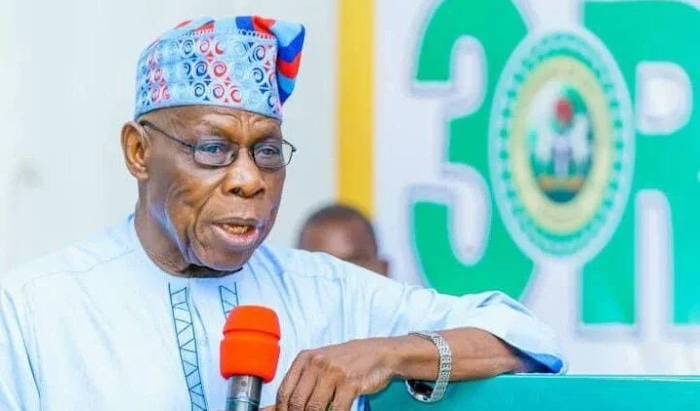
A few weeks back, former military ruler and former President, Olusegun Obasanjo, came up with one of his maverick impulses. On Wednesday, September 24, 2025, the veteran of Nigeria’s power practice announced, once more, that he never sought tenure extension at the end of his presidential term in 2007. The latest denial was at a democracy forum of Goodluck Jonathan Foundation in Ghana. _Vanguard_ of Sunday, September 21, 2025 quoted the ex head of state saying: “I’m not a fool. If I wanted a third term, I know how to go about it. And there is no Nigerian dead or alive that would say I called him and told him I wanted a third term.” The declaration is typical Obasanjo’s grandstanding. It refrains from coming to terms with the heart of the matter. On what grounds then, can his dismissal of the subject be founded? The retired general’s posture rather evokes a familiar sense of infallibility; self assurance on fancies that often takes public consciousness for granted.
Barely a year after stepping aside as military dictator, Obasanjo was back in the public consciousness with the release of his war memoir, _My Command_ . The publication of the book in 1980 made it one of the first titles on the civil war literature. But the work drew attention not for it’s pioneering mark but for a reflexive historicity. The account reduced the war narrative to how one man won the civil war for Nigeria. Much of Africa had come under military rule in the decades of the 1970s – 1980s. For these same countries impatient to break with the strictures of regimented society, Obasanjo preached one party system as magic wand of unity and stability. With similar flight of fancy, the Ota farmer advocated the use of juju to bring apartheid to an end in South Africa. It was the same Obasanjo who in the midst of agitation for validation of June 12 1993 election, pronounced that MKO Abiola was not the messiah Nigerians were looking for. Who was the messiah? Olusegun Obasanjo? He never told us. But one thing is clear. Obasanjo is a man whose whims can easily dominate him.
While the former President is entitled to his version of event narratives, his personal views must contend with the weight of public information on such national issues. Government is a collective, a network involving different actors and layers of machineries for it’s operation. Even where their briefs are not openly stated, an analysis of activities of public officials can provide reasonable description of a common purpose. Other arisings, incidental to the originating subject, have a way of lending insights into the larger picture. The combination of these factors takes monopoly of the subject away from anyone so desirous. The principle of separation of powers, with provision for checks and balances between the three arms of government, puts certain issues beyond the authority of the President. Tenure extension is about constitutional amendment, which is a responsibility of the legislature. When all these are taken together, the testimony of the former President is isolated. It is seen to be weak, narrow, shallow, evasive and self serving. The retired general’s position is incompatible with the submission of other players with jurisdiction on the same subject matter. In the face of Obasanjo’s subjective and unreliable account, other competent sources provide objective parameters for situating the attempted tenure extension.
Here’s how the Voice of America reported the power plot that rocked Nigeria in 2006. “Nigeria’s Senate has rejected a proposed constitutional amendment to allow President Olusegun Obasanjo to seek a third term in office. Lawmakers threw out the measure in a voice vote Tuesday, prompting shouts and celebrations from senators opposed to the bill.” For his part, Senate President at the time, Ken Nnamani, confirmed the conspiracy in his book, _Standing Strong: Legislative Reform, Third Term & Other Issues_ . The third citizen wrote: ‘The battle against the third term bid of President Olusegun Obasanjo in 2006 was certainly the most defining task of my tenure as President of the fifth Senate of the Nigerian legislature.’ At the presentation of the book on October 22, 2021, Nnamani reiterated on the antidote. ‘We decided to televise the proceedings. Publicising the proceedings was not supported by those who wanted to smuggle into the Constitution the extension of tenure through undefined and darkened procedure. We overcame intense pressure from the highest level of government.’ Finally, Condoleeza Rice, the then United States Secretary of State observed that Obasanjo confessed to nursing tenure extension ambition. From her memoir, _No Higher Honour_ , _My_ _Years in Washington_ , we read: ‘In 2006, when President Olusegun Obasanjo sidled up to the President (George Bush) and suggested that he might change the Constitution so that he could serve a third term, the President told him not to do it. “You have served your country well. Now, turn over and become a statesman.” A glaring contradiction attends the former soldier’s posture. While he throws a vacuous, general challenge on establishing his involvement in the plot, he at the same time maintains shouting silence on the damning comments by competent authorities.
Robert Greene’s 1999 publication, _48 Laws _of Power_ is considered an important work on the science of acquiring and retaining power. Manipulation assumes a focal point in the study’s analysis of strategies. Quest for power may not in itself be viewed with disapproval. Every age and society boasts heroes who used their vantage position to uphold the common good. Indeed, every man has the potential for both virtue and vice. Nurture, socialisation and ultimately, self – will, make the difference. Personality or self – will can separate two students of power by the rules they bring into it’s pursuit. Quest for power and hunger for power would operate at two different levels. The former tends to be restrained whereas the latter borders on the compulsive. For the typical student of power, power is taken, not given. A serious candidate for power cannot ignore the reality of other contenders for the prized spot. And so, between acquisition and retention, it boils down to a survivalist game. The dedicated, if desperate competitor, is at alert to outfox his rivals and indeed, the society.
There’s a game of cards called ‘suspect.’ The fundamental of the game is to manage to escape indictment.
Any number of cards can be shared between two or more players. You play by placing your card face – down on the table. As you do so, you call out the details of the card you played. It’s up to the other player(s) to challenge the authenticity of the card put out. It’s also up to the second player to drop their copy of the reigning card genuinely or by claim. Where there’s no challenge, that is to say, no suspicion, the party with the turn of play continues dishing out his or her cards. Otherwise, opportunity for the other party to play comes with a successful contest of the opponent’s card claims. An unsuccessful challenge of a card earns the challenger burden of an extra card and loss of turn to play. As it were, a daring player can snatch victory by disposing of his cards through cunning and deception. It’s a game that places premium on psychological deftness. Mind reading, sharp instincts and ability to take advantage of the other’s distraction are crucial elements of the game. The craftier a player, higher the chances of winning. To maintain relevance in the sport is to be dropping your cards consistent with the prevailing card. Since the cards are laid face – down, an A can become K – if you have the guile. How valuable keeping the face expressionless. Shakespeare was right. ‘There’s no art to read the mind’s construction in the face.’
Yet, some other actors, by naivety, simplicity or principle are plain both in intent and expression. Personality makeup varies, making outlook to life to also differ. Accordingly, disposition to the vexed issue of power ambition is not all negative and disappointing. Nelson Mandela made a conscious decision to forgo a constitutional right of second tenure as President. It was not a function of age, as erroneously interpreted by some commentators. Nelson Mandela was 81 years on completion of his mandate in 1999. Relatively strong, alert, riding immense goodwill, Mandela could have pulled off another five year term, and still be standing at 86.
Joe Biden at 82, was resolute on contesting the 2024 United States presidential election before health challenges stopped him. Contrast with Cameroun’s Paul Biya who is running for 8th term of office poll at 92. Not even the fact that physical frailty prevents him from coming out to campaign nor the daughter’s disassociation with his candidacy, has stopped the senile dictator. Teodoro Obiang Mbasogo has ruled Equatorial Guinea for 46 years this year. President of Ireland, Michael Higgins is 84 years. At 81, after 39 years in office in Uganda, Yoweri Museveni is still hungry for power. Contrast this with the legacy of Alao Aka Bashorun. In 1989, Bashorun, 68, was asked by the defunct Financial Post if he would vie for a second term as President of Nigeria Bar Association. His answer was a categorical no, but his reason was profoundly touching. Bashorun said NBA had thousands of bright, resourceful and committed members across age brackets. He pointed out that if he, less endowed than some members, could provide what was seen as meritorious leadership, it stood to reason that there were many others who could give even better service than he had done. The Association would be enriched by tapping into it’s wealth of human capital, not by recycling of leadership. What was the sense in running at the expense of the Association and the country? I fell in love with him after reading the interview.
Nigerians will have to keep to mind the maxim that the price of freedom is eternal vigilance. The threat of power corruption is ever present, even in our supposedly democratic setting. Power intoxication was at play in the six month illegal suspension of Rivers State Governor, Simnalaya Fubara. Perversion of state of emergency provision started from Obasanjo’s presidency with subversion of democracy in Plateau and Ekiti states. Nigeria’s experience shows patterns of power addiction. History therefore teaches that power grab be constantly guarded against. Yakubu Gowon’s regime was overthrown in 1975 for seeking to perpetuate itself in office. After nine nine years of rulership, general Gowon was not ready to step down. General Ibrahim Babangida would not voluntarily relinquish power after years of dictatorial rule. It took a determined House of Representatives leadership under Agunwa Anaekwe to block Babangida’s for parliamentary endorsement for continuation in office. By the fifth year of his dictatorship, General Sani Abacha was in the process of decreeing himself civilian President before divine intervention stopped him. Obasanjo’s third term presidential plot, emboldened by past local attempts and continental examples, was a heroic win by Nigerians against the virus of self succession.
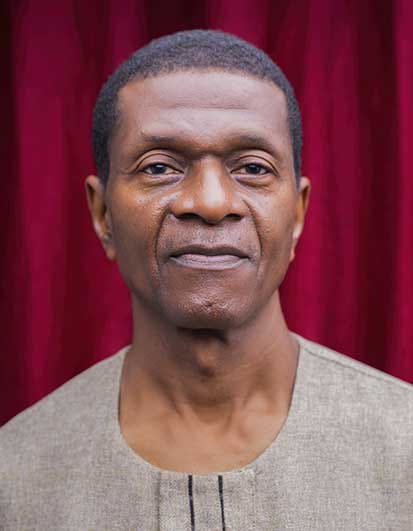
IfeanyiChukwu Afuba