
Africa
Of Nigeria’s Crude Oil, The Hunter’s Bush Meat And Palm Wine, by Isaac Asabor

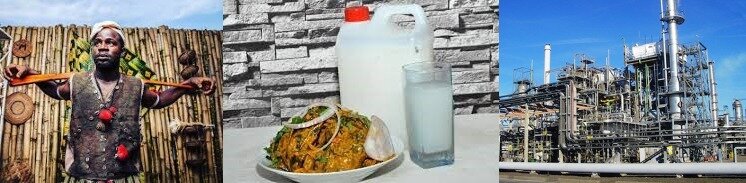
In a small village in Edo State, there lived a hunter who was well-known for his exceptional ability to hunt bushmeats, particularly grasscutters. Every few days, after a successful hunt, he would visit the local palm wine joint to trade his catch for palm wine. The shop owner would prepare the bushmeat as a delicacy, and the hunter would often end up buying back the meat on credit, along with his wine, also on credit. This arrangement seemed convenient to him at first, not mindful of the fact that he was denying members of both his nuclear and extended families the privilege of enjoying delicacies made with bushmeats like other families who were blessed with a skillful hunter as relatives were wont to enjoy. He relished his palm wine and the tasty bushmeat, but soon his debts began to pile up. Each subsequent hunt became a means of settling his past credit, trapping him in a vicious cycle.
His family, particularly his wives and grown children, were not pleased with this reckless trade. They saw his hunting skill as a waste, believing that the meat should be brought home to feed the family instead of being squandered in the wine shop. After much pressure, the hunter eventually gave in and started taking the meat home. But a new problem emerged; he had no money to buy the ingredients needed to cook the meat. The once-prized bushmeat sat idly in his house, a burden rather than a blessing, as the family could not afford to make use of it.
Without a doubt, the foregoing anecdote serves as a fitting metaphor for Nigeria’s crude oil situation today. The country is one of the largest producers of crude oil in the world, extracting vast quantities of black gold from its soil. Yet, despite this abundance, Nigeria is unable to refine its own crude oil into petrol (PMS) for local consumption. Like the hunter who could catch the bush meat but could not afford to prepare it, Nigeria’s crude oil, which should be a source of wealth, has instead become a heavy burden.
For decades, Nigeria has been forced to rely on foreign refineries, exporting its crude oil only to buy it back as refined products at exorbitant prices. This dependency on foreign refineries has drained the country’s finances, much like the hunter’s endless cycle of debt at the palm wine shop. Nigeria exports crude oil cheaply and imports refined petrol at high costs, with each cycle leaving the country poorer rather than wealthier. The paradox is glaring, despite being an oil-producing nation, Nigerians pay some of the highest prices for petrol in the world.
The failure to build and maintain functional local refineries has been a persistent issue. Successive governments have promised to address this problem, but corruption, mismanagement, and a lack of political will have left the country in the same vicious cycle. Even the refineries that do exist in Nigeria have operated far below their capacity for years, forcing the country to continue importing refined products.
Now, with the commencement of production of PMS by Dangote Refinery, many Nigerians have hoped that the long-standing issue of refining would finally be addressed. The refinery, touted as the largest single-train refinery in the world, has been hailed as a game-changer for Nigeria. It promises to not only meet local demand for PMS but also make Nigeria a net exporter of refined products. On paper, this should bring an end to the costly imports and drive down the price of petrol in the country.
However, much like the hunter who, despite changing his ways, still struggled to make ends meet, Nigeria faces new challenges in this next chapter. Despite the prospects of local refining, early signs suggest that the price of petrol may not fall as projected. The reality of global oil prices, market forces, and the operational costs of the Dangote Refinery could mean that Nigerians may still pay high prices for fuel, even with local production.
Furthermore, the removal of fuel subsidies has placed additional pressure on the average Nigerian. For years, the government heavily subsidized petrol, keeping prices artificially low. But with subsidies now removed, many citizens have seen the cost of living skyrocket, as petrol prices have more than doubled since the subsidy’s elimination. The anticipated benefits of local refining, while still promising, may not be felt immediately, leaving Nigerians in a state of uncertainty.
Nigeria’s situation today is strikingly similar to the hunter’s dilemma. The hunter had the skill and resources to hunt, but he could not fully benefit from his work. In the same way, Nigeria possesses one of the world’s most valuable natural resources but remains unable to fully capitalize on it. Instead of generating wealth from its crude oil, the country has been bogged down by inefficiency, corruption, and poor governance.
The global energy market is evolving, and Nigeria must find a way to adapt. While local refining through the Dangote Refinery represents a step in the right direction, the country must address the systemic issues that have kept it trapped in a cycle of dependency. The government needs to create an environment that encourages investment in the oil sector, both for refining and exploration. Policies that support long-term sustainability and transparency are essential if Nigeria is to break free from its current challenges.
Beyond refining, Nigeria must also look toward diversification. The global shift toward renewable energy sources is accelerating, and the country cannot afford to rely solely on oil for its economic future. Investing in renewable energy, agriculture, and technology sectors will be key to ensuring a more stable and prosperous future.
In the end, Nigeria’s crude oil story is one of potential and paradox. Like the hunter with his prized bushmeat, the country has the resources to thrive, but it must learn to manage them wisely. Only then can Nigeria transform its oil wealth from a burden into a true blessing for its people.

























You must be logged in to post a comment Login