
National Issues
Oga Bayo, Food Dey, But Hunger Dey -By Prince Charles Dickson Ph.D
The question is no longer whether Nigerians are brave swimmers. They are. The question is who keeps pushing them into the water, who keeps praising their survival, and when leadership will finally stop clapping long enough to build a bridge.—May Nigeria win.

There is a famous crocodile farm story that explains Nigeria better than most economic briefings. A group of tourists stood by a crocodile pond when the owner announced: “One million dollars for anyone who jumps in, swims across, and survives.” Everywhere went quiet. Even the mosquitoes paused. Then suddenly, one man entered the water and began swimming like a man who had just remembered unpaid school fees, house rent, diesel price, and his wife’s last warning. Crocodiles chased him. He kicked, shouted, prayed in three denominations, and somehow reached the other side alive. Everybody clapped. The owner called him brave. His wife smiled. Later, at the hotel, someone praised his courage. The man replied: “I didn’t jump. Someone pushed me.”
That, in one wet sentence, is the Nigerian food story.
Nobody is saying Nigeria has no food at all. This country is too stubbornly blessed for that kind of simple obituary. We have yam that can humble a wrestler, rice (almighty rice) that appears at every ceremony like a political appointee, beans, garri, maize, millet, tomatoes, onions, pepper, fish, suya, masa, acha, egusi, and enough soup theology to confuse the Vatican. In most places, the market is not empty. The problem is that the pocket arrives at the market and begins to speak in tongues. Food dey, yes. But hunger dey because money no dey reach buy food again.
That is the difference many official conversations pretend not to understand. A food shortage means the food is not there. A food crisis can also mean the food is there, but people cannot afford it, cannot access it, cannot farm it, cannot transport it safely, or cannot survive the price of cooking it. Hunger does not always wear the uniform of empty barns. Sometimes it wears the agbada of inflation, insecurity, transport cost, low wages, conflict, climate shock, market disruption, and government grammar.
This is why the recent FAO-WFP warning should not be treated like opposition propaganda wearing UN perfume. The Food and Agriculture Organization and the World Food Programme warned that acute food insecurity is expected to worsen in 13 hunger hotspots between June and November 2026, with northeast Nigeria added to the category of highest concern because populations in Borno may face Catastrophe levels of acute food insecurity. The Guardian Nigeria also reported the same concern, noting that Nigeria had been listed among hotspots of greatest concern, with conflict, violence, economic shocks, funding shortfalls, and weather risks worsening the picture.
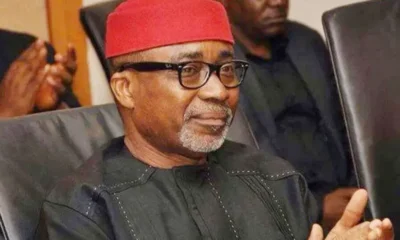
Then enter Oga Bayo Onanuga, presidential spokesman, with a statement that landed in the national stomach like cold pap without sugar. He said, “I don’t see the level of hunger people are talking about,” explaining that he asks people who work for him privately how they are coping.
To be fair, he also argued that government programmes, infrastructure projects, student loans, and credit facilities are benefiting people. That part deserves to be heard. Government is not a cupboard where nothing exists. Roads matter. Credit matters. Student loans matter. Infrastructure matters. If a road reduces travel time, that is not nothing. If a student gets help, that is not nothing. If a worker accesses cheaper credit, that is not nothing.
But, Oga Bayo, hunger is not audited by asking your staff, “How are things?” In Nigeria, when oga asks “How are things?” the correct answer is not always the truth. The correct answer is often, “We thank God, sir.” That sentence has carried more suppressed national data than many spreadsheets. A hungry employee does not always brief his employer with the confidence of a World Bank economist. Sometimes he smiles because salary is near. Sometimes she says “we are managing” because Nigerians have turned managing into a national language. Sometimes the person answering is not fine, but the mouth has collected home training.
The danger is that official eyes can become air-conditioned. They see roads, convoys, meetings, airport lounges, and policy slides. But hunger hides in smaller places. It hides in a mother reducing soup so that children can eat twice instead of once. It hides in a father pretending he has eaten outside. It hides in a student drinking garri with philosophical courage. It hides in IDP camps, in farming communities afraid of going to the field, in households where protein has become a Christmas visitor, in markets where people price fish and walk away with seasoning cube.
Reuters reported on July 2, 2026, that more than 17 million people across nine conflict-hit northern states face severe hunger, with violence and funding cuts pushing food insecurity to its worst level in nearly a decade. It also reported that Borno alone has more than three million acutely food insecure people, including over 750,000 facing severe hunger conditions. That is not social media noise. That is not “Ebi n pawa” remix. That is data with shoes on.
Still, balance matters. Nigeria’s problem is not simply that the nation woke up one morning and all the food disappeared. No. The problem is crueler and more Nigerian: food is present, but access is injured. Farmers are willing, but insecurity blocks fields. Traders are active, but transport cost bites. Markets are open, but purchasing power is limping. Government announces programmes, but households meet prices. The macroeconomy may be wearing a suit, but the kitchen is wearing bathroom slippers.
So when government says, “We don’t see hunger,” citizens hear something else: “Swim faster, the crocodiles are not real.” But the crocodiles are real. One is inflation. One is insecurity. One is unemployment. One is displacement. One is poor coordination. One is climate stress. One is the cost of fuel. One is the collapse of trust. And somewhere by the pond, someone is still clapping for the swimmer instead of asking who pushed him.
The citizen did not jump willingly into this crocodile economy. Many were pushed by reforms without enough cushioning, by insecurity without enough protection, by prices without enough wages, by promises without enough delivery. And like the man in the story, Nigerians are swimming. Some are surviving. Some are even smiling. But survival is not the same as comfort. Endurance is not evidence of absence of pain. A people who can laugh inside suffering should not be mistaken for a people who are not suffering.
The honest position is this: Nigeria is not yet a nationwide famine theatre, and we must avoid reckless exaggeration. But Nigeria is clearly at risk of worsening acute food insecurity in several regions, especially where conflict, displacement, market disruption, and poverty meet like crocodiles at feeding time. Denial will not cook rice. Sarcasm will not plant maize. Road projects will not automatically reduce hunger unless they connect farmers to safety, markets to affordability, and households to real income.
Oga Bayo, food dey, but hunger dey. And when a country where food dey still has millions unable to eat well, the problem is not imagination. The problem is access. The problem is governance. The problem is security. The problem is price. The problem is the crocodile pond.
The question is no longer whether Nigerians are brave swimmers. They are. The question is who keeps pushing them into the water, who keeps praising their survival, and when leadership will finally stop clapping long enough to build a bridge.—May Nigeria win.

























You must be logged in to post a comment Login