
Africa
Oworonshoki: Between Creative Destruction and Reset in Lagos -By Ariwoola Samuel Akinwale
This is where the principle of creative destruction—adaptive reuse—might be helpful, perhaps if we think well enough. This could mean a retrofit of chaos into a circumstantial plan, flexible, and iterative. This may be beyond our urban planners; our abundant creatives might be helpful here—programmers, poets, artists, writers, architects, engineers, and civil societies with a flair for such could now help. Can there be a move from demolition to dialogue, exclusivity to integration as we plod our way out of this quagmire?

Running for a sustainable city,
Top-down, the state moved.
Bottom-up ran Mr. Citizen.
Somewhere in-between…collision ensued—a colossal loss, for both!
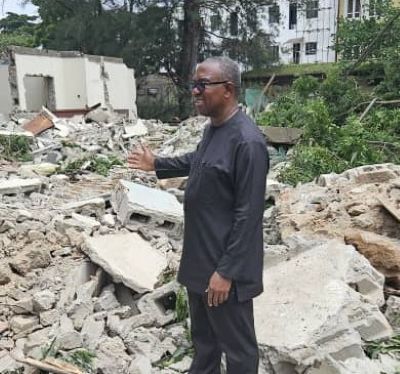
The lines above capture a recurring tension between the individual and the state in many Nigerian cities today. This week, Oworonshoki in Lagos was in the news when the government embarked on the demolition of unplanned houses. This is a condemnable idea at face value, but laudable with further rethink—a mixed bag of an august gift.
From Otumara, Baba Ijora, to Ikota (all in Lagos), this year alone recorded evictions and demolitions of houses running to billions of naira. In Abuja, Gishiri Village (Katampe), Wumba District, Cashew Garden (Apo Resettlement Town), Karsana, and Guzape, among a few areas, witnessed a similar experience. These are not isolated incidents—they mirror the housing system in many Nigerian cities today.
In this piece, I examine this contestation between the individuals’ lived experience and struggle for shelter and the discordance with urban planning and development, proposing a bridge in between.
The Paradox of Informality
The paradox of our housing system is that we have serious housing deficits in cities, yet demolition is routine history in an attempt to modernize our cities. Our fault lines lie in cultural and systemic failures to match our ideal expectations with the lived realities. Consequently, across our cities, we witness daily demolition of our scarce housing. This isn’t just ironic—it’s tragic. Our housing system mirrors a contestation between informal systems and modern ideals.
The logic of informal systems runs through all facets of our society—economy, security, education, health, and housing. Countries responding to modernity struggle with frequent tension between current informal systems and the state’s attempt to modernize them—this structural fault persists.
The attempt by the state to bring order to an existing chaotic system is a painful struggle for all parties—a gap, a clash between two civilizations, tension between yesterday and tomorrow. A few of such struggles suffice here: The attempt by the Buhari government to bring the church under formal control of the state ended in a stalemate. We struggle to stop or co-opt informal education systems like the Almajiri with the modern education system. Millions of our children are currently out of formal school owing to distrust, apathy, and disinterest in the modern system. Our prevailing housing system shares something in common with these stories.
A Call for Creative Destruction
There’s a persisting attitude of “build now, documentation later” in many places. Individuals build and supervise housing projects without monitoring from professionals, hence without recourse to planning policies and laws in place. Never blame them much; this is a survival mechanism in the powerless hand of an unsupportive economy without mortgage, credits, and loans, housing schemes, and infrastructure seen in modernized cities of the world. Here, the individuals build their communities, provide the infrastructure, and sometimes secure their communities as guards in the night. Hence, a clash between the individuals and the state on this ground. There’s a tension of transition between informality and transformation in our housing system from both ends.
Today, an entire neighborhood has evolved without a plan. Over seventy percent of houses in Lagos are unplanned—these are likely to be demolished if full recourse to the master plan is to be executed. But, this is a city with a serious housing deficit already.
There’s a need to rethink our demolition exercises as we progress towards modern, sustainable cities. Can informal housing systems be accommodated in our urban planning? A good artist is one who sees every error creatively, working with it, while keeping an eye on the masterpiece.
For instance, over ninety percent of Nigerians are in the informal economy; we embrace that anomaly with the effort to bring it to the mainstream. Recently, when insecurity became a serious issue in the South West, the Amotekun Security Network was initiated, drawing from informal security outfits like local vigilante groups, Agbekoya, and hunters, among others. This outlook could be embraced in the housing system and built environment rather than demolition.
This is where the principle of creative destruction—adaptive reuse—might be helpful, perhaps if we think well enough. This could mean a retrofit of chaos into a circumstantial plan, flexible, and iterative. This may be beyond our urban planners; our abundant creatives might be helpful here—programmers, poets, artists, writers, architects, engineers, and civil societies with a flair for such could now help. Can there be a move from demolition to dialogue, exclusivity to integration as we plod our way out of this quagmire?
Ariwoola Samuel Akinwale, teacher and writer, wrote this piece from Lagos.
ariwoolaakinwale@gmail.com


























You must be logged in to post a comment Login