Africa
Oyebanji: Res Ipsa Loquitur! -By Biodun Debanwi
While many Nigerian states are currently combustible, some even sitting on a keg of gunpowder, even the most ardent partisan would not place Ekiti State in the top thirty of potentially problematic states. Indeed, Oyebanji has a lot to teach others!

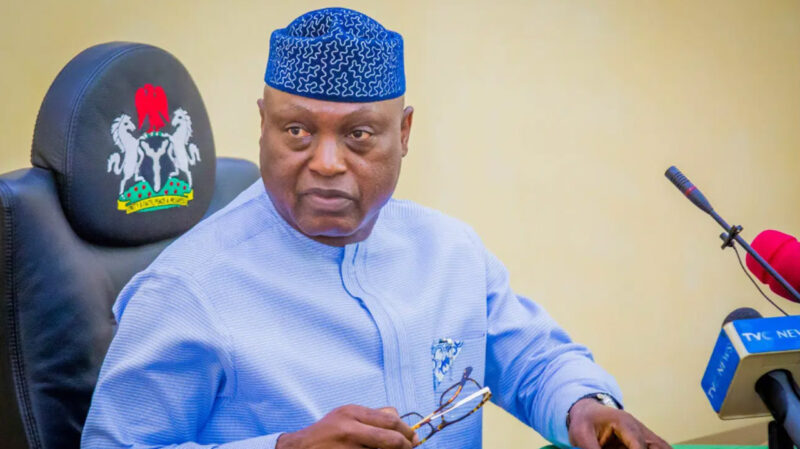
On Wednesday, September 10, 2025, Governor Biodun Abayomi Oyebanji (BAO) submitted his Expression of Interest and Nomination Forms for the 2026 Ekiti State governorship election at the All Progressives Congress (APC) National Secretariat in Abuja.
This event was far more than a formality; it was a collective endorsement of a leader whose performance has left no room for doubt. It was also framed as a deliberate effort to break a historical “jinx” in Ekiti State politics. Oyebanji himself addressed this directly, stating, “Since the creation of Ekiti State, no governor has done two terms at a stretch and Ekiti people have come here to remove this reproach. I have the divine mandate to break this jinx.”
This sentiment was echoed by leaders across the political spectrum, demonstrating a rare show of bipartisan support. Bisi Kolawole, a prominent political figure from an opposition party, assured the APC national leadership that “all opposition leaders in Ekiti were united behind Oyebanji.” What’s remarkable about this public show of support is that the governor clearly has not just widespread acceptance, but also a firm grip on a diverse array of interest groups who will likely coalesce into a powerful voting bloc.
There’s clear evidence that representatives from various segments of society – including party leaders, community elders, civil servants, students, former deputy governors, and even political opponents – have publicly endorsed the Ikogosi-Ekiti-born politician. They praised his performance, humility and competence, while highlighting his government’s development initiatives, such as regular salary payments, improved healthcare, and student-friendly policies.
These developments suggest that any opposition to BAO’s reelection will face a Herculean task. Fortunately for him, he currently appears to have no obvious weaknesses. Despite being perceived as a technocrat, Oyebanji has demonstrated unexpected political acumen, revealing his depth and shrewdness in navigating potential pitfalls.
Ekiti State has long been associated with political enlightenment. Given this history, it’s impressive that Oyebanji has navigated the difficult economic climate without stirring up discontent. There can be no credible accusation of selectiveness in the distribution of state services, even to those areas that voted against him. The tension that has been stalking the land has not been pronounced in Ekiti State because the fault lines are less prominent.
Attempts to stir up disaffection have been met with indifference, which can be largely attributed to the calm atmosphere created by the governor. This raises important questions for potential opponents: what issues could they use to argue that he doesn’t deserve a second term? Clearly, the opposition will need a highly effective strategy to mount a successful challenge against him.
While there’s no room for complacency, a betting person’s money would be on Oyebanji winning a convincing reelection. His leadership style is defined by an uncommon blend of comportment, intellectual humility, and moral sophistication. His calm demeanor is a reflection of his circumspection, while his unwavering openness to criticism demonstrates a profound commitment to continuous growth. He is not only accessible to the people he serves but also remarkably responsive to their needs, always receptive to feedback.
Oyebanji’s administration has focused on delivering tangible results across several key sectors, beginning with a strong emphasis on fiscal responsibility and transparency, which has led to improved civil service reforms. The government has also invested significantly in infrastructure, with major road reconstruction and expansion projects like the Ekiti Ring Road and the dualisation of the Ado-Ifaki Road.
In addition, his administration’s tangible achievements – from the consistent payment of salaries and pensions to crucial infrastructure projects – have served as irrefutable evidence of his effectiveness. He’s also made significant progress in human and social development. Oyebanji has prioritized education, with a large-scale renovation of public schools and the recruitment of over 2,000 teachers.
In healthcare, his government revitalized primary health facilities and launched mobile health initiatives. For agriculture, the administration has supported farmers with inputs, credit and access to mechanized tools through initiatives like the Erifun Livestock project and Renewed Hope Farms. The state has also secured an $80 million loan from the African Development Bank for the Ekiti Knowledge Zone.
According to the National Bureau of Statistics (NBS) Consumer Price Index report for August 2025, Ekiti State has made significant progress in reducing food prices. The food index saw a 6.8% month-on-month decrease, with annual food inflation at 16.8%, which is below the national average. This positive trend is a direct result of the “state government’s strategic focus on agricultural development, particularly through initiatives that encourage youth participation and foster public-private partnerships, such as the agro-trading firm, Ounje Ekiti”.
Yet, the report also highlights a critical challenge: Ekiti State recorded the highest overall inflation rate in August at 28.2% year-on-year. This increase is primarily driven by non-food categories, including housing, transport, and electricity. To counter this, the government is poised to “implement comprehensive reforms aimed at reducing housing costs, investing in road infrastructure to lower transportation expenses, and enhancing community electrification to moderate power costs”. This data-driven approach, which involves collaboration “with both private and public institutions”, underscores a commitment to improving the lives of Ekiti residents.
Oyebanji has cultivated what’s been termed a “magic of assemblage”. He has gained the voluntary and public endorsement of all four former Ekiti State governors: Adeniyi Adebayo, Ayodele Fayose, Kayode Fayemi and Segun Oni. This quintessential ‘insider’ politician has avoided simmering, let alone mass disaffection.
BAO must, however, develop catchy talking points to drive his message home, abandon his modesty, and amplify the gains, because politics is all about constant reminders. As things stand, the mood across Ekiti State isn’t one of fervent partisanship; rather, it’s a desire for continuity, as in, to use the sporting parlance, “Why change a winning team?” Frankly, July 20, 2026 is Oyebanji’s to lose! Any discerning observer would see that he is far too calculating to fall into the trap of complacency.
All said, it important to note that running for reelection is always a referendum on the incumbent. The candidate is placed in a defensive position, facing a simple ‘yes’ or ‘no’ on whether he or she should remain in office. Yet, without a doubt, Oyebanji is on firm footing, defending his record of sensible governance, which has carried the overwhelming majority along. His refusal to be vindictive or escalate political acrimonies has served him well.
Oyebanji has obviously benefited from extensive tutelage, enabling him to understand Ekiti State from the ground up. By rising through various layers of multiple administrations before getting the top job, he has been granted a unique and comprehensive apprenticeship in governance, immersing him in the state’s various structures.
As the 2026 Ekiti governorship election approaches, it has become a widely held belief that a second term would not lead to complacency but to a deeper commitment to his work. While Oyebanji has openly acknowledged the national economic hardship, the Ekiti electorate is discerning enough to appreciate that he is not the cause of the crisis.
What voters do see and commend is the governor’s proactive response: a leader who is equitably distributing the limited funds from federal allocations while simultaneously making significant strides to boost the state’s internally generated revenue (IGR). This focus on good governance is clearly providing a dividend that is ameliorating potential disaffection.
While many Nigerian states are currently combustible, some even sitting on a keg of gunpowder, even the most ardent partisan would not place Ekiti State in the top thirty of potentially problematic states. Indeed, Oyebanji has a lot to teach others!
Vincit Omnia Veritas!
●Debanwi wrote from Ikere, Ekiti State.