Africa
Paul Biya’s Victory Is A Taboo To African Democracy -By Isaac Asabor
By re-electing himself yet again, Biya has reminded the world that African democracy remains fragile, vulnerable to manipulation, and easily derailed by the cult of personality. His “victory” sends a dangerous signal to younger African leaders: that democracy can be bent, stretched, and distorted, as long as one maintains the façade of constitutional order.

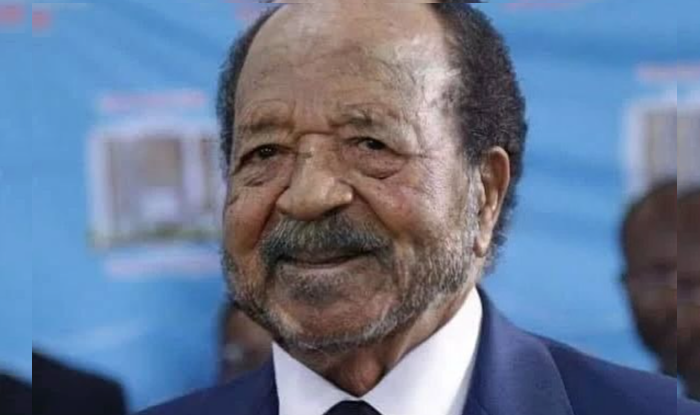
When a 92-year-old man who has ruled a nation for 43 unbroken years “wins” another seven-year term in office, the event ceases to be an election, it becomes a ritual of political mockery. Cameroon’s recent presidential “election” that returned Paul Biya to power for the eighth consecutive term is not a triumph of democracy; it is a national tragedy dressed in the garb of legitimacy. His so-called victory is a taboo to African democracy, a defilement of the very principles that the continent has fought for since the wave of independence in the 1960s.
Paul Biya, Africa’s longest-serving ruler, embodies everything that has gone wrong with leadership on the continent: the worship of power, the criminal manipulation of institutions, and the cynical use of elections to perpetuate tyranny. For over four decades, Biya has mastered the art of ruling without governing, a president more concerned with staying in power than with transforming the lives of his people.
Biya’s return to power is not a democratic milestone; it is an indictment of a system that refuses to evolve. Since assuming office in 1982, Biya has outlived generations of African leaders, witnessed coups, and seen entire regimes collapse. Yet his own government, ossified and autocratic, has survived by perfecting repression under the veneer of constitutional order.
The 2025 election result, 53.66% of votes for Biya against 35.19% for his one-time ally Issa Tchiroma Bakary, is not a reflection of the people’s will but a testament to institutional capture. Opposition voices were stifled, protests were met with bullets, and the electoral process was drenched in suspicion. When the dust settles, one fact remains: Biya has not been re-elected by the people; he has merely renewed his own mandate through a ritualistic process he controls.
That a 92-year-old man can cling to power in the 21st century, in a country struggling with poverty, insurgency, and economic stagnation, is not a sign of strength. It is the very definition of political decay.
Democracy, in its simplest form, is about choice. However, for Cameroonians, the only choice left is between continuity and chaos. The institutions that should check presidential excesses, the judiciary, parliament, and electoral commission, have long been reduced to rubber stamps of the executive. Biya has systematically dismantled the democratic safeguards that could have facilitated leadership transition.
The Cameroonian opposition, fractured and intimidated, operates under a climate of fear. Electoral observers, where allowed, often describe the process as opaque and predetermined. The international community, though alarmed, often responds with the usual diplomatic platitudes: “We urge calm,” “We encourage dialogue,” “We call for reforms.” Meanwhile, Biya consolidates power further, shielding himself with the legal fiction of legitimacy.
In truth, Cameroon today is not a democracy. It is a gerontocratic monarchy disguised as a republic. The so-called elections serve only one purpose, to remind the world that Paul Biya is still in charge.
Biya’s victory also exposes a deeper African ailment: the normalization of political longevity. Across the continent, leaders have learned that to rule indefinitely, one must manipulate constitutions, compromise electoral bodies, and silence dissent. Uganda’s Yoweri Museveni, Equatorial Guinea’s Teodoro Obiang Nguema, and Congo-Brazzaville’s Denis Sassou Nguesso all share the same political DNA. They belong to a generation of leaders who believe that the state and the self are indistinguishable, that without them, the nation will collapse.
This mentality is poison to democratic progress. It turns governance into inheritance and elections into coronations. The African Union, which should serve as the moral conscience of the continent, remains disturbingly silent. Its inaction reinforces the message that power in Africa is eternal, not accountable.
By re-electing himself yet again, Biya has reminded the world that African democracy remains fragile, vulnerable to manipulation, and easily derailed by the cult of personality. His “victory” sends a dangerous signal to younger African leaders: that democracy can be bent, stretched, and distorted, as long as one maintains the façade of constitutional order.
Supporters of Biya often justify his longevity with the argument of “stability.” They claim that Cameroon has avoided the violent implosions seen in other African nations. However, what they fail to acknowledge is that stability under repression is nothing more than quiet suffering.
Cameroon remains a nation divided along linguistic and ethnic lines, with the Anglophone crisis festering in the northwest and southwest regions. Thousands have died or been displaced as the government wages a brutal campaign against separatists. Unemployment remains high, corruption endemic, and infrastructure decaying. The regime’s obsession with self-preservation has left the country directionless.
While Biya reportedly spends extended periods abroad, often in Swiss luxury hotels, his people endure hardship at home. This grotesque contrast between ruler and ruled underscores why his continued reign is not a sign of leadership but of abandonment.
Paul Biya’s victory should provoke soul-searching across Africa. It challenges us to ask difficult questions: Why does the continent tolerate leaders who outlive their purpose? Why do we continue to equate elections with democracy when the outcomes are preordained? Why do citizens risk their lives to vote when their votes mean nothing?
True democracy is not about how many times a country holds elections; it is about whether those elections can change anything. Cameroon’s experience shows that without institutional independence, civic freedom, and accountability, democracy becomes an illusion.
The taboo, therefore, lies not only in Biya’s personal ambition but also in Africa’s collective acquiescence. Each time a leader extends his rule beyond reason, each time citizens are told that change is dangerous, and each time international observers look away, the continent loses a bit more of its democratic soul.
Breaking this taboo will require more than outrage; it demands action. African civil societies must reclaim the narrative of democracy from the hands of aging autocrats. Youth movements, journalists, and reform-minded politicians must insist that leadership is not a lifetime appointment.
Regional institutions like ECOWAS and the African Union must stop rewarding illegitimacy with silence. They must adopt a zero-tolerance policy toward constitutional manipulation and electoral fraud. The global community, too, must recognize that stability built on repression is unsustainable, that ignoring leaders like Biya is complicity in the slow death of African democracy.
Finally, the Cameroonian people themselves must refuse to normalize this absurdity. No ruler, no matter how long he has stayed, is indispensable. Change may be slow, but the will of a determined people is indestructible.
Paul Biya’s eighth-term “victory” is not an event to celebrate, it is a warning bell. It signals that Africa’s struggle for genuine democracy is far from over. A 92-year-old ruler clinging to power in the face of national stagnation is not a symbol of resilience; he is a relic of a past Africa must urgently outgrow.
If African democracy is ever to be respected globally, it must begin by rejecting the idea that leadership is a lifetime entitlement. Biya’s victory is not a triumph; it is a taboo, a desecration of the democratic altar, and a shameful reminder that power, in Africa, still too often means permanence.
Until that change, every “election” like Biya’s will remain not a celebration of democracy but a taboo.