Africa
Political Turmoil Beckons In Cameroon As Paul Biya’s Rule Nears Breaking Point -By Isaac Asabor
If the regime continues to cling to power through manipulation and intimidation, then political turmoil is not just likely, it is inevitable. For too long, Cameroon’s politics have been defined by fear and fatigue. Now, as the old guard clings desperately to power and a new generation refuses to wait any longer, the stage is set for confrontation.

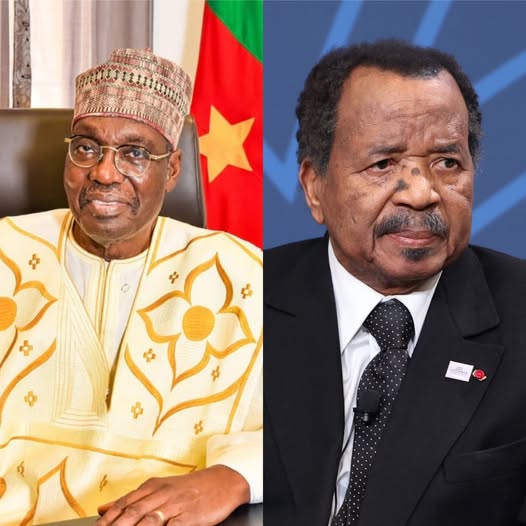
If history has a memory, then Cameroon is about to relive its darkest chapters, only this time, the actors are different, but the script remains tragically familiar. The declaration of victory by opposition candidate Issa Tchiroma Bakary, even before the official announcement of results, is not just a bold political gamble. It is a spark thrown into a room filled with decades of political gas, and the explosion could be imminent.
Tchiroma’s words, “accept the truth of the ballot box or plunge the country into turmoil”, are not idle threats. They are a warning, and perhaps, inevitability. In a nation where elections are theatre and results are predetermined, the audacity of hope has often met the brutality of power. Cameroon, it appears, is once again standing on the edge of political unrest.
Paul Biya’s 43-year hold on power is not governance, it is a generational stranglehold. Since 1982, Biya has turned Cameroon into a political museum of autocracy. He has perfected the art of staying in power while giving the illusion of democracy, a master of the “managed election,” where outcomes are scripted long before ballots are counted.
Each election in Cameroon follows a predictable pattern: opposition enthusiasm, claims of victory, state denial, arrests, and repression. The 2018 presidential election is a case in point. Maurice Kamto, who dared to declare victory, ended up behind bars, while his supporters were dispersed with tear gas and water cannons. The message from Biya’s regime was unmistakable, power does not change hands in Cameroon; it merely renews itself.
But something feels different this time. The aging Biya, now the world’s oldest serving head of state, faces not just political opposition but a generational revolt. Most Cameroonians have known no other leader in their lifetime. They have grown up, raised families, and suffered under the same ruler. This election was not just another contest; it was a referendum on endurance, a silent scream for change.
Tchiroma’s declaration of victory carries both hope and danger. Hope, because it signals that the opposition still dares to dream in a country where dissent is treated as treason. Danger, because it challenges the machinery of a state that has never allowed defeat.
His call for the government to “accept the truth of the ballot box” may resonate deeply with millions of disillusioned Cameroonians. But in Biya’s Cameroon, truth is not determined by ballots, it is dictated by decree. The Constitutional Council, the only body authorized to announce results, is firmly under Biya’s control. The “red line” the government warns against crossing is, in reality, a tool of suppression. Tchiroma knows this, yet he crossed it anyway.
His defiance has ignited something potent, social media is already flooded with tally sheets and claims of victory from both camps. The digital battlefield is buzzing, and in a country where physical protests are swiftly crushed, online resistance may soon spill into the streets.
Cameroon is a nation simmering with multiple tensions, the Anglophone crisis, economic despair, youth unemployment, and regional marginalization. Add to that a disputed election, and you have the perfect recipe for unrest.
When Tchiroma warns that the government risks plunging the country into turmoil, he is not exaggerating. Cameroon’s history of post-election chaos is well documented. Each contest has left scars on its fragile democracy. And now, with Biya’s legitimacy waning and his physical frailty becoming more apparent, the regime’s reflex will be to tighten its grip. That means more repression, more arrests, and possibly, more blood on the streets.
Political scientist Stephane Akoa’s observation that the ruling system has “ample means to get results in its favour”, captures the mood perfectly. The system is entrenched, and it does not lose elections; it only recalibrates power. But this time, even recalibration might not suffice. The people have tasted the possibility of defiance, and that alone can be revolutionary.
Cameroon’s democracy has always been a mirage, a hollow ritual performed every few years to pacify the international community. Biya’s regime has long mastered the art of staging elections as political theatre: the posters, the campaigns, the ink-stained fingers, all props in a well-rehearsed charade.
Behind the spectacle lies a broken system: opposition voices silenced, electoral commissions compromised, and state media serving as the ruling party’s mouthpiece. For over four decades, Biya has outlived coups, economic downturns, and rebellions, not by reforming, but by repressing.
That is why Tchiroma’s declaration is more than just political bravado, it is a direct confrontation with the myth of Biya’s invincibility. It is an attempt to reclaim the narrative from the state and return it to the people. Whether it succeeds or not, it exposes the fragility of Biya’s rule and the growing fatigue of a nation held hostage by one man’s ambition.
Make no mistake, Cameroon is entering a volatile chapter. If the government, as expected, dismisses Tchiroma’s claim and crowns Biya once again, the fallout could be severe. The opposition’s base, already mobilized, will see it as confirmation that elections in Cameroon are nothing but mockery. And when the legitimacy of the ballot collapses, people often turn to the streets.
The tragedy is that Biya’s government will not hesitate to meet protest with force. The regime has never learned the art of dialogue; it only knows the language of control. And as with every autocracy that outlives its moral authority, the use of force will only accelerate its decline.
Without a doubt, Cameroon stands at a crossroads, between reform and rupture, between evolution and explosion. The façade of stability that Biya has projected for decades is cracking. Tchiroma’s defiance has merely widened the fissure.
If the regime continues to cling to power through manipulation and intimidation, then political turmoil is not just likely, it is inevitable. For too long, Cameroon’s politics have been defined by fear and fatigue. Now, as the old guard clings desperately to power and a new generation refuses to wait any longer, the stage is set for confrontation.
The world may still see Cameroon as a quiet corner of Central Africa. But beneath that quiet lies a storm, and it is about to break.
Against the backdrop of the forgoing views, it is not nonsensical to opine that political turmoil beckons in Cameroon, not because Issa Tchiroma declared victory, but because the people have finally declared enough.