Africa
Political Uncertainty: Can the ADC Afford a Wolf Politician? -By Abu Mahmud
Power is not bestowed by any individual. It is granted by Allah alone. , who grants and withdraws power as He wills. Both Islam and Christianity affirms the same principle: power is a divine trust, not personal property. Any posture that suggests authority flows from personal will contradicts both faith and reality.

The recent realignment inside the African Democratic Congress (ADC) is a direct response to its founding promise of *transparency, accountability, and people‑centered politics free from money‑bags, godfatherism, and elite domination. it seeks to harness a powerful opposition coalition while safeguarding its founding ideals from elite capture. Success will depend on how rigorously the party enforces its transparency and accountability mechanisms as the 2027 race intensifies.
As the 2027 elections approach, that promise is being put to the test. ADC’s realignment is a *high‑stakes balancing act.The party must decide whether to open its doors to opportunistic politicians whose primary currency is personal ambition. Such “wolves” may bring short‑term numbers, but they threaten the party’s credibility, cohesion, and long‑term legacy. The ADC’s strength lies in shared values, not in the whims of any single figure.
If the ADC opens its doors to politicians driven primarily by personal ambition rather than shared ideals, it risks undermining its very foundation. As electioneering approaches, the party stands at a crossroads: either remain faithful to its principles or sacrifice them for short-term political advantage.
Its credibility, cohesion, and long-term relevance depend on choosing the former. As Nigeria moves toward the 2027 general elections, the country needs politicians of integrity visionary, unifying, and committed to national development over sectional or personal interests. Such politician must be accountable, embrace competent new talent, and reject divisive, self-serving politics is not in favor of institution-building, job creation, poverty reduction, and national cohesion.
At this critical moment, Nigerians cannot afford leadership captured by individuals who exploit poverty and emotion with populist rhetoric while pursuing narrow ambition. Citizens must distinguish between politicians who seek power and wealth for themselves and those who serve with integrity, transparency, and genuine commitment to community development.
A political party is bigger than any individual; it is built on shared values and collective purpose, not personal ownership. When individuals attempt to dominate a party, democracy weakens and godfatherism thrives.
Even before the election season, there is a real possibility that the ruling establishment could attempt to weaken opposition forces through proxy infiltration, sowing discord within emerging coalitions. This concern arises as the PDP faces its weakest moment since inception.
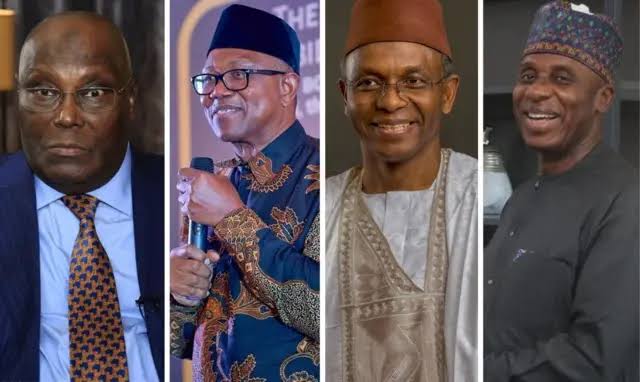
Atiku Abubakar has emerged as a central figure in a new opposition coalition that has adopted the ADC as its platform for 2027. The coalition includes figures such as former Senate President David Mark (interim national chairman), former Osun State Governor Rauf Aregbesola (interim secretary), Nasir El-Rufai, Rotimi Amaechi, and others. They have held consultations on party structure and strategy, advocating transparent primaries and urging members—including Peter Obi—to fully transition into the ADC. Atiku’s exit from the PDP and registration with the ADC signals a coordinated effort to challenge the APC government.
This context raises a critical question: can the ADC afford to admit politicians whose entry is conditioned on personal guarantees?
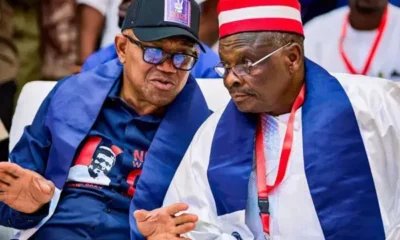
One recurring feature of some Kano-based politician is the tendency to conflate local dominance with national relevance. Through emotionally charged rhetoric, he mobilize loyal supporters while mistaking regional popularity for national appeal. More troubling is the practice of setting conditions even before joining a party. Rabiu Musa Kwankwaso, national leader of the NNPP, has openly stated that he would only defect to another party if offered the presidential or vice-presidential ticket for 2027.
Kwankwaso argues that his decades-long political career entitles him to such consideration, insisting that his supporters would accept nothing less. Yet this posture contrasts sharply with the conduct of other coalition members who subordinated personal ambition for collective negotiation. To demand special concessions while others make sacrifices raises questions about motive, sensitivity, and commitment to a shared cause.
This article is not rooted in personal animosity or partisan loyalty. It is an examination of a political style defined by populism, personality-driven movements, and frequent party migration driven by immediate ambition rather than ideology. Kwankwaso commands a loyal base in Kano, where he is celebrated as a champion of the masses.
Beyond that stronghold, however, his career is marked by serial defections—PDP, APC, NNPP—each aligned with personal calculations rather than consistent principles. Supporters call this pragmatism; critics call it political nomadism.
Recent developments in Kano have punctured the myth of Kwankwaso’s invincibility. The political rupture within the state has exposed a reality long obscured by propaganda: his influence depends heavily on state power. Without control of institutional machinery, his dominance diminishes. Electoral results reinforce this limitation. In the last presidential election, Atiku Abubakar secured over seven million votes, Peter Obi over six million, while Kwankwaso garnered just 1.14 million—nearly all from Kano.
Governor Abba Yusuf’s anticipated defection to the APC further signals a shift in Kano’s political landscape. While the Kwankwasiyya movement remains relevant, its grip on state power is weakening. This moment calls for recalibration, not confrontation. Politics is not a do-or-die affair, and clinging to power at all costs risks eroding both dignity and legacy.
Reports of behind-the-scenes meetings involving Kwankwaso and former President Olusegun Obasanjo, as well as speculation that he could be used to destabilize opposition parties, only deepen concerns about his role in any coalition. As his influence wanes, he increasingly portrays himself as a victim of betrayal, rallying supporters with narratives that elevate personal loyalty above political evolution.
In a political maneuver aimed at his own survival, a report claimed that the former NNPP presidential candidate formally asked Akande to help arrange a direct meeting with President Bola Ahmed Tinubu so he could personally negotiate his defection. Akande reportedly refused, stressing that he could not sidestep the party’s established structures, and instead directed Kwankwaso to the official high‑level committee that handles negotiations with prominent politicians seeking to join the party.
Even though he’s anxious about his political future, he can’t bring himself to tell the youths—whose blind loyalty he still counts on—why the people who stood with him from 1999 onward have walked away. What’s glaringly absent from his story is any reckoning with his own habit of discarding the allies who built his career: Senator Hamisu Musa, Musa Gwadabe, Abubakar Rimi—all sidelined after they helped him rise. Political independence isn’t betrayal; it’s a legitimate pursuit.
When Abdullahi Ganduje parted ways with Kwankwaso, he endured ridicule and abuse.
In my view, Kwankwaso and his blindsided supporters should at least appreciate Abba Gida‑Gida’s restraint in not publicly airing the unpleasant experiences that surrounded his rise to governor under the NNPP. Even though the Kwankwaso–Abba clash is, at its core, politics in its truest form—a search for solutions and self‑determination, there remains a clear distinction between betrayal, the pursuit of solutions, and the quest for independence from total submission. Yet Madugo’s recent speeches full of symbolism and coded language aimed at Governor AKY—are nothing more than a shameful display of a lack of self‑control.
For Atiku’s, other heavyweight politicians and ADC, the lesson is clear. No serious political party should mortgage its future on conditional loyalty or personal ambition. The party’s strength lies in its principles, not in accommodating politicians who seek to bend its vision to their own ends.
At this critical stage, Kwankwaso’s political control appears to have reached its limits. History shows that successful politicians are those who understand timing, terrain, and temperament. They fight when the cause is just, support is solid, and victory is achievable.
They retreat when the odds are stacked, emotions outweigh reason, or when a temporary withdrawal can prevent permanent defeat. It’s time for him to step aside gracefully and preserve his dignity—thereby protecting both his reputation and his place in history. When an ant gets spoiled, it grows wings._
Power is not bestowed by any individual. It is granted by Allah alone. , who grants and withdraws power as He wills. Both Islam and Christianity affirms the same principle: power is a divine trust, not personal property. Any posture that suggests authority flows from personal will contradicts both faith and reality.
Mahmud write it from Hadejia Road Kano.