
Africa
President Tinubu, Why Is the Woman Who Spoke Out Now on Trial—While Her Accused Stand as Witnesses? Rethink, Sir. Let It Go -By John Egbeazien Oshodi
This writer does not know any of the individuals involved; the focus is solely on upholding democracy, truth, and justice. It is not a judgment of guilt or innocence. It is a lament. A painful recognition that what should never happen in a lawful society is happening here, now, in full view. A woman who raised her voice is facing the weight of the law, while those she accused stand untouched, confident, and even celebrated.

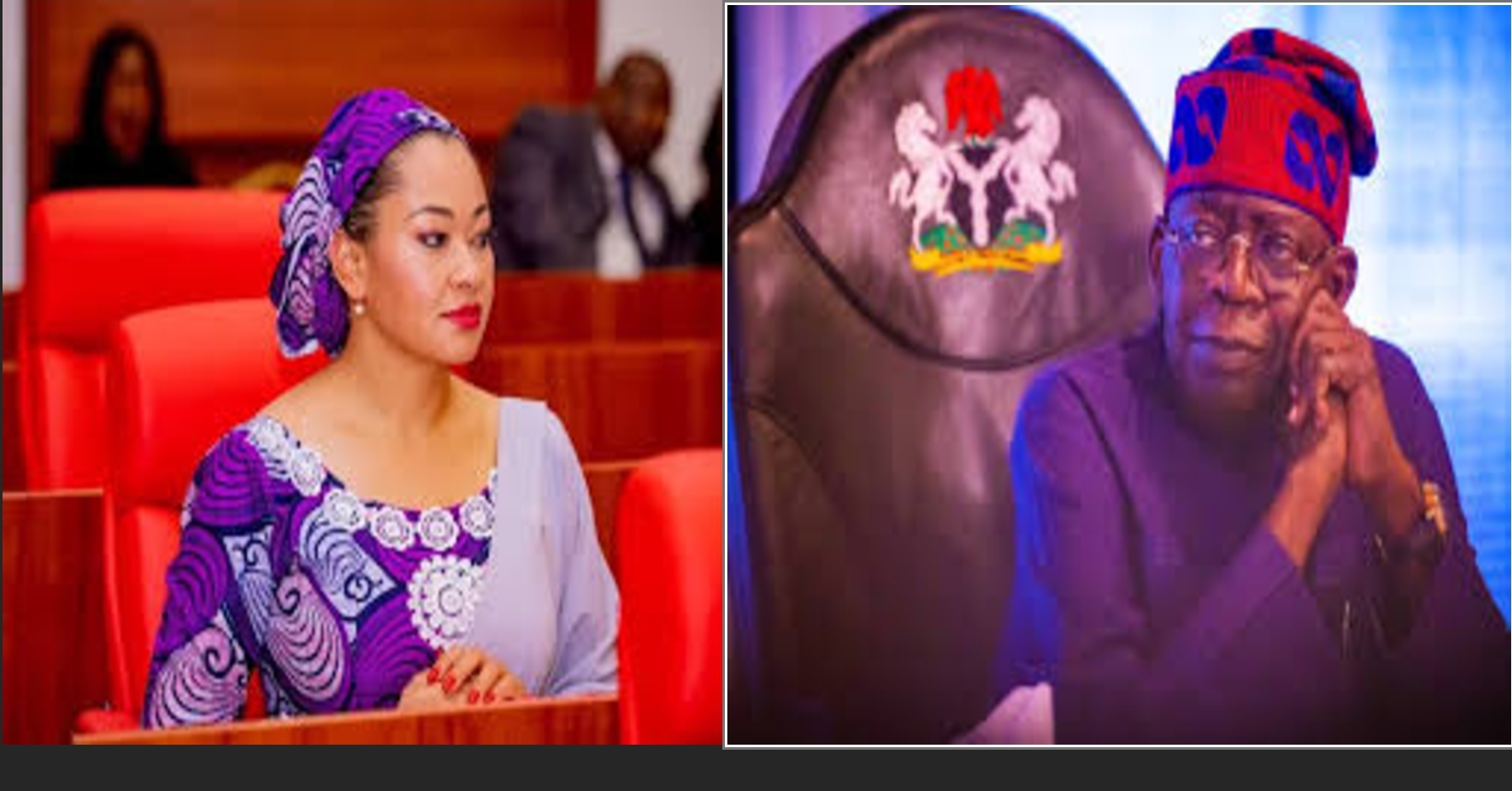
A Justice System in Reverse
How does a nation justify the image of a woman—one who has publicly cried out about harassment, humiliation, and political suppression—sitting as a defendant in court, while one of the men she accused of sexual misconduct sits across from her as a government witness? How did Nigeria arrive at this moment, where the lines between justice and institutional betrayal are so cruelly blurred?
Senator Natasha Akpoti-Uduaghan has not hidden. She has spoken with conviction, made public appeals, and demanded that her allegations of sexual harassment and threats be taken seriously. She asked for an investigation. She requested protection. She called for fairness. What she received instead was suspension, ridicule, silence—and now, prosecution. The image we are now witnessing is not justice. It is trauma dressed in legal robes. It is the accused given state validation, and the complainant treated as the problem.
A Damning National Spectacle
It is one thing to debate the credibility of a claim. It is another to reverse roles entirely, allowing an accused individual—especially one as powerful as a Senate President—to take the stand not in defense of himself, but as a key witness against his accuser. The image of him seated comfortably in the witness box, staring across the courtroom at the very woman who accused him of harassment, and then testifying against her—this is a moment that should chill the conscience of any observer.
This is the same man who, in other legal proceedings, has reportedly refused to appear in court when Natasha was the one seeking redress. He did not come forward to clear his name or respond to her allegations when summoned, yet here he is—appearing willingly, not to face justice, but to help deliver judgment against the woman who accused him. It is a bitter and painful reversal that speaks volumes.
And he is not the only one. Sitting beside him in state protection is Yahaya Bello, the former governor Natasha has repeatedly accused of targeting her with threats and orchestrating attempts on her life during past elections. Now, both men—whom she once named as tormentors—are preparing to testify against her. The psychological toll of facing one’s alleged abuser in court is already immense. But to face two, both empowered by the very government she once turned to for justice, is a level of trauma that borders on inhumane. This is not a search for truth—it is the compounding of trauma.
The emotional weight of that gaze—of a man once named in a serious sexual misconduct claim, and another in violent electoral interference—now bolstered by state power to testify against their accuser—is not just a legal anomaly. It is a national spectacle that broadcasts all the wrong messages. This is not symbolic. It is systemic. It is a message to every Nigerian woman that speaking out may lead not to resolution, but to retaliation. It tells victims: “Your truth will not protect you. It may be used to prosecute you.”
What does it say to the public when a sitting government aligns itself so clearly behind the men whose conduct is in question? What confidence can any citizen—especially female citizens—have in a justice system that appears more interested in protecting political strength than addressing claims of abuse?—of a man once named in a serious sexual misconduct claim now bolstered by state power to testify against his accuser—is not just a legal anomaly. It is a national spectacle that broadcasts all the wrong messages. This is not symbolic. It is systemic. It is a message to every Nigerian woman that speaking out may lead not to resolution, but to retaliation. It tells victims: “Your truth will not protect you. It may be used to prosecute you.”
What does it say to the public when a sitting government aligns itself so clearly behind the man whose conduct is in question? What confidence can any citizen—especially female citizens—have in a justice system that appears more interested in protecting political strength than addressing claims of abuse? when a sitting government aligns itself so clearly behind the man whose conduct is in question? What confidence can any citizen—especially female citizens—have in a justice system that appears more interested in protecting political strength than addressing claims of abuse?
The Psychological Harm of Legal Posturing
From a psychological standpoint, this moment is more than uncomfortable. It is damaging. It reopens wounds, both personal and national. It suggests to the survivor that not only will her voice be dismissed, but that it will be used against her. This is institutional re-traumatization—the kind that leaves long-term scars not just on the individual, but on a generation of women watching from afar.
In any country where justice functions as it should, the accused does not become the state’s trusted witness in a case targeting the very woman who brought forward serious accusations. In any healthy democracy, such a case would first examine the allegations, protect the vulnerable party, and ensure that public interest was centered in every legal step taken.
A Judiciary on Trial Before the World
Let us not forget—this is not happening in the dark. The world is watching. International observers, human rights organizations, legal monitors, and diplomatic partners are watching how Nigeria handles this moment. They are seeing whether our judiciary can stand apart from political pressure. They are watching to see whether those accused of abuse can be held accountable, or whether their positions protect them from scrutiny while punishing those who speak out.
This is not a moment that will be forgotten easily. It will live in media archives. It will echo through activist movements. It will resurface in every future conversation about gender, power, and justice in Nigeria.
A Closing Reflection
This piece is not written to favor Natasha. It is not a judgment of guilt or innocence. It is a national lament. A cry not from partisanship, but from principle. What should never happen in a lawful, compassionate, and democratic society is unfolding before our very eyes. A woman who dared to speak—who stood up against powerful forces and named her pain—is now the one being prosecuted, while the men she accused stand empowered, composed, and elevated by the same state she once trusted to protect her.
Her voice was not hidden. She went beyond borders. She has told her story in New York. She has raised alarm in Britain. And in doing so, she activated the world’s attention. Natasha’s testimony no longer lives solely in court filings—it exists in the memory of international observers, on the desks of diplomats, and in the conscience of human rights institutions. And now, the image Nigeria is projecting is one in which a survivor of alleged abuse is dragged to court, while the accused rise as witnesses of the state.
So I ask again—with humility, with gravity, and with urgency: Mr. President Tinubu, do you truly wish this image to remain burned into the world’s memory? Is this how you want your government remembered—by allowing a woman to be publicly dismantled while the men she fears are permitted to testify against her under the banner of the republic? Can this be the justice you campaigned to uphold?
There is still time to change course. Let it go. Rethink this path, not as a retreat—but as a higher form of leadership. Step back, not in weakness, but in wisdom. The story does not need to end in shame. It can still turn into an example of what justice looks like when power has the courage to yield.
Because it is not only her trial. It is a national trial. A reckoning. A mirror held up to our institutions. A test of what kind of country we are—and what kind of justice we truly claim to believe in.
This writer has no ties to any of the individuals involved. I speak only as a psychologist, as a citizen, and as a voice committed to democracy, truth, and justice.
This writer does not know any of the individuals involved; the focus is solely on upholding democracy, truth, and justice. It is not a judgment of guilt or innocence. It is a lament. A painful recognition that what should never happen in a lawful society is happening here, now, in full view. A woman who raised her voice is facing the weight of the law, while those she accused stand untouched, confident, and even celebrated.
It is not only her trial. It is a national trial. A test of what kind of country we are, and what kind of justice we truly believe in.
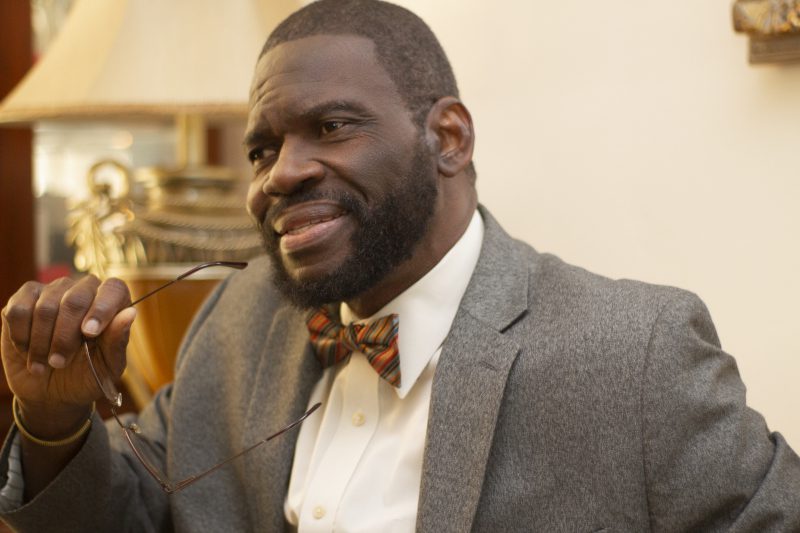
Psychologist John Egbeazien Oshodi
Professor John Egbeazien Oshodi is an American psychologist, educator, and author specializing in forensic, legal, and clinical psychology, cross-cultural psychology, police and prison sciences, and community justice. Born in Uromi, Edo State, Nigeria, he is the son of a 37-year veteran of the Nigeria Police Force—an experience that shaped his enduring commitment to justice, security, and psychological reform.
A pioneer in the field, he introduced state-of-the-art forensic psychology to Nigeria in 2011 through the National Universities Commission and Nasarawa State University, where he served as Associate Professor in the Department of Psychology. His contributions extend beyond academia through the Oshodi Foundation and the Center for Psychological and Forensic Services, advancing mental health, behavioral reform, and institutional transformation.
Professor Oshodi has held faculty positions at Florida Memorial University, Florida International University, Broward College, where he also served as Assistant Professor and Interim Associate Dean, Nova Southeastern University, and Lynn University. He is currently a contributing faculty member at Walden University and a virtual professor with Weldios University and ISCOM University.
In the United States, he serves as a government consultant in forensic-clinical psychology, offering expertise in mental health, behavioral analysis, and institutional evaluation. He is also the founder of Psychoafricalysis, a theoretical framework that integrates African sociocultural dynamics into modern psychology.
A proud Black Republican, Professor Oshodi advocates for individual empowerment, ethical leadership, and institutional integrity. His work focuses on promoting functional governance and sustainable development across Africa.

























You must be logged in to post a comment Login