Africa
Prevailing Hardship In The Land: Are Our Leaders Heartless Or Clueless?, by Isaac Asabor

In the streets of Lagos, across the bustling markets of every cities in Nigeria as gathered, and in the serene communities in Nigeria’s rural areas, there is a common refrain echoed by countless Nigerians: “Things have never been this hard.” It is not just rhetoric; it is a reality that many are grappling with daily. The current economic hardship in Nigeria has become so pervasive that it transcends the usual economic cycles and governmental rhetoric. It raises the question that lingers on everyone’s lips: “Is the government heartless or simply clueless?”
Everywhere you turn, the signs are glaring. The cost of living has skyrocketed, inflation rates are at record highs, and unemployment continues to surge. Basic commodities like rice, garri, and bread have become luxuries for many families. In fact, a not too recent survey by the National Bureau of Statistics (NBS) indicates that over 133 million Nigerians are living in multidimensional poverty. It is not just about low income; it is about the lack of access to basic services, deteriorating infrastructure, and worsening healthcare.
The removal of fuel subsidies, hailed as a necessary evil for economic stabilization, has only exacerbated the plight of the average Nigerian. Overnight, fuel prices more than tripled, leading to a ripple effect on transportation costs, food prices, and general household expenses. Despite the government’s promise of palliatives to cushion the blow, many Nigerians are yet to see any tangible relief. The feeling among the masses is that the government is either turning a blind eye to their struggles or is simply overwhelmed by the magnitude of the economic crisis.
A debate has ensued over whether the current administration’s handling of the economy reflects heartlessness or cluelessness. For many, the government appears indifferent to the suffering of the people. After all, how else can one explain the recent statements from officials like Vice President Kashim Shettima, who suggested that N8, 000 was enough to change the life of a struggling youth? This statement was met with widespread outrage and mockery on social media, as it was seen as a gross underestimation of the harsh realities facing Nigerians. In fact, Nigerians have been urged to go into prayer and faster, knowing full well that prayer without work is a futile effort.
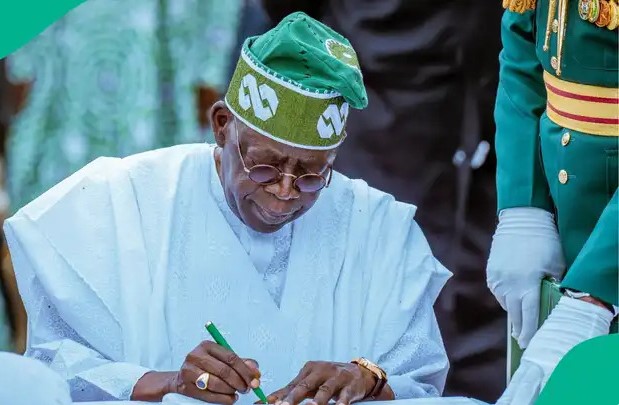
But perhaps, it is not heartlessness but a deep-seated cluelessness. President Bola Tinubu’s administration, which came into power with high hopes and promises of “renewed hope,” now seems to be struggling to get a handle on the economic situation. Analysts argue that there appears to be a lack of coherent economic policy, with decisions often made on the fly, leading to unintended consequences. For instance, the removal of fuel subsidies was done abruptly without adequate planning or a safety net for the most vulnerable, leaving millions to bear the brunt of higher costs.
One of the most frustrating aspects of the current economic climate is the perceived disconnect between the government and the reality on the ground. Sometime ago, Senate President Godswill Akpabio was caught on camera making a flippant remark about “enjoying” while Nigerians were struggling. This came shortly after he announced that lawmakers would receive allowances to “cushion” the effects of the fuel subsidy removal. Such statements highlight a widening gap between the political class and the ordinary Nigerian.
While lawmakers are shielded by generous salaries and allowances, the average Nigerian worker is barely surviving. The minimum wage of N70, 000, which is yet to be implemented by most state government, likely not going to be implemented by employers in the private sector, is grossly insufficient in today’s economy, where a bag of rice alone costs almost twice that amount. Yet, there are no serious efforts to address wage increases or provide substantial relief to the suffering masses.
The consequences of economic mismanagement were evident in the wave of protests and strikes that were recently carried out across the country. Just recently, the Nigeria Labour Congress (NLC) and the Trade Union Congress (TUC) threatened to embark on nationwide strikes if the government fails to address the skyrocketing cost of living. There is a palpable sense of frustration, and for good reason, Nigerians have been patient for far too long.
In fact, small businesses, which form the backbone of the Nigerian economy, are folding up at an alarming rate. The harsh economic environment has led to reduced consumer spending, which in turn has caused many SMEs to downsize or shut down entirely. The unemployment rate, currently estimated at over 33%, is only getting worse, leaving many young graduates with little hope for the future.
The lack of foreign investment due to an unstable business environment and a volatile exchange rate has further compounded the economic challenges. The naira continues to depreciate against the dollar, with the parallel market rate reaching unprecedented levels. This, in turn, makes imported goods more expensive, putting additional pressure on already stretched household budgets.
The current situation calls for more than just lip service. It requires a comprehensive economic reform strategy that prioritizes the welfare of the people. The government needs to rethink its approach to subsidies, focusing on ensuring that relief reaches those who need it the most rather than creating tokenistic programs that do little to alleviate the suffering of the masses.
There is also an urgent need for transparency and accountability. For too long, government officials have shielded the true state of the nation’s finances behind a veil of secrecy. The public has a right to know how funds, particularly the billions in loans taken from international bodies like the World Bank, are being utilized. Without transparency, there can be no trust, and without trust, there can be no progress.
The government must also prioritize job creation by investing in sectors that have the potential for growth, such as agriculture, technology, and manufacturing. Encouraging entrepreneurship and supporting small businesses with grants and low-interest loans can go a long way in addressing the unemployment crisis.
In these trying times, what Nigerians need is not just economic policies but compassionate leadership. The government must demonstrate that it is genuinely concerned about the plight of the people by making sacrifices of its own. Instead of increasing the allowances of lawmakers, why not redirect those funds to critical sectors like healthcare and education?
There is a need for leaders who can inspire hope by not just talking the talk but walking the walk. This means going beyond token gestures like sharing bags of rice or announcing cash transfers that never materialize. It means understanding that the average Nigerian is not asking for handouts but for the opportunity to live a dignified life.
The economic hardship in Nigeria today is not just a temporary downturn; it is a crisis that demands urgent attention. Whether the government is heartless or clueless is beside the point. What matters is that there are millions of Nigerians who are suffering, and something needs to change fast.
The time for empty promises and political grandstanding is over. Nigerians need real solutions, and they need them now. It is up to the government to decide whether it wants to be remembered as one that stood by idly while its people suffered or as one that took decisive action to turn the tide. The choice is clear, but the question remains: Does the government have the will to make it?
In the words of the legendary reggae musician Bob Marley, “Dem belly full, but we hungry.” This aptly captures the Nigerian reality today, a nation rich in resources but with its citizens impoverished. The onus is on the leaders to prove that they are neither heartless nor clueless but capable of steering the nation towards a brighter future. For now, the jury is still out.